
TL;DR:
- An accurate roofing estimate provides a detailed breakdown of labor, materials, and fees necessary for a project.
- In St. Louis, local knowledge and precise measurements help prevent budget overruns caused by hidden costs or scope omissions.
An accurate roofing estimate is a detailed, itemized projection of all labor, materials, and fees required to complete a specific roofing project. For St. Louis homeowners and commercial property owners, getting this number right from the start means the difference between a project that stays on budget and one that spirals into costly surprises. National replacement costs range from $9,000 to $18,000, with regional pricing swings of 25–40%. Midwest markets like St. Louis typically run 10–20% below the national average, which makes local knowledge a real advantage when you get accurate roofing estimate quotes from contractors.
What do you need to get an accurate roofing estimate?
Getting a reliable roofing cost estimate starts with the right inputs. Without accurate measurements and material decisions upfront, even the best contractor will give you a number that shifts once the project begins.
Roof area and measurement methods
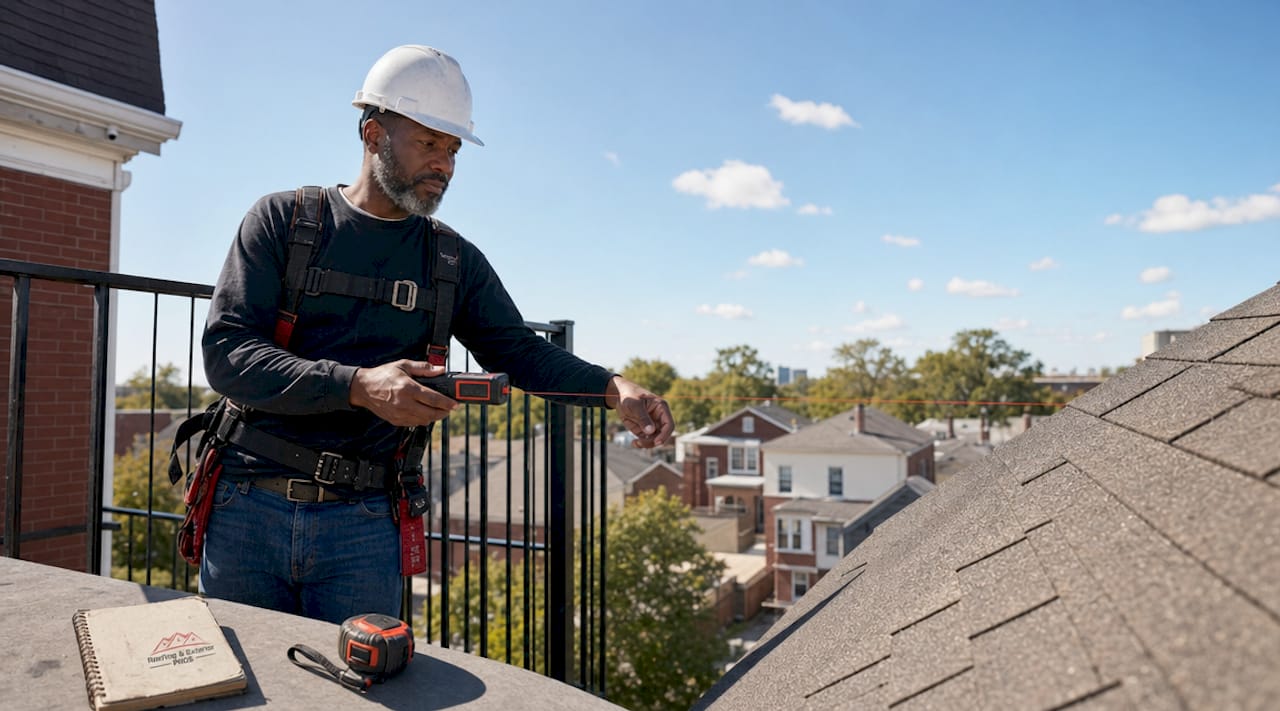
Roof area is measured in “squares,” where one roofing square equals 100 square feet of surface. Satellite imagery tools can calculate this quickly, but satellite measurements carry a 5–10% error margin on complex roofs with multiple hips, turrets, or dormers. Most standard urban homes in St. Louis fall in the 2–5% error range, which is acceptable for early budgeting. For final quotes, a physical measurement by a licensed contractor is the standard.
Roof pitch and complexity
Roof pitch describes the steepness of your roof, expressed as a ratio like 6:12 or 9:12. Steep roofs above a 9:12 slope require additional safety equipment and slower labor, which drives up costs significantly. A simple gable roof costs far less to estimate and install than a roof with multiple valleys, dormers, and a chimney penetration.
Material selection and local labor rates
Your choice of roofing material is one of the biggest cost variables. Asphalt shingles, metal panels, slate, and wood shake each carry different price points and installation requirements. Labor typically accounts for 50–60% of total roofing costs, running $2.50 to $6.00 per square foot. That means a $15,000 roof replacement in St. Louis could include $7,500 to $9,000 in labor alone.
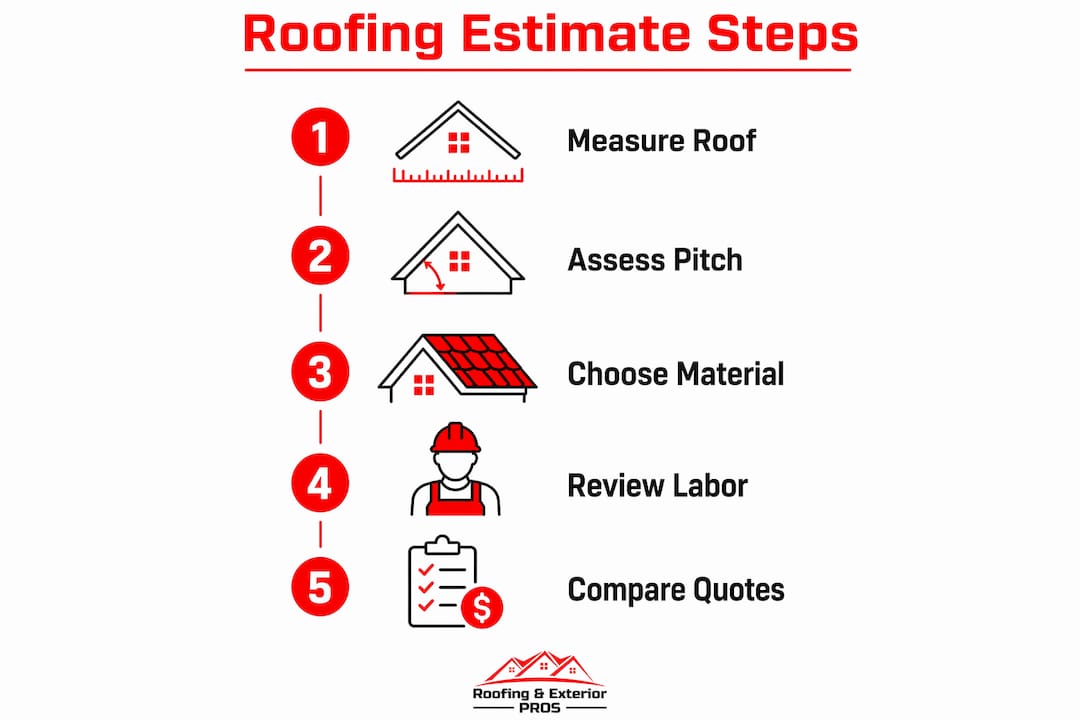
Here is a quick reference for the key inputs every estimate requires:
| Input | Why It Matters |
|---|---|
| Roof area in squares | Determines material quantity and base cost |
| Roof pitch and complexity | Affects labor time, safety needs, and equipment |
| Material type and brand | Drives per-square material cost and warranty tier |
| Local labor rates | St. Louis rates differ from national averages |
| Existing roof layers | Tear-off adds cost if multiple layers exist |
Pro Tip: Before calling any contractor, pull your home’s square footage from county property records. It gives you a baseline to cross-check any estimate you receive.
How do you get an accurate roofing estimate step by step?
The industry term for this process is “scope of work development,” and it combines digital measurement tools with on-site contractor verification. Here is how to do it right.
-
Start with an AI-powered online estimator. Tools like Roofr and Roof Manager use satellite imagery to generate a roof measurement report in under 60 seconds. AI-powered estimators reach 90–95% accuracy for standard roofs, making them reliable for early budget planning. Treat this number as a budgeting range, not a contract price.
-
Confirm pitch and complexity details. After getting an online figure, verify your roof’s pitch using a smartphone app or a simple level-and-ruler method. Complexity factors like skylights, chimneys, and multiple roof planes must be noted before any contractor visit.
-
Request itemized quotes from at least three contractors. A detailed roofing quote should break out labor, materials by brand and type, tear-off, underlayment, flashing, and disposal fees as separate line items. Estimates must include material brand, scope details, and waste factors to allow true cost comparisons between bids.
-
Verify that permits and disposal fees are included. St. Louis County and St. Louis City both require permits for full roof replacements. A quote that omits permit fees is not a complete quote.
-
Compare the online estimate to contractor bids. If a contractor’s bid is more than 20% below your satellite estimate, ask for a detailed explanation. Low bids often signal missing scope items that will appear as change orders later.
Here is how the two main estimate methods compare:
| Factor | Online Estimator | Contractor Quote |
|---|---|---|
| Speed | Under 60 seconds | 1–3 business days |
| Accuracy | 90–95% for standard roofs | 98–100% with on-site visit |
| Cost | Free or low cost | Free from most contractors |
| Best use | Initial budgeting | Final project decision |
| Limitations | Misses hidden damage | Requires scheduling |
Pro Tip: Ask each contractor to use the same material brand and shingle line in their bid. Comparing a GAF Timberline HDZ bid against a generic shingle bid is not a fair comparison.
What hidden costs can inflate your roofing bill?
Hidden costs are the most common reason a roofing project exceeds its original estimate. Knowing where they hide lets you ask the right questions before signing anything.
-
Decking repairs. Rotted or damaged roof decking is only visible after tear-off begins. Decking repairs and disposal fees can add $1–$3 per square foot to your final bill, which translates to $1,000–$3,000 or more on a typical St. Louis home. Budget a contingency of at least 10% for this possibility.
-
Flashing around penetrations. Chimneys, skylights, and pipe boots all require metal flashing to seal properly. Estimates often exclude flashing work on chimneys and skylights, yet these are the most common sources of post-installation leaks. Any written scope should list every penetration by name.
-
Tear-off and disposal fees. Removing your old roof and hauling away debris is labor-intensive work. Some contractors bundle this into their per-square price, while others list it separately. Confirm which approach your quote uses.
-
Steep slope premiums. A roof above a 9:12 pitch requires harness systems and slower work pace. If your quote does not mention a steep slope surcharge and your roof qualifies, expect a revision.
-
Permit fees. St. Louis area permits typically run $150–$500 depending on the municipality. A quote that omits this line item is incomplete.
“Homeowners should treat instant online quotes as budgeting tools, not contract prices.” — Estimating Roof Costs
Understanding these cost layers before you sign protects you from the most common source of contractor disputes. A thorough written scope is your best protection.
How do you compare roofing estimates for the best value?
Comparing quotes is not just about finding the lowest number. The best roofing estimate is the one that gives you the most complete picture of what you are actually buying. Use our roof estimate comparison checklist to keep your review organized.
-
Check the material and labor breakdown. Every line item should be listed separately. A single lump-sum number tells you nothing about where the money goes or what gets cut if the price changes.
-
Verify contractor credentials and references. Ask for proof of Missouri contractor licensing, general liability insurance, and workers’ compensation coverage. Request two or three local references from projects completed in the past 12 months.
-
Understand the warranty structure. Roofing warranties come in two types: manufacturer warranties covering material defects, and workmanship warranties covering installation errors. A contractor offering only a one-year workmanship warranty on a 30-year shingle system is a red flag. Review roofing service contract types before you commit.
-
Confirm permitting is included. Any contractor who suggests skipping the permit to save money is exposing you to liability. Unpermitted roofing work can void your homeowner’s insurance and complicate a future home sale.
-
Evaluate the estimate phase as a vetting process. The estimate phase is also a contractor vetting process, where responsiveness, detail, and transparency signal how a company will behave once work begins. A contractor who rushes the estimate will rush the installation.
For commercial property owners, the stakes are even higher. Flat roof systems, TPO membranes, and modified bitumen all require specialized experience that not every residential roofer carries. Verify that your contractor has documented commercial project experience before accepting any commercial roofing bid.
Key takeaways
Getting an accurate roofing estimate requires combining satellite measurement tools with itemized contractor quotes, local pricing knowledge, and a clear written scope that covers every cost from tear-off to permits.
| Point | Details |
|---|---|
| Use online tools for budgeting | AI estimators reach 90–95% accuracy but need contractor verification for final pricing. |
| Labor is the largest cost driver | Labor accounts for 50–60% of total cost, so steep or complex roofs cost significantly more. |
| Hidden costs are predictable | Budget a 10% contingency for decking repairs, flashing, and disposal fees. |
| Compare itemized quotes only | Lump-sum bids prevent true comparison; always request line-by-line breakdowns. |
| Estimate phase reveals contractor quality | How a contractor handles the quote tells you how they will handle the job. |
What i have learned about roofing estimates in st. louis
Working with St. Louis property owners across dozens of roofing projects, I have seen one pattern repeat itself more than any other. Homeowners trust a low number because it feels like a win. It rarely is.
The St. Louis market has real pricing advantages. Midwest labor rates run below the national average, and material supply chains here are solid. But those savings disappear fast when a contractor skips flashing details, ignores decking conditions, or omits permit fees from the original quote. I have seen $10,000 estimates turn into $14,000 invoices because the written scope left too much undefined.
My honest advice is this: the best roofing estimate is the most detailed one, not the cheapest one. If a contractor cannot give you a line-by-line breakdown within 48 hours of visiting your property, that tells you something. Transparency at the estimate stage is the clearest signal of how a company operates once your money is on the table.
For commercial property owners especially, I recommend reviewing how estimates differ from insurance scopes before accepting any bid tied to a storm damage claim. The two documents serve different purposes, and confusing them is a costly mistake.
— Jake
Get a detailed roofing estimate from roofing & exterior PROS
Roofing & Exterior PROS serves homeowners and commercial property owners across St. Louis, St. Charles, and O’Fallon with free, no-obligation roofing estimates backed by satellite measurement technology and on-site verification. Every estimate we provide is fully itemized, covering materials, labor, tear-off, flashing, disposal, and permit fees so you know exactly what you are paying for before any work begins.

Our team brings local St. Louis market knowledge to every project, whether you need a residential or commercial roofing solution. We work closely with you through every step, from initial measurement to final inspection, and we stand behind our work with clear warranty terms. Contact Roofing & Exterior PROS today to schedule your free roof inspection and receive a detailed quote you can actually rely on.
FAQ
What is included in an accurate roofing estimate?
An accurate roofing estimate includes labor, materials by brand and type, tear-off, underlayment, flashing, disposal fees, and permit costs listed as separate line items. A lump-sum quote without this detail is not a complete estimate.
How accurate are online roofing estimate calculators?
AI-powered roofing estimate calculators reach 90–95% accuracy for standard roofs using satellite imagery. They are reliable for early budgeting but require a professional on-site inspection before finalizing any contract price.
How much does a roof replacement cost in st. louis?
The national average for roof replacement runs $9,000 to $18,000, and Midwest markets like St. Louis typically fall 10–20% below that range. Final cost depends on roof size, pitch, material choice, and any hidden repairs discovered during tear-off.
Why do roofing estimates vary so much between contractors?
Estimates vary because contractors include different scope items, use different material brands, and apply different labor rates. Comparing quotes that do not specify the same materials and scope is not a true cost comparison.
Should i get a free roofing estimate before filing an insurance claim?
Getting an independent estimate before filing a claim gives you a baseline to compare against the insurance adjuster’s scope. Review the differences between a contractor estimate and insurance scope to avoid accepting a payout that does not cover the full cost of repairs.