
TL;DR:
- Understanding the difference between a roofing estimate and an insurance scope is essential for ensuring proper repair and fair reimbursement.
- The contractor’s estimate outlines the full scope of work, including hidden damage and code upgrades, while the insurance scope covers only visible, documented damage based on regional pricing.
After a storm tears through your neighborhood, you file a claim and suddenly you’re holding two documents that both look like estimates. One comes from your insurance adjuster. One comes from your roofing contractor. They have different numbers, different line items, and neither one fully explains what the other is doing. Understanding what is a roofing estimate vs insurance scope is not just useful knowledge. It’s the difference between getting your roof properly fixed and leaving thousands of dollars on the table because you didn’t know what to ask for.
Table of Contents
- Key takeaways
- What is a roofing estimate vs insurance scope
- How the insurance scope of loss works
- Key differences between the two documents
- How to use both documents effectively
- My take on where homeowners really get tripped up
- How Roofing & Exterior PROS helps you through the process
- FAQ
Key takeaways
| Point | Details |
|---|---|
| Two different documents, two different purposes | A roofing estimate is your contractor’s work plan; an insurance scope defines what your insurer will pay. |
| Insurance scopes often miss items | Adjusters assess visible damage, so hidden issues and code upgrades may not be included initially. |
| Supplements close the gap | Formally documented supplements revise the insurance scope to add missing or undervalued repair items. |
| Don’t sign contracts too early | Committing to a contractor before your insurance scope is approved can complicate your claim. |
| ACV vs RCV affects your cash flow | You receive depreciated value first and full replacement cost only after repairs are completed and verified. |
What is a roofing estimate vs insurance scope
Let’s start with the roofing estimate, which the industry formally calls the contractor’s scope of work or simply a bid. A proper roofing estimate is detailed enough that another contractor could build from it. That’s a useful way to think about it. It’s not a rough ballpark. It’s a written plan.
A thorough contractor estimate includes:
- Materials: Brand, product line, color, and quantity of shingles, underlayment, ice and water shield, flashing, ridge cap, and pipe boots
- Labor: Tear-off, disposal, installation broken down by task
- Permits: Local permit costs required for the job
- Warranties: Both manufacturer material warranty and contractor workmanship warranty
- Timeline: Projected start and completion dates
- Payment terms: Deposit amount, milestone payments, and final payment conditions
The reason every item is listed separately is so you can compare bids from multiple contractors. When two estimates show different prices, itemized line items let you see exactly where the difference comes from. One contractor might use a premium shingle while another uses a builder-grade product. You can’t see that difference in a lump sum price.
Pro Tip: Ask any contractor you’re considering to walk you through their estimate line by line. If they can’t explain what every charge is for, that tells you something important about how they communicate and how they operate on the job.

The estimate is also the contractor’s commitment to you. It defines the scope of work they’re agreeing to perform. Any change to the project after signing should come in writing as a change order. Without that paper trail, disputes about what was supposed to be included become very difficult to resolve.
How the insurance scope of loss works
The scope of loss, sometimes called the insurance estimate, is a document your insurance adjuster prepares after inspecting your roof. Where the contractor’s estimate asks “what does this roof need?”, the scope of loss asks a different question: “what damage is covered under this policy?”
Those are not the same question, and that gap is exactly where homeowners run into trouble.
Insurance adjusters typically use software called Xactimate to produce their scope. Insurance scope items list what the insurer will pay based on visible, documented damage from a covered peril. The scope includes repair or replacement line items with pre-set pricing built into the software’s regional databases.
Here’s what your insurance scope typically covers:
- Damage caused by covered perils such as wind, hail, and fire
- Line items tied to the specific damage the adjuster observed during inspection
- Tear-off and disposal of damaged materials
- Replacement materials priced at regional averages in Xactimate
- Overhead and profit for the contractor in some cases
The scope will also explain how your payout works. Most policies pay on either an actual cash value (ACV) or replacement cost value (RCV) basis. ACV pays depreciated value upfront based on the age and condition of your roof, while the full RCV payment is released only after repairs are completed and documented. This means you often receive two checks: one to get started, and a second to cover recoverable depreciation after the work is done.
Coverage has limits. What your insurer covers depends on whether the damage was caused by a covered peril versus normal wear and tear or maintenance neglect. That distinction matters significantly when the adjuster is writing the scope.
Key differences between the two documents
This is where the practical impact of the distinction hits home. Here’s a direct comparison of what each document covers and why the differences matter.
| Category | Contractor’s estimate | Insurance scope of loss |
|---|---|---|
| Purpose | Blueprint for all work needed | Defines what insurer will pay |
| Damage coverage | Includes hidden and code-required items | Based on visible, documented damage only |
| Pricing source | Contractor’s actual costs | Xactimate regional averages |
| Code compliance | Included as required | May be excluded unless specifically covered |
| Hidden damage | Addressed after tear-off | Not included until supplemented |
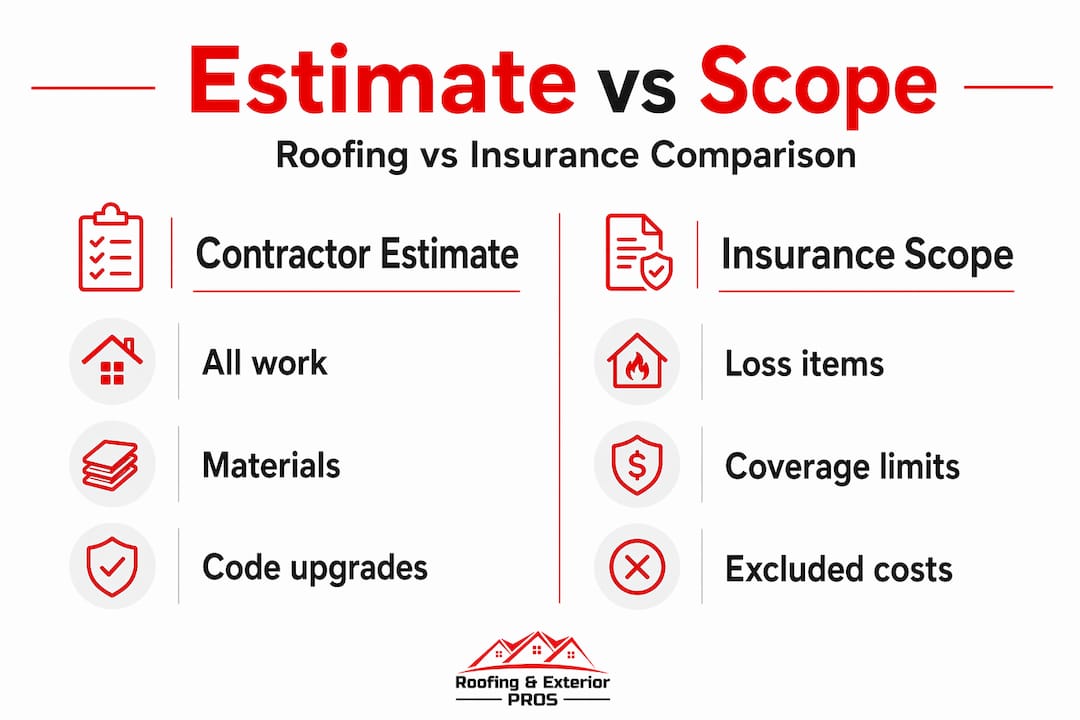
The contractor sees the full picture. When they pull off old shingles and find rotted decking beneath, that cost goes into their estimate. Hidden damage after tear-off routinely causes the contractor’s final number to differ from the original insurance scope. That’s not the contractor padding the bill. That’s reality appearing once the damaged layers come off.
Code compliance is another common gap. If local building codes require upgraded ventilation or specific underlayment products that weren’t on the original roof, your contractor must install them. Your insurance policy may or may not include a code upgrade rider (sometimes called “ordinance and law” coverage). If it doesn’t, that cost lands in the contractor’s estimate but not in the insurance scope.
Pro Tip: Pull out your insurance policy declarations page and look for “ordinance or law” coverage before your adjuster visits. If you have it, make sure the adjuster knows, because this coverage for code-required upgrades is frequently left out of initial scopes.
When the insurance scope is missing items or undervalues the work, the formal process for correcting this is called a supplement. Supplements revise the insurance scope to add or correct items, supported by documentation, and submitted to the insurer for approval. They are technical documents, not complaints. The more precisely they mirror the original scope’s format and link each new item to documented damage, the better they perform.
How to use both documents effectively
You don’t have to be a roofing expert to protect yourself. You just need a clear process. Here’s how to work through both documents confidently.
-
Wait for your insurance scope before signing a contract. Committing to a contractor before your insurer determines claim value can put you in a difficult position. The contractor’s price and the insurer’s payment may not align, and you need to know that gap before you sign anything.
-
Compare the two documents line by line. Lay the contractor’s estimate next to the insurance scope and look for what’s in one but not the other. Focus on description and quantity mismatches rather than just price differences. A missing line item is more significant than a small price variance on a shared item.
-
Flag missing items for a supplement. If the contractor identifies work that’s clearly storm-related but absent from the scope, document it with photos, measurements, and written explanation. Your contractor should know how to prepare a supplement, and supplements work best when they directly link each new item to the covered damage in the original scope.
-
Understand your ACV payment and what comes next. Your first insurance check covers the depreciated value of your roof. Once work is complete, you submit documentation to receive recoverable depreciation. Don’t spend the entire first check without planning for your deductible and the contractor’s final payment on completion.
-
Work with a contractor who understands insurance claims. This is not the time to hire based on price alone. A contractor experienced with roofing insurance claims can spot scope gaps, prepare supplements, and communicate professionally with your adjuster in a way that keeps your claim moving forward.
Reviewing both documents carefully before any work starts protects you from two problems: overpaying out of pocket for items your policy should cover, and underpaying your contractor so the work can’t be completed properly.
My take on where homeowners really get tripped up
I’ve seen hundreds of homeowners go through this process, and the same mistakes show up again and again. The paperwork itself isn’t that complicated once you understand what each document is for. The real problem is the pressure that comes with it.
After a storm, you have a damaged roof, a stressed household, and contractors knocking on your door the next morning. That pressure pushes people into decisions they make too fast. Signing a contract before the insurance scope is finalized is the single most common mistake I see. It seems harmless at the time. You trust the contractor, the price looks reasonable, and you just want your roof fixed. But if the insurance scope comes in lower than the contract, you’re stuck negotiating from a weak position.
The second thing I’d tell every homeowner is to not treat the first insurance scope as the final word. Adjusters work from what they can see during a single inspection. They’re not trying to shortchange you, but hidden damage revealed after tear-off is real and common, and supplements exist precisely for that reason. Persistence with documentation wins these situations. Not arguments. Documentation.
Ask questions. Ask your contractor to explain every line. Ask your adjuster why a specific item isn’t included. You have every right to that conversation, and the professionals who do this work well will welcome it rather than deflect it.
— Jake
How Roofing & Exterior PROS helps you through the process
At Roofing & Exterior PROS, we’ve worked alongside St. Louis homeowners through hundreds of storm damage claims, and we know the document confusion you’re dealing with. Our team reviews your insurance scope alongside our detailed roofing estimate to identify gaps before work begins, not after.

We prepare and submit supplements on your behalf when the scope misses storm-related items, and we document hidden damage thoroughly so your insurer has everything they need to approve additional coverage. We also walk you through your storm damage claim step by step so you understand every decision being made. Our goal is a roof that’s completely repaired and a claim that’s handled fairly, with no surprises for you along the way. Call us for a free inspection and let us start with the documents you already have.
FAQ
What is the difference between a roofing estimate and an insurance scope?
A roofing estimate is a contractor’s full plan for completing all necessary repairs, while an insurance scope of loss defines only what the insurer will pay based on documented, covered damage from the adjuster’s inspection.
Why do the contractor’s estimate and the insurance scope have different numbers?
They measure different things. The contractor’s estimate reflects actual costs for all needed work including hidden damage and code requirements, while the insurance scope is based on Xactimate pricing and visible damage only.
What is a supplement in a roofing insurance claim?
A supplement is a formal revision to the insurance scope that adds missing or undervalued items with documentation, submitted to the insurer for approval so the contractor can be paid for all covered work.
Should I sign a contractor agreement before my insurance claim is approved?
No. You should wait until your insurance scope is finalized before signing a contract, because committing to a price before claim approval can create a gap between what you owe the contractor and what your insurer will pay.
What is the difference between ACV and RCV in a roofing claim?
ACV (actual cash value) is the depreciated payout you receive first, while RCV (replacement cost value) is the full amount released after repairs are completed and verified with documentation.