TL;DR:
- A standing seam metal roof features concealed fasteners and raised seams, offering durability and leak resistance. It lasts 40 to 70 years, provides energy savings, and withstands extreme weather, making it a cost-effective long-term choice. Installation quality, such as using appropriate gauge steel and floating clips, is crucial to maximize its performance and lifespan.
A standing seam metal roof is defined as a roofing system made of vertical metal panels connected by raised interlocking seams with all fasteners concealed beneath the surface. This design eliminates exposed screws and rubber washers entirely, which are the most common failure points in traditional metal roofing. Concealed fastener systems vastly reduce potential leaks compared to barn-style exposed-fastener metal roofs. The result is a roof that lasts 40–70 years, handles extreme weather, and delivers real energy savings. If you are weighing roofing options for a home or commercial property, this guide covers everything you need to make a confident decision.
What is a standing seam metal roof, really?
Standing seam is the industry-standard term for a concealed-fastener metal panel roofing system. The name comes from the raised seams that stand vertically above the flat panel surface, locking adjacent panels together. Those raised seams are the defining feature. They keep water from pooling at any fastener point and give the roof its clean, linear appearance.
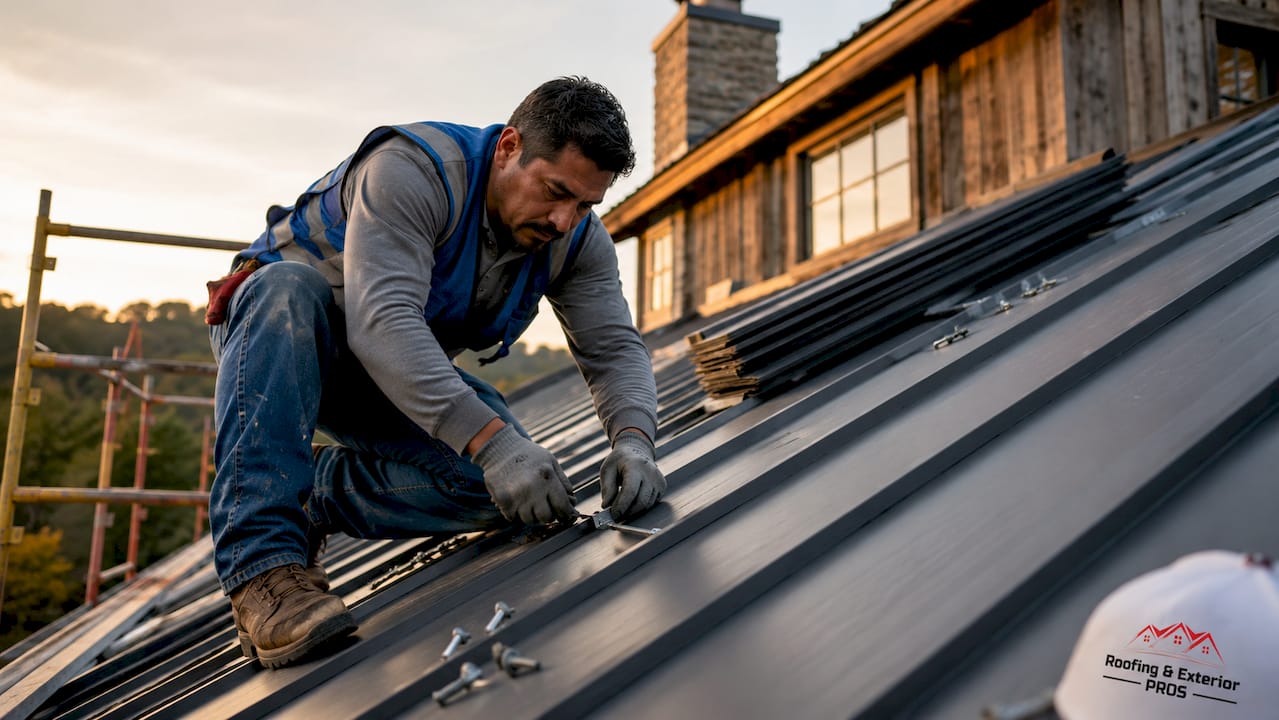
The system works because no screw or nail ever penetrates the exposed face of a panel. Instead, hidden clips attach each panel to the roof deck from below. The next panel slides over and locks onto the clip, covering it completely. This is what separates standing seam from corrugated or R-panel metal roofing, where screws drive directly through the metal face and rely on rubber washers to seal the hole. Those washers degrade in 10–15 years. Standing seam has no washers to fail.
Manufacturers like ATAS International, McElroy Metal, and Englert produce standing seam systems in steel, aluminum, and copper. Each material suits different climates and budgets. Steel is the most common choice for residential and commercial projects across the Midwest.
Key components and engineering features
The engineering behind standing seam roofing is more deliberate than it looks from the street. Every component serves a specific function.
Panel materials and gauges:
- Steel (Galvalume or Galvanized): The residential standard is 24-gauge steel. Thinner gauges like 26 or 29 increase the risk of oil canning and reduce resistance to hail and foot traffic.
- Aluminum: Lighter than steel and naturally corrosion-resistant. Common in coastal climates where salt air accelerates rust on steel.
- Copper: The premium option. Copper develops a protective patina over time and carries a lifespan well beyond 70 years. It is most often used on historic or high-end architectural projects.
Raised seam profiles:
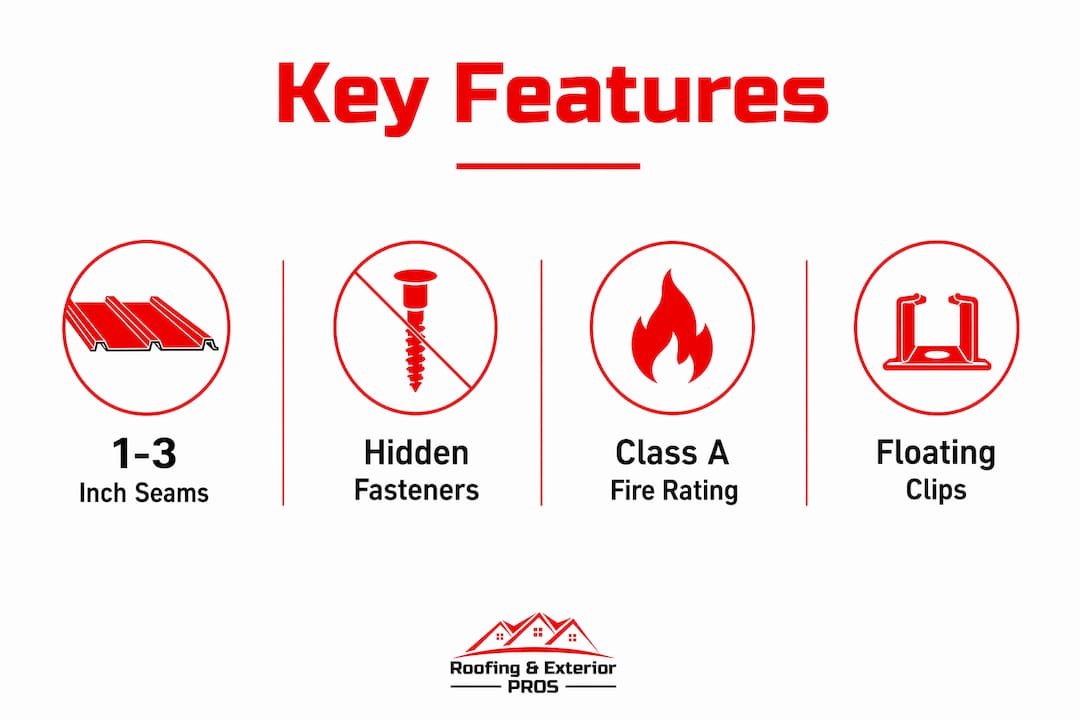
Seam heights typically range from 1 inch to 3 inches. Taller seams shed water more aggressively and perform better on lower-slope roofs. The seam profile also affects the roof’s visual weight from the ground.
Floating clip attachment:
Floating clips are the most critical engineering detail in the entire system. Metal expands and contracts with temperature changes. A fixed clip would cause the panel to buckle or pull fasteners loose over time. Floating clips hold the panel firmly while allowing it to slide slightly as temperatures shift. This prevents leaks and extends the roof’s service life significantly.
Fire and wind ratings:
Standing seam metal roofs carry a Class A fire rating, the highest classification available. They also withstand wind speeds of 110–160 mph. For homeowners in storm-prone regions like the St. Louis metro area, those ratings matter.
Pro Tip: Always ask your contractor for the specific gauge of steel being used before signing a contract. A 29-gauge panel costs less upfront but performs noticeably worse under hail impact and heavy foot traffic during installation or maintenance.
Standing seam vs. asphalt shingles and other metal roofing
The comparison that matters most for most homeowners is standing seam against asphalt shingles, since shingles dominate the residential market. The differences are significant.
| Category | Standing Seam Metal | Asphalt Shingles | Exposed-Fastener Metal |
|---|---|---|---|
| Lifespan | 40–70 years | 15–25 years | 20–30 years |
| Fastener exposure | None (concealed) | Nails under shingles | Screws through face |
| Fire rating | Class A | Class A (most) | Class A |
| Wind resistance | 110–160 mph | 60–130 mph | 90–130 mph |
| Energy efficiency | High (reflective coatings) | Moderate | Moderate |
| Upfront cost | High | Low | Moderate |
Asphalt shingles last 15–25 years on average. A standing seam roof on the same house could outlast two or three asphalt replacements. When you factor in the cost of those replacements plus labor, the lifetime cost of asphalt often exceeds standing seam.
Energy efficiency is another area where standing seam pulls ahead. Reflective metal roofing can reduce cooling costs by 10%–25% and lower attic temperatures by 20–30 degrees during summer months. For a home in Missouri, where summer heat is consistent and intense, that reduction shows up directly on your utility bill. You can read more about how this connects to your home’s thermal performance in our guide on attic insulation and energy efficiency.
Exposed-fastener metal roofing sits between the two. It costs less than standing seam but shares the fastener vulnerability of asphalt. The screws that penetrate the panel face will eventually need resealing or replacement. Standing seam avoids that maintenance cycle entirely. For a deeper look at how these materials stack up for residential use, our metal roof vs. shingles comparison covers the full picture.
Types of standing seam systems and how installation works
Not all standing seam systems are the same. The two primary types differ in how the seams are formed and what applications they suit best.
The two main panel systems:
-
Snap-lock panels: The seam snaps together by hand during installation. Snap-lock systems are faster and less expensive to install because they do not require mechanical seaming equipment. They work well on steep-slope residential roofs where water drains quickly.
-
Mechanically seamed panels: A specialized seaming machine crimps the panels together after they are placed. This creates a continuous locked joint that is stronger and more watertight than a snap-lock connection. Mechanically seamed systems are the right choice for low-slope roofs or any application where maximum weather resistance is required.
The installation sequence:
- Remove existing roofing material and inspect the roof deck for damage or rot.
- Install underlayment rated for metal roofing. Standard felt underlayment is not adequate because it can trap moisture against the metal.
- Attach floating clips to the roof deck at the correct spacing for the panel width.
- Slide the first panel into place and lock it onto the clips.
- Continue panel by panel across the roof, locking each one to the previous.
- Seal all penetrations (vents, chimneys, skylights) with compatible metal flashing.
- For mechanically seamed systems, run the seaming machine along each joint to complete the lock.
Why professional installation matters:
Oil canning, the wavy rippling effect sometimes visible on metal panels, is almost always caused by incorrect gauge selection or poor installation that fails to account for thermal expansion and contraction. An experienced installer knows how to handle panels without introducing stress and how to set clip spacing correctly for the local temperature range.
Pro Tip: Ask any contractor you interview whether they use a dedicated metal roofing underlayment like Grace Ice and Water Shield or a synthetic product rated for metal. The wrong underlayment is one of the most common causes of premature corrosion on otherwise well-installed systems.
Benefits and maintenance considerations for homeowners
The advantages of metal roofs in the standing seam category go well beyond durability. Here is what you should know before committing to the investment.
Core standing seam metal roofing benefits:
- Longevity: A properly installed standing seam roof lasts 40–70 years. Most manufacturers back their systems with 30 to 50-year warranties.
- Energy savings: Reflective coatings and the natural emissivity of metal reduce cooling loads. The 10%–25% reduction in cooling costs is consistent across climates with hot summers.
- Weather resistance: The Class A fire rating and 110–160 mph wind resistance make standing seam one of the most protective roofing systems available for residential and commercial properties.
- Low maintenance: Because there are no exposed fasteners to reseal and no shingles to replace individually, standing seam requires very little routine maintenance. Annual inspections and clearing debris from valleys is typically all that is needed.
- Design flexibility: Modern standing seam systems come in a wide range of profiles and colors, from matte charcoal to weathered copper finishes, making them compatible with traditional and contemporary architecture alike.
What to watch for:
Oil canning is the most common cosmetic concern. It does not affect performance, but it is visible on flat panel sections in certain lighting conditions. Choosing a heavier gauge, a striated or ribbed panel profile, and an experienced installer all reduce the likelihood of oil canning appearing. You can explore the full range of residential roofing materials to see how standing seam fits within your broader options.
Though upfront costs are higher than asphalt, lifecycle savings and reduced maintenance make standing seam a superior long-term investment for most homeowners. The cost of a standing seam roof typically ranges from $10 to $17 per square foot installed, depending on material, panel profile, and roof complexity.
Key takeaways
A standing seam metal roof is the most durable and weather-resistant roofing system available for residential and commercial properties, combining concealed fasteners, floating clips, and reflective metal panels to deliver a 40–70 year service life.
| Point | Details |
|---|---|
| Concealed fastener design | Hidden clips eliminate exposed screws, removing the most common source of leaks and long-term maintenance. |
| Lifespan advantage | Standing seam lasts 40–70 years, outlasting asphalt shingles by two to three full replacement cycles. |
| Energy cost reduction | Reflective coatings cut cooling costs by 10%–25% and lower attic temperatures by up to 30 degrees in summer. |
| Gauge selection matters | Use 24-gauge steel as the residential minimum to avoid oil canning and maintain hail resistance. |
| System type affects application | Snap-lock suits steep-slope roofs; mechanically seamed panels are required for low-slope or high-performance installations. |
Why i always recommend getting the gauge in writing
After working with homeowners and property developers across the St. Louis area for years, the single biggest misconception I hear is that all metal roofs are the same. They are not. The difference between a 24-gauge and a 29-gauge panel is not just a number. It is the difference between a roof that handles a Missouri hailstorm without a dent and one that shows damage after the first serious storm of the season.
The second thing I see homeowners overlook is the clip system. A contractor who uses fixed clips instead of floating clips is cutting corners in a way that will not show up for five or ten years. By then, you may have fasteners backing out and seams that no longer sit flush. That is a warranty conversation nobody wants to have.
My honest recommendation: standing seam is worth the investment for any property owner planning to stay in their home or building for more than 10 years. The upfront cost is real, but so is the math. When you avoid two asphalt replacements and reduce your cooling bill every summer, the numbers work in your favor. For commercial properties especially, the durability and low maintenance profile of standing seam makes it the most responsible long-term choice. If you are on the fence, ask your contractor to show you the lifecycle cost comparison side by side. The answer usually becomes clear quickly.
— Jake
How roofing & exterior PROS can help with your metal roof
If you are ready to explore standing seam metal roofing for your home or commercial property, Roofing & Exterior PROS is here to help. We serve homeowners and business owners across St. Louis, St. Charles, and O’Fallon, MO, with expert installation and honest guidance on every project.
Our team has hands-on experience with both snap-lock and mechanically seamed standing seam systems, and we work closely with you to select the right material, gauge, and profile for your specific roof. We offer free inspections and detailed estimates so you know exactly what you are getting before any work begins. Whether you need a full commercial roofing installation or a residential replacement, we bring the same commitment to quality and transparency to every job. Contact Roofing & Exterior PROS today to schedule your free consultation.
FAQ
What is the lifespan of a standing seam metal roof?
Standing seam metal roofs last 40–70 years, compared to 15–25 years for asphalt shingles. Most systems carry manufacturer warranties of 30–50 years.
How does standing seam roofing differ from regular metal roofing?
Standing seam systems use concealed fastener clips beneath raised seams, while standard exposed-fastener metal roofing drives screws directly through the panel face. Concealed fasteners eliminate the rubber washer degradation that causes leaks in exposed-fastener systems.
What does a standing seam metal roof cost?
Installation costs typically range from $10 to $17 per square foot depending on material, panel profile, and roof complexity. Though higher upfront than asphalt, the long-term savings from reduced maintenance and energy costs make it a strong investment.
What is oil canning on a metal roof?
Oil canning is a visible waviness or rippling on flat metal panels, caused by incorrect gauge selection or installation that does not account for thermal expansion. It is cosmetic and does not affect performance, but choosing 24-gauge steel and an experienced installer minimizes the risk.
Can a standing seam roof be installed on a low-slope roof?
Yes, but it requires a mechanically seamed panel system rather than snap-lock. Mechanically seamed panels create a continuous locked joint that provides the watertight seal needed for low-slope applications.