TL;DR:
- Proper safety equipment, clear communication, and prompt professional response are essential for tenant-safe roofing repairs. Maintaining thorough documentation and legal compliance reduces liabilities and tenant disputes during roof projects. Regular inspections and proactive maintenance extend roof lifespan and prevent costly emergencies.
Tenant safety roofing repair tips are the set of procedures, equipment standards, and communication protocols that protect residents and property managers during any roof repair or maintenance project. A single overlooked step, whether it’s a missing harness or a skipped tenant notification, can turn a routine repair into a liability claim or a serious injury. This guide covers the safety equipment you need, the communication strategies that prevent disputes, temporary repair methods that actually work, legal compliance requirements, and emergency response steps that protect everyone involved. Whether you manage a multi-family building in St. Louis or rent a commercial space, these roof repair guidelines apply directly to your situation.
1. Essential roofing safety equipment and procedures
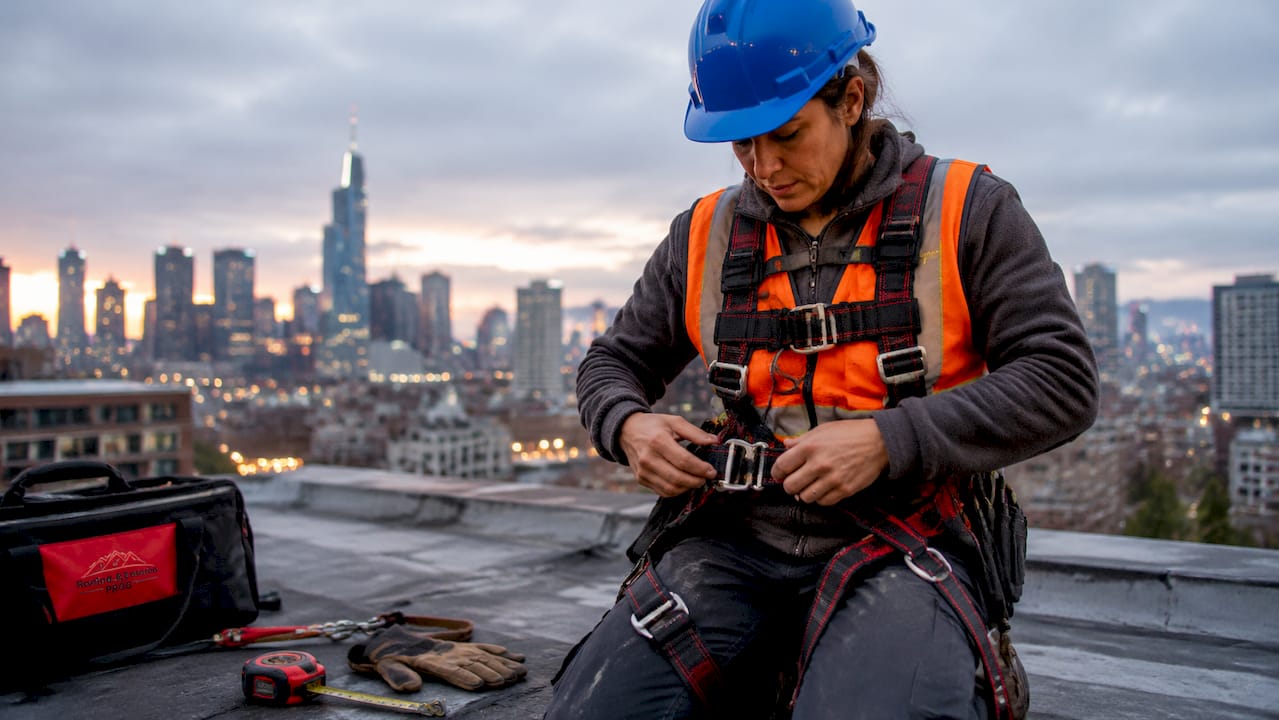
The most critical piece of roofing safety equipment is a correctly fitted ANSI Z359.11 full-body harness with a shock-absorbing lanyard. The harness must have no more than two fingers of slack at any strap point, and anchor points must support a minimum of 5,000 pounds. A six-foot shock-absorbing lanyard limits fall impact force to under 1,800 pounds, which is the threshold that prevents serious injury. Skipping this gear on any roof with a pitch above 4:12 is not a calculated risk. It is a preventable mistake.
Ladder setup is equally non-negotiable. The ladder base position should sit one foot away from the wall for every four feet of ladder height. Use ladder stabilizers to prevent sideways movement, and always have a spotter on the ground when someone is climbing. Never work on a roof alone, and never work in wet, icy, or high-wind conditions regardless of how minor the repair seems.
- Always wear ANSI Z359.11 full-body harness with shock-absorbing lanyard
- Set ladder base at a 4:1 height-to-distance ratio from the wall
- Use ladder stabilizers and non-slip footwear rated for roofing
- Assign a ground-level spotter for every roof access
- Postpone all roof work when wind exceeds 20 mph or surfaces are wet
Pro Tip: Inspect your harness before every use. Look for frayed webbing, corroded buckles, or any sign of previous impact load. A harness that has arrested a fall must be retired immediately, even if it looks undamaged.
2. How to minimize tenant disruption during roofing projects
Multi-channel communication using physical notices, emails, and texts in a 30-60-90 day cadence is proven to reduce tenant complaints and improve project outcomes. Redundant tenant communication using all three channels can reduce complaints by up to 80% during active roof projects. Physical maps slid under doors are especially effective because many tenants ignore email notifications entirely. That single detail changes how many people actually show up prepared on repair day.
Property managers should include specific impact details in every notice: which sections of the building are affected, expected noise levels, parking restrictions, and the name and phone number of an onsite contact. Daily updates during active work keep tenants informed and reduce the volume of calls your office receives. Documenting pre-existing interior damage with photos before work begins protects managers from liability claims after the project ends.
- Send initial notice 90 days before project start
- Follow up at 60 days with parking maps and impact details
- Send a final reminder 30 days out with contractor contact information
- Deliver physical notices under doors the day before work begins
- Post daily updates in common areas and via text during active repairs
“Transparency and clear timelines reduce tenant complaints even when roofing projects disrupt normal routines.” — 1StopRoofing Roofing Safety Awareness
3. Safe temporary roofing repair methods before professionals arrive
Temporary roof repairs are the stopgap measures used to limit water intrusion and structural exposure until a licensed contractor completes permanent work. The industry term for this category is “emergency tarping and interim patching.” Knowing what works and what causes more damage is the difference between containing a problem and making it worse.
Temporary roof tarps must extend at least 3 feet beyond the damaged area on all sides. Water travels sideways under improperly placed tarps, which means a tarp that only covers the visible damage will still allow water intrusion at the edges. Use sandbags or wood battens to secure the tarp, never nails or staples that can cause additional punctures.
- Extend tarps at least 3 feet past the damaged zone on every side
- Secure with sandbags or wood battens, not nails or staples
- Clear gutters and downspouts to prevent water backup during rain
- Never apply spray foam to an active leak. It traps moisture and accelerates rot
- Minor shingle replacement or flashing resealing with roofing caulk is safe only on dry, low-pitch roofs with full PPE in use
| Temporary fix | When it’s appropriate | What to avoid |
|---|---|---|
| Tarp placement | Any active leak before contractor arrives | Tarps shorter than 3 feet past damage |
| Roofing caulk on flashing | Dry conditions, low-pitch roof, full PPE | Applying over wet or deteriorated surfaces |
| Gutter clearing | Any time debris causes backup | Using pressure washers near damaged areas |
| Shingle resealing | Single slipped shingle, dry weather only | Steep-pitch roofs without harness and anchor |
Pro Tip: Keep a pre-cut 20×30 foot polyethylene tarp and a bag of sandbags in your maintenance storage. When a storm hits at 11 p.m., having materials on hand cuts your response time from hours to minutes.
4. Legal compliance and tenant rights during roof repairs
Written notice of 24 to 48 hours is required in most jurisdictions before a landlord or contractor can access a tenant’s unit for roof-related work. The notice must include the date, the approximate time of entry, and the reason for access. Door posting and personal delivery both satisfy this requirement in most states, but mailed notices require additional lead time, typically three to five business days. Skipping this step exposes property managers to habitability claims and potential lease violations.
Tenants have the right to refuse entry if proper notice was not given, but they cannot unreasonably withhold access when legitimate repairs are needed. Property managers should always use licensed, insured contractors and pull the required permits before any structural roof work begins. Lease clauses often shift routine maintenance responsibilities like gutter clearing to commercial tenants, so reviewing lease terms before assigning responsibility prevents costly disputes.
- Provide written notice 24 to 48 hours before any unit access for repairs
- Include date, time, and reason in every access notice
- Use licensed, insured contractors for all structural roof work
- Pull required permits before starting any repair that affects the roof deck or structure
- Photograph all pre-existing damage before work begins to protect both parties
- Review lease terms to clarify which maintenance tasks fall to tenants versus management
Landlords who treat roof inspections as mandatory tasks significantly reduce legal liability and operational costs. Skipping scheduled inspections frequently leads to habitability claims and repair bills that dwarf the cost of prevention. A twice-yearly roof inspection checklist is the most practical tool for staying ahead of those risks.
5. Emergency response steps for sudden roofing failures
Water intrusion through roof leaks in occupied units requires same-day or next-day professional attention to prevent mold, structural damage, and tenant disputes. Structural sag or membrane blistering signals that replacement may be needed soon and cannot wait for a scheduled appointment. The first 30 minutes after a sudden roofing failure determine how much secondary damage occurs, so having a clear response sequence matters.
Tenant safety during roof leaks depends on immediate hazard mitigation like removing slip hazards and identifying electrical risk areas. Water near light fixtures, outlets, or electrical panels requires shutting off power to the affected circuit before anyone enters the space. That step alone prevents the most serious injuries that occur during leak events.
- Move furniture and valuables away from the leak zone immediately
- Place buckets and lay down absorbent materials to contain water spread
- Identify and shut off power to any circuits near the water intrusion
- Apply a temporary tarp from the exterior if safe conditions allow
- Contact a licensed roofing contractor for same-day or next-day emergency service
- Notify all affected tenants in writing with a status update and expected repair timeline
“Shared roof safety responsibility reduces accidents. Landlords integrating inspections as mandatory tasks significantly lower liability.” — NRCA Safety in the Workplace 2026
Document everything during an emergency response. Photographs, timestamps, and written records of every action taken protect property managers from claims that damage was caused by negligence rather than the weather event itself.
Key takeaways
Effective tenant safety roofing repair requires proactive inspections, proper PPE, multi-channel communication, and immediate professional response to leaks and structural failures.
| Point | Details |
|---|---|
| Use certified safety gear | ANSI Z359.11 harnesses and shock-absorbing lanyards are required for any roof access above low pitch. |
| Communicate early and often | A 30-60-90 day notice cadence with physical maps cuts tenant complaints by up to 80%. |
| Extend tarps correctly | Temporary tarps must reach at least 3 feet past the damaged area to stop sideways water travel. |
| Give proper legal notice | Written 24 to 48 hour notice before unit access is required in most jurisdictions. |
| Respond to leaks same day | Water intrusion in occupied units needs professional attention within 24 hours to prevent mold and disputes. |
What I’ve learned from years of roofing projects in occupied buildings
The biggest mistake I see property managers make is treating roof repairs as a maintenance task instead of a tenant relations event. The roof work itself is usually straightforward. The complaints, the disputes, and the liability claims almost always come from communication failures, not from the repair itself.
I’ve also seen tenants attempt DIY fixes that cost far more to undo than the original damage. Spray foam on an active leak is the most common one. It feels like a solution in the moment, but it traps moisture inside the roof assembly and turns a $400 repair into a $4,000 decking replacement. Proactive commercial roof maintenance can extend roof life by 5 to 15 years, and that number is only achievable when repairs are done correctly the first time.
My honest recommendation: schedule two professional inspections per year, document everything before and after any repair, and never let a tenant or maintenance staff member access a pitched roof without a full harness setup. The cost of prevention is always lower than the cost of the alternative. For property managers handling flat roof maintenance on commercial buildings, that twice-yearly schedule is especially important because flat roof damage is far less visible than shingle damage and tends to go undetected until it’s serious.
— Jake
Get professional roofing support from Roofing & Exterior PROS
At Roofing & Exterior PROS, we work directly with property managers and tenants across the St. Louis metropolitan area to keep buildings safe, dry, and code-compliant year-round.

Our team handles everything from routine inspections and maintenance contracts to emergency roof repairs available 24 hours a day, seven days a week. We offer free inspections so you know exactly what you’re dealing with before committing to any repair. For property managers overseeing multi-unit or commercial buildings, our commercial roofing services are built for durability, safety, and minimal tenant disruption. Contact Roofing & Exterior PROS today to schedule your free inspection and get ahead of the next storm season.
FAQ
What PPE is required for safe roof access?
A correctly fitted ANSI Z359.11 full-body harness with a six-foot shock-absorbing lanyard is the minimum requirement for any roof access above a low pitch. Anchor points must support at least 5,000 pounds, and non-slip footwear rated for roofing is also required.
How much notice must landlords give before roof repair access?
Most jurisdictions require 24 to 48 hours of written notice before a landlord or contractor can enter a tenant’s unit for repairs. The notice must include the date, approximate time, and reason for entry.
Can tenants make temporary roof repairs themselves?
Minor tasks like resealing a slipped shingle or clearing gutters are sometimes safe if conditions are dry, the roof pitch is low, and full PPE is in use. Spray foam on active leaks and any work on steep-pitch roofs without professional equipment should be avoided entirely.
How often should a rental property roof be inspected?
Two professional inspections per year is the standard recommendation for both residential and commercial rental properties. Proactive maintenance at this frequency can extend roof life by 5 to 15 years and significantly reduce repair costs.
What should tenants do immediately when a roof leak starts?
Move furniture and valuables away from the water source, place buckets to contain spread, and identify any electrical hazards near the leak. Notify your property manager immediately, as water intrusion in occupied units requires same-day or next-day professional attention to prevent mold and structural damage.