For the best hail protection, Class 4 shingles carry the top UL 2218 impact rating among asphalt options, while Class 3 offers a middle ground with a lower material cost. Two things decide which one fits your roof: how often hail hits your area and what your insurer will discount. The IBHS testing behind those ratings gives you a fair comparison, and we help you confirm the numbers with your carrier.
TL;DR:
- Class 3 passes UL 2218 with a 1.75 inch ball; Class 4 passes with a 2.00 inch ball, but neither guarantees protection in real storms.
- Multiply the confirmed annual discount by the years you expect to own the home, then compare that total with the upgrade’s extra material cost.
- Class 3 suits occasional small hail, tighter budgets, or shorter ownership, while frequent large hail and a long stay favor Class 4.
- Shingle warranties generally cover manufacturer defects, not hail damage, and both classes often depend on proper installation and ventilation to preserve coverage.
Table of Contents
- How the UL 2218 impact rating works
- What Class 3 shingles are and where they fit
- What Class 4 shingles are and why they cost more
- Cost and insurance: running the numbers
- How to choose between Class 3 and Class 4
- How long each class lasts and what the warranty covers
- Does either class change your energy bills?
- Installation differences: roof prep and ventilation
- Environmental impact and recycling
- Maintenance and repairs for each class
- Our take: how we advise homeowners on Class 3 vs Class 4
- How we can help with your roof
- FAQ
- Sources
How the UL 2218 impact rating works
UL 2218 is a laboratory method. A steel ball is dropped onto a sample of roofing from a set height, and the shingle must show no visible cracking or tearing at the impact points to pass. The class number depends on the size of the ball the product survives. The IBHS comparison of asphalt shingles uses this same steel-ball approach to line products up against each other.
Here is what the classes mean in plain terms:
- Class 3: the shingle passes the test with a 1.75-inch steel ball.
- Class 4: the shingle passes with a 2.00-inch steel ball, the highest rating on the scale.
- A pass is a controlled result: the ball is dropped at known spots on a flat test sample, which a hailstorm never does.
- Impact-rated does not mean hail-proof: real storms bring wind, ice of different shapes and repeated strikes in the same place.
Think of the rating as a fair way to compare products, not a promise about any one storm.
What Class 3 shingles are and where they fit
Class 3 products are usually impact-resistant versions of laminated (architectural) shingles, along with some treated lighter options. Architectural shingles are thicker and longer-lived than single-layer 3-tab shingles, which is why they form the base for many impact-rated lines. A Class 3 shingle gives you a real step up from a standard product without the price of the top rating.
What you can expect from Class 3:
- Construction: a sturdier laminate or treated mat that handles small to moderate hail better than a basic shingle.
- Performance: a solid choice where hail is occasional and stones tend to stay on the smaller side.
- Cost: a lower material price than Class 4, with installation labor that runs about the same.
- Best fit: moderate hail exposure, tighter budgets or a home you may not keep for decades.
If your roof sees the odd storm rather than repeated large hail, Class 3 is a sensible, honest upgrade. We walk homeowners through that exact trade-off before they sign anything.
What Class 4 shingles are and why they cost more
Class 4 shingles are built to take a harder hit. Manufacturers get there with thicker laminates, a reinforcing scrim backing or polymer-modified asphalt, and the IBHS testing shows that pass rates vary by shingle type and by those treatments. The extra flexibility helps the mat absorb impact without cracking, which is what the 2.00-inch ball test rewards.
Here is how Class 4 stacks up in practice:
- Stronger resilience: more margin against larger stones than Class 3 in comparable tests.
- Honest limits: no asphalt shingle is hail-proof, and a severe storm can still damage any of them.
- Long-term value: the premium makes the most sense where large hail returns often.
- Ownership plans: if you plan to stay for many years, the added protection has more time to pay off.
For roofs in hail-prone areas, we usually point homeowners toward Class 4 first and then run the numbers.
Cost and insurance: running the numbers
Class 4 may cost more per square than Class 3, while labor can be similar, so the difference may come largely from materials. Your actual figure depends on the product and your roof size, so ask for line-item pricing.
The offset is insurance. Many carriers discount premiums for impact-resistant roofing, and the amounts vary widely by state, insurer and policy terms. Programs like FORTIFIED and state grants work the same way, and incentives differ by state. For more on how upgrades move your premium, read how roofing upgrades affect your insurance premiums, and see whether impact-resistant shingles are worth the cost for your home.
Use this simple break-even check:
- Get a written quote for each class and subtract to find the extra material cost.
- Ask your insurer, in writing, what annual discount each class would earn.
- Multiply the annual savings by the years you expect to own the home.
- Compare that total with the extra material cost. If savings meet or beat the cost, the upgrade pays for itself.
Pro Tip: Ask your insurer for the policy language that lists eligible materials, and ask your roofer for line-item pricing, so the discount and the product match on paper.
How to choose between Class 3 and Class 4
You do not need a long study to decide. You need a few honest answers and a few documents. Start with these questions: What hail sizes has your neighborhood seen? How old is the current roof? How long will you stay? What does the budget allow? And what do your insurer’s discount rules say?
Then work through this checklist:
- Risk level: frequent or large hail points toward Class 4, occasional small hail toward Class 3.
- Warranty and approval: confirm the manufacturer’s terms and that the product qualifies.
- Documented discount: get the insurer’s confirmation in writing before you buy.
- ROI timeline: run the break-even check above and see how many years it takes.
- Recent damage: review the top signs of roof storm damage so a hidden problem does not skew the decision.
Your next steps are simple. Book a professional inspection, collect written quotes for both classes, get the insurer’s confirmation, and make sure the installer follows manufacturer instructions so your warranty stays valid. For Missouri homes in particular, our impact-resistant shingle review is a useful local read.
Pro Tip: If you are replacing after storm damage, talk to your contractor and insurer early about upgrade options so the claim and any upgrade credits are documented from the start.
How long each class lasts and what the warranty covers
Class matters less to lifespan than people expect. Age is the bigger factor: IBHS research shows that asphalt shingles become more vulnerable to wind and small-hail damage as they age, which is why choosing impact-resistant material at replacement is a proactive move. A Class 4 shingle that is installed well and ventilated properly tends to hold up better against repeated impacts, but it still ages in the sun like any other asphalt product.
Warranties deserve a careful read. As the Triple-I roofing toolkit explains, shingle warranties often cover manufacturer defects and are not a guaranteed indicator of full lifespan or of performance in severe weather. That is true for both classes. A longer warranty term on a Class 4 line does not mean hail damage is covered; it means the product itself is covered against defects under stated conditions.
Here is how we suggest you compare:
- Read what is covered: defects, wind ratings and hail are usually separate topics.
- Check the conditions: warranties often depend on correct installation and ventilation.
- Look at the shingle type: laminated products generally outlast 3-tab shingles.
- Plan for aging: see our guide to asphalt shingle lifespan factors for what shortens or extends a roof’s life.
We read the warranty paperwork with you, so you know exactly what you are buying.
Does either class change your energy bills?
Impact class and energy performance are two separate things. The UL 2218 rating tells you how a shingle handles a steel ball, not how it handles heat. Whether a roof keeps your attic cooler depends mostly on the color of the granules, any reflective coating and how well the attic is ventilated.
That means a Class 3 and a Class 4 shingle in the same color and from the same product family should behave much alike for heating and cooling. If one line offers a reflective option and the other does not, that option will matter more than the impact class. Because most of the savings come from the attic, ask about the product’s reflectivity if cooling costs are a concern, and do not assume a higher impact rating lowers your bill.
What actually moves your energy use:
- Shingle color: lighter granules reflect more heat than dark ones.
- Reflective options: some product lines offer them, whatever the impact class.
- Attic ventilation: moving hot air out protects the shingles and your cooling load.
- Insulation: this does more for comfort than the roof surface itself.
We do not claim a specific savings number for either class, because the product details decide it. If you want a broader comparison, our residential roofing materials review covers how different materials behave.
Installation differences: roof prep and ventilation
Both classes install much like any asphalt shingle, and labor costs run about the same. The real difference is in the details you cannot see from the street. A strong shingle on a weak deck is a poor result, so preparation matters for either choice.
Before shingles go on, we check the roof deck for soft or damaged spots, confirm the underlayment is right for the product and make sure flashing is handled properly. Ventilation deserves its own look. A hot, poorly vented attic shortens the life of any shingle and can put a warranty at risk, so intake and exhaust need to balance before the new roof goes down.
Here is what to expect:
- Deck inspection: damaged or uneven decking is repaired first.
- Fastening: nailing must follow the manufacturer’s pattern, since a stiffer Class 4 product still needs correct placement.
- Ventilation check: balanced intake and exhaust keep temperatures down.
- Manufacturer rules: following installation instructions keeps warranties valid.
Because some Class 4 products are stiffer, handling in cold weather can take extra care, and an experienced crew knows how to work around it. For the full sequence, read our residential roof installation process and our roof replacement guide for homeowners.
Environmental impact and recycling
Both classes are asphalt shingles, so their environmental profile is similar. They are petroleum-based, they are heavy to haul and, at the end of life, most tear-off ends up in a landfill unless a local recycling program takes it. Impact class does not change that on its own.
There is one angle where the choice can help. A roof that resists damage may need fewer repairs and fewer early replacements, which means less material leaving your home over the years. Choosing impact-resistant material at replacement is also a way to reduce vulnerability as the roof ages, as the IBHS findings on aging shingles suggest. Fewer storm-driven replacements is the practical environmental benefit.
Recyclability depends on where you live and which facilities are nearby, not on the class. Some regions grind old shingles for use in paving, while others have no such program. We cannot promise a specific outlet for every job, so ask about local options when you request a quote.
Questions worth raising with your roofer:
- Tear-off disposal: where does the old roofing go?
- Local recycling: is a shingle recycling program available nearby?
- Product choice: does the manufacturer publish any recycled content or take-back details?
We are happy to talk through disposal choices, since they vary by job and by area.
Maintenance and repairs for each class
Neither class asks much of you. A yearly look from the ground, a check after every major storm and clean gutters will catch most problems early. Granule loss, lifted tabs, cracks and exposed nails are the signs to watch for, and after hail you should have the roof inspected even if nothing looks wrong from below.
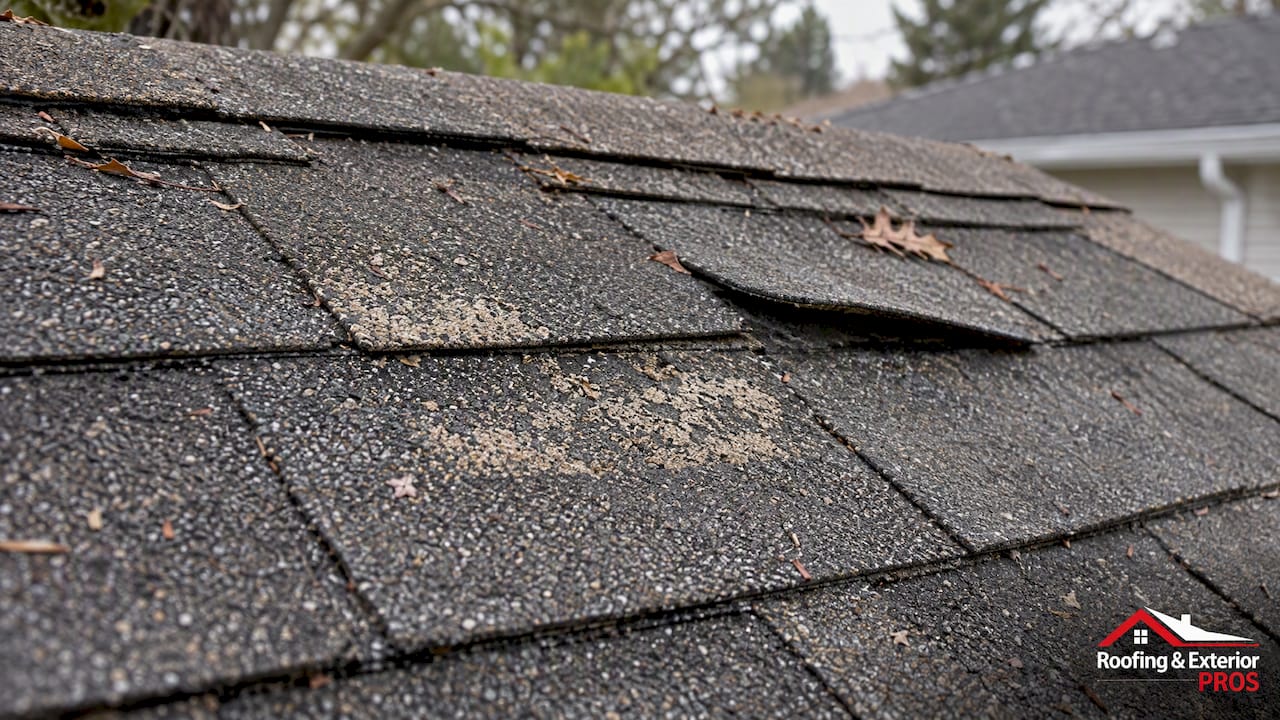
Repairs are where the classes differ a little. Individual shingles on either roof can be replaced, but matching the exact product matters. A Class 4 repair should use a Class 4 shingle from the same line so the impact performance stays consistent across the roof. Older shingles also lose flexibility with age, so a repair on a weathered roof takes a careful hand to avoid damaging neighbors.
A simple routine looks like this:
- After storms: check for cracked, bruised or missing shingles and inspect soon after hail.
- Twice a year: clear gutters and look at flashing and vents.
- Keep records: photos and dates help if you ever file a claim.
- Pair with drainage: healthy gutters protect the roof edge, so see our gutter and gutter guard services.
When you spot damage, call early. Small repairs cost far less than a leak that has had time to soak the deck.
Our take: how we advise homeowners on Class 3 vs Class 4
We start with the roof and the facts, not the sale. Our team inspects the roof and talks through your hail history. We document what we find to support an insurance claim. Most homeowners in hail-prone areas lean toward Class 4 once they see the numbers, and we recommend it when your risk and plans support it.
— Jake Ehlinger
How we can help with your roof
If you are ready to compare real quotes, our team is here to help. Here is what we can do for you:
- Residential roofing: full shingle replacement and installation.
- Shingle roofing: options explained and priced.
- Storm damage restoration: inspection and repair after hail.
- Insurance claim help: documentation to support your claim.
Request a free inspection and have your policy details and any past claim photos ready. We will go over your options in plain terms. Start with our residential roofing services or read our roof replacement guide, then contact us to book your visit.
FAQ
How do I tell if I have 3 tab or architectural shingles?
Look at the shingle edge. 3-tab shingles are flat with uniform cutouts that repeat in a clean pattern, while architectural shingles are thicker with a layered, dimensional look. Architectural shingles are the thicker, more durable laminate type.
What class shingle is GAF Timberline HDZ?
The Timberline HDZ line is a standard architectural shingle, and the class depends on the specific product. Check the manufacturer’s product data sheet or ask your roofer, since impact-rated lines are sold separately.
What size hail can Class 4 shingles withstand?
Class 4 means a shingle passed the UL 2218 test with a 2.00-inch steel ball. That is a lab result under controlled conditions, so IBHS testing treats it as a fair comparison, not a guarantee against every storm.
How many years do 3 tab shingles last?
Lifespan varies with climate, ventilation and installation quality. Single-layer 3-tab shingles generally do not last as long as thicker architectural products, and our guide to asphalt shingle lifespan factors explains what affects it.