TL;DR:
- EPDM is a durable synthetic rubber membrane primarily used for flat and low-slope roofs, offering a lifespan of 25 to over 50 years with proper maintenance. Its performance depends on quality installation, seam sealing, and routine inspections, especially at vulnerable areas like seams and penetrations. Compared to TPO, EPDM is cost-effective, performs well in cold climates, but absorbs heat, necessitating reflective options for energy savings.
If you’ve been researching flat or low-slope roofing options, you’ve likely come across the term EPDM membrane roofing without a clear explanation of what it actually means. EPDM stands for ethylene propylene diene monomer, a synthetic rubber material that has been used in commercial and residential roofing for decades. It’s not just “rubber roofing,” a label that gets applied loosely to several different products. EPDM is a specific, well-tested material with a track record that few roofing membranes can match. This guide breaks down what it is, how it works, what it costs, and whether it’s right for your property.
Table of Contents
- Key Takeaways
- What EPDM membrane roofing is and how it works
- EPDM roofing benefits and drawbacks
- How EPDM roofing installation works
- EPDM vs TPO roofing: how they compare
- Maintaining and repairing your EPDM roof
- My perspective on EPDM after years of roofing projects
- Work with a team that knows EPDM inside and out
- FAQ
Key Takeaways
| Point | Details |
|---|---|
| EPDM is a synthetic rubber membrane | Made from ethylene propylene diene monomer, it’s designed for flat and low-slope roofs. |
| Lifespan reaches 25 to 50+ years | With proper maintenance, EPDM roofs commonly last 25 to 35 years and can exceed 50 years. |
| Seams are the main vulnerability | Most EPDM failures occur at seams, penetrations, and terminations, not across the membrane itself. |
| Black EPDM absorbs significant heat | White reflective versions are available to reduce cooling costs in warmer climates. |
| Installation quality determines performance | Surface prep, primer curing, and detail work at transitions matter more than the membrane brand. |
What EPDM membrane roofing is and how it works
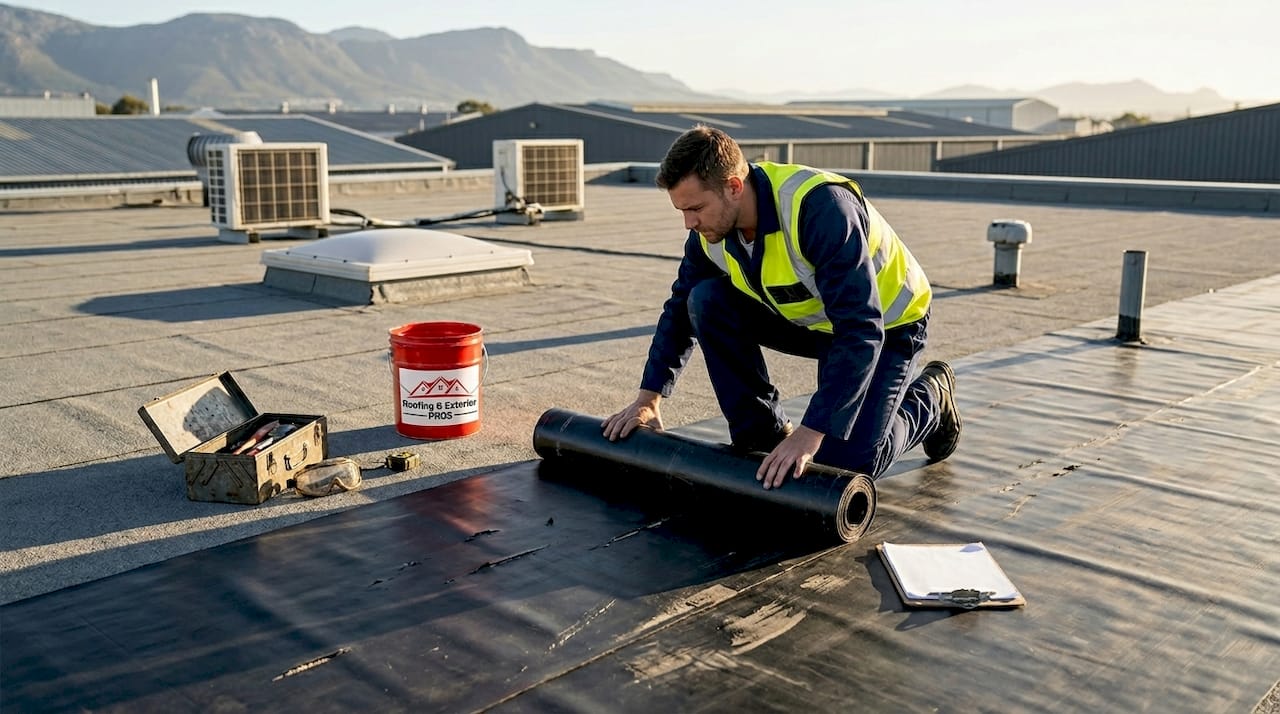
EPDM roofing is a type of single-ply membrane roofing system. The membrane is manufactured from synthetic rubber compounds and comes in large rolls or sheets that are laid across the roof deck in as few seams as possible. The fewer the seams, the fewer the potential leak points.
EPDM membrane types are categorized primarily by thickness:
- 45-mil sheets are the thinnest option, used where budget is the primary concern and roof traffic is minimal.
- 60-mil sheets represent the standard for most residential and light commercial applications.
- 90-mil sheets offer the most durability and puncture resistance, often specified for roofs with mechanical equipment or frequent foot traffic.
The material itself is elastomeric, meaning it stretches and returns to its original shape. This quality makes EPDM particularly well suited to temperature swings and structural movement that would crack a rigid material. It bonds to the substrate using bonding adhesive, mechanical fasteners, or ballast (gravel or pavers). Seams between sheets are created using lap adhesives, seam tape, or cover strips rather than heat welding.
Understanding what a roofing membrane is in the first place helps here. A membrane is simply the waterproofing layer applied directly to the roof deck. On a flat or low-slope roof, water doesn’t run off quickly the way it does on a steep pitch, so the entire surface needs to be waterproof rather than just water-shedding.
Pro Tip: Ask your contractor which bonding method they use before signing a contract. Fully adhered systems offer the best wind uplift resistance. Ballasted systems are cheaper upfront but add dead load to the structure.
EPDM roofing benefits and drawbacks
EPDM’s staying power in the roofing market comes down to one factor above most others: longevity. Properly maintained EPDM systems commonly last 25 to 35 years, with some documented cases exceeding 40 years under favorable conditions. When you factor in EPDM roofing cost against that lifespan, the value proposition is strong.
Where EPDM excels
- Freeze-thaw performance. EPDM remains flexible in cold temperatures, which is a significant advantage in climates like St. Louis where temperature swings between seasons are dramatic. Materials that become brittle in winter crack, blister, or delaminate. EPDM does not.
- UV resistance. The material resists ultraviolet degradation well without requiring reflective coatings, though coatings are available.
- Repair simplicity. EPDM patch repairs can be made with adhesive patches or peel-and-stick kits, which reduces maintenance costs over the roof’s life. You don’t need specialized equipment.
- Cost-effectiveness. EPDM is generally less expensive per square foot than TPO, modified bitumen, or built-up roofing systems, both in materials and labor.
Where EPDM falls short
Black EPDM absorbs heat significantly, with surface temperatures running 50 to 70°F higher than white reflective membranes under the same conditions. That translates directly into higher air conditioning costs during summer months. White reflective EPDM addresses this, though it tends to cost slightly more.
EPDM seams use adhesive bonds rather than heat welds, which means they can degrade over time and require re-sealing or patching. This is less of a concern when installation is done correctly, but it becomes a significant issue when a contractor skips surface prep or rushes primer curing.
EPDM is also chemically incompatible with oils and solvents. If your roof sits near HVAC exhaust or cooking vents that discharge grease, you’ll need compatible coatings or protection pads over those areas.
Pro Tip: If you’re in a region with hot summers and need to control cooling costs, ask specifically about white reflective EPDM. The upfront cost difference is modest compared to years of energy savings.
How EPDM roofing installation works
The installation of EPDM roofing follows a process that looks straightforward on paper but has several stages where quality can diverge. The difference between a roof that lasts 15 years and one that lasts 35 years often comes down to how well each of these steps was executed.
-
Surface preparation. The existing deck or substrate must be clean, dry, and free of debris, oil, or loose material. Any damaged decking should be replaced before membrane application. A contaminated surface will compromise adhesion regardless of what product is used.
-
Primer application. Primer is applied to the substrate and allowed to cure before the membrane is bonded. Adhesion strength after primer application can take up to one week to reach full strength depending on temperature and humidity. Rushing this step is one of the most common installation mistakes we see.
-
Sheet placement. The EPDM sheet is unrolled and positioned across the roof surface, allowing it to relax before bonding. Folding the sheet back on itself and applying bonding adhesive to both surfaces is standard for fully adhered systems.
-
Rolling and bonding. After the adhesive reaches proper tack, the membrane is pressed firmly to the substrate using a heavy roller to eliminate air pockets and ensure full contact.
-
Seam sealing. Overlapping edges are cleaned, primed, and bonded with seam tape or lap adhesive. This step requires careful attention to temperature. Cold weather slows adhesive curing, while extreme heat can cause the adhesive to skin over before proper contact.
-
Detail work. This is where most installations either succeed or fail. Most EPDM leak problems occur at terminations, penetrations, and lap splices rather than across the field of the membrane. Flashings around pipes, skylights, curbs, drains, and roof edges must be carefully formed and sealed with appropriate materials.
-
Final inspection. Every seam and termination should be probed and checked before the crew leaves the job site.
Pro Tip: Never schedule EPDM installation when rain is expected within 24 hours or when temperatures will drop below 40°F overnight. Primer and adhesive curing times extend in cold weather, and a poor bond at installation will show up as a leak within a few years.
EPDM vs TPO roofing: how they compare
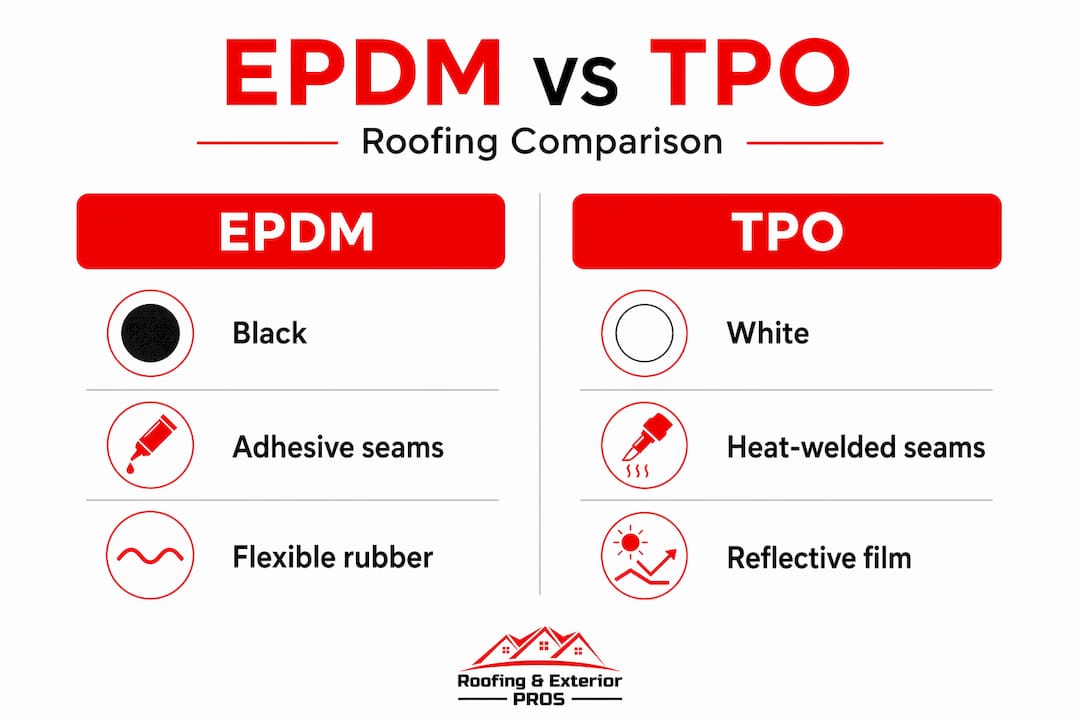
When property owners research flat roofing membranes, EPDM vs TPO roofing becomes the central question. Both are single-ply membranes, but they differ in meaningful ways. Here’s a direct comparison:
| Factor | EPDM | TPO |
|---|---|---|
| Color | Black (white available) | White or gray standard |
| Seam type | Adhesive or tape | Heat welded |
| Energy efficiency | Lower (black standard) | Higher (white reflects heat) |
| Repair complexity | Simple patch or tape | Requires heat gun for welding |
| Cold climate performance | Excellent | Good |
| Typical lifespan | 25 to 35+ years | 20 to 30 years |
| Material cost | Lower | Moderate to higher |
The seam difference matters more than most buyers realize. TPO seams are heat welded, creating a bond that is essentially as strong as the membrane itself. EPDM seams rely on adhesive, which can weaken over time. A well-installed EPDM roof with good seam work will outlast a poorly installed TPO roof, but when installation quality is equal, TPO seams have a structural advantage.
EPDM is generally a better choice for:
- Northern climates with cold winters and frequent freeze-thaw cycles
- Properties where repair simplicity is valued
- Budget-conscious projects that still need long-term durability
- Buildings that already have ballasted or mechanically fastened systems
For energy-efficient commercial buildings in warmer climates, or facilities where cooling costs are high, TPO’s reflective surface often wins. You can review a broader breakdown of flat roof material options to see where both membranes fit in the full picture.
Maintaining and repairing your EPDM roof
How long does EPDM last? The honest answer is that maintenance determines the outcome more than the membrane itself. Correct design and ongoing maintenance are the deciding factors in EPDM roof performance. Some EPDM roofs have exceeded 50 years with consistent care. Others fail at 12 years because they were never inspected after installation.
A basic maintenance routine includes:
- Twice-yearly inspections. Spring and fall are ideal. Look for bubbling, shrinkage, loose flashings, and standing water patterns.
- Seam and termination checks. EPDM’s strongest vulnerabilities sit at seams and transitions, so these areas deserve close attention every inspection cycle.
- Drain and scupper cleaning. Blocked drains cause ponding, which accelerates seam and adhesive degradation.
- Surface cleaning. Remove leaves, debris, and biological growth (moss, algae) that retain moisture.
- Prompt minor repairs. Small punctures or lifted seam edges are easy to fix with peel-and-stick patches. Left alone, they become large water intrusion problems.
When a repair goes beyond a small patch, or when you notice widespread seam separation or membrane shrinkage across a large area, it’s time to call a professional. A commercial roof maintenance checklist can help you stay organized between professional visits.
Pro Tip: After any major storm, do a quick visual scan from the roof edge or use binoculars from the ground. EPDM punctures from hail or fallen branches are small and easy to miss until water damage shows up inside the building.
My perspective on EPDM after years of roofing projects
I’ve worked with EPDM roofs on everything from single-story residential additions to large commercial buildings, and my view on this material has gotten more specific over the years, not less.
The most common thing I see is homeowners dismissing EPDM because it looks plain or because they’ve heard “rubber roofs don’t last.” That reputation usually traces back to one of two things: an old ballasted system installed before adhesive technology improved, or a contractor who cut corners on seam work. Neither of those is a material problem. Both are execution problems.
What I’ve also noticed is that property owners who inspect their EPDM roof twice a year and fix small issues promptly almost never face a full replacement before the 30-year mark. The ones who ignore it for five years straight are usually calling us for a full tear-off and replacement by year 18.
If you’re choosing an installer, ask specifically how they handle the flashings at roof penetrations and edge terminations. Any contractor who gives you a vague answer or skips that conversation is telling you something important. The field of an EPDM roof is almost never where problems start.
EPDM remains one of the most honest materials in roofing. It doesn’t promise what it can’t deliver. You get long life, easy repairs, and strong cold-weather performance if you treat it right.
— Jake
Work with a team that knows EPDM inside and out
If you’re weighing EPDM for a new installation or trying to decide whether your existing flat roof needs repair or replacement, Roofing & Exterior PROS is here to help. We work with homeowners and commercial property owners across the St. Louis metro area, and we bring the same care to a residential garage roof as we do to a large commercial building.

We walk you through every step, from the initial inspection to material selection and final installation. Our team handles EPDM installation, seam repairs, flashing replacement, and full roof replacements. If you’re ready to move forward, start with our roof installation overview to understand the full process. You can also explore our guidance on preparing for a roof replacement if you’re still in the planning stage. Call us today for a free inspection and honest assessment.
FAQ
What does EPDM stand for in roofing?
EPDM stands for ethylene propylene diene monomer, a synthetic rubber compound used to manufacture flat and low-slope roofing membranes.
How long does an EPDM roof typically last?
With proper installation and maintenance, EPDM roofs commonly last 25 to 35 years, and some well-maintained systems have exceeded 50 years according to long-term roof observations.
Is EPDM roofing good for cold climates?
Yes. EPDM stays flexible in low temperatures and handles freeze-thaw cycles better than many competing membranes, making it a strong choice for northern states and regions with cold winters.
What is the difference between EPDM and TPO roofing?
EPDM uses adhesive-bonded seams and is typically black, while TPO features heat-welded seams and a white reflective surface. TPO offers better energy efficiency in hot climates, while EPDM generally performs better in cold climates and costs less upfront.
Where do most EPDM roof leaks come from?
Most EPDM leaks originate at seams, penetrations, edge terminations, and drain flashings rather than the flat membrane surface, which is why detail work during installation and regular seam inspections matter so much.