
TL;DR:
- A roofing subcontractor is a licensed specialist hired by a general contractor to perform specific roofing tasks under a formal agreement. They hold a secondary contract with the GC, not the property owner, affecting liability, permits, and insurance requirements. Proper vetting, clear contracts, and verification of licenses and insurance are essential for a successful roofing project.
If you have ever hired someone for a roofing project and wondered who exactly was showing up on your roof, you are not alone. Many homeowners and business owners confuse a roofing subcontractor with a general contractor or assume they are simply extra workers. Understanding what is a roofing subcontractor, how they fit into a project’s structure, and what responsibilities they carry can save you from costly surprises. This article breaks down the roofing subcontractor definition, their legal obligations, contractual relationships, and how to hire one with confidence.
Table of Contents
- Key Takeaways
- What is a roofing subcontractor and how they fit in
- Licensing, permits, and compliance
- Contracts and risk management
- Benefits and challenges of using roofing subcontractors
- How to find, vet, and hire a roofing subcontractor
- My honest take on working with roofing subcontractors
- Work with a team that manages it all for you
- FAQ
Key Takeaways
| Point | Details |
|---|---|
| Clear role distinction | A roofing subcontractor holds a contract with the GC, not the property owner, and performs a defined scope of work. |
| Licensing is separate | Roofing subcontractors often need their own license even when working under a licensed general contractor. |
| Permits carry responsibility | Whoever pulls the permit becomes the contractor of record and is accountable for inspections and code compliance. |
| Contracts protect all parties | A written subcontract with flow-down provisions aligns responsibilities and limits unexpected liability exposure. |
| Vetting prevents callbacks | Verifying insurance, licenses, and past performance before hiring protects your project and your reputation. |
What is a roofing subcontractor and how they fit in
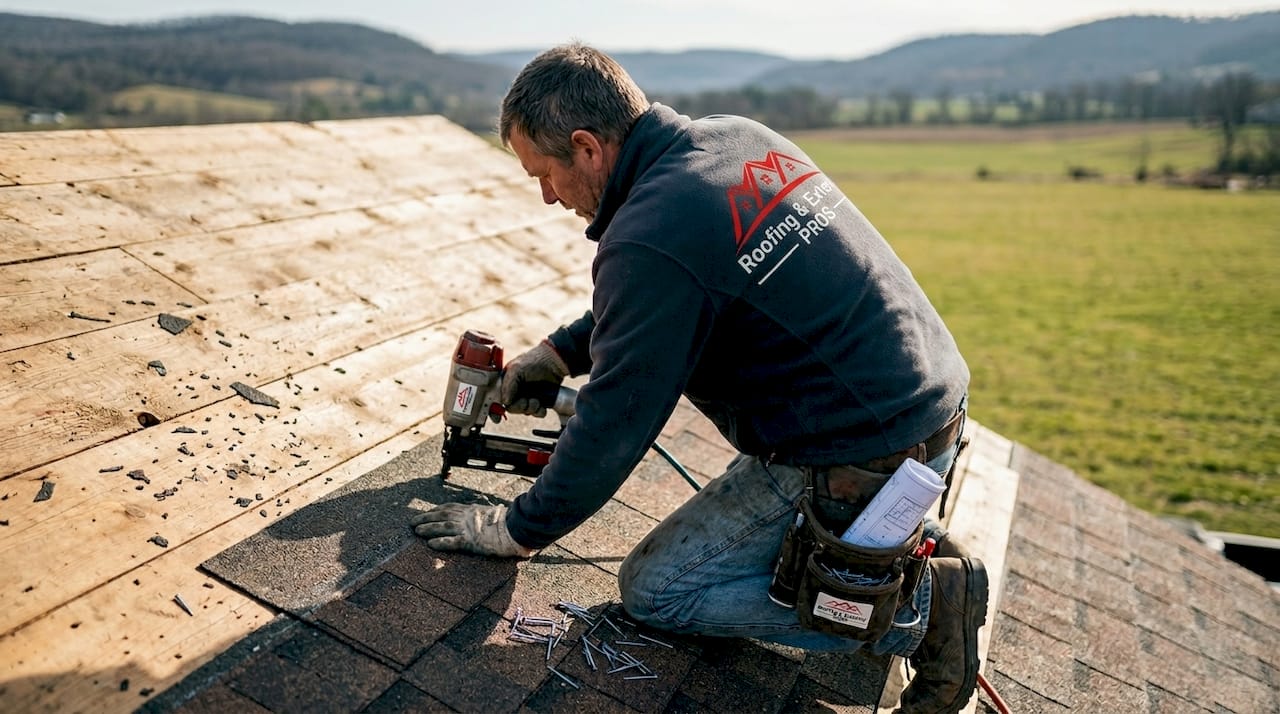
A roofing subcontractor is a licensed specialty trade contractor engaged by a general contractor or property owner to perform a specific, defined scope of roofing work under a formal subcontract agreement. They are not just extra bodies on a job site. They are credentialed professionals with a contractual role that is separate from both the general contractor and the property owner.
Here is the distinction that trips most people up. The general contractor, often called a GC or prime contractor, holds the primary contract with the property owner and is responsible for overall project coordination. The roofing subcontractor holds a secondary contract directly with the GC, not with you as the property owner. That single fact has significant consequences for liability, insurance, and communication.
In practice, you will encounter roofing subcontractors across a wide range of project types. On a large commercial build, a GC might hire a roofing subcontractor to handle the entire roof system while managing other trades like electrical and plumbing separately. On a residential project, a restoration company might bring in a roofing subcontractor with experience in a specific material, such as slate or metal, because that skill set is not in-house.
Common examples of roofing subcontractor roles include:
- Installing shingle, metal, flat, or specialty roofing systems on behalf of a GC
- Performing storm damage repairs as part of a larger insurance-driven restoration project
- Handling specific phases like underlayment, flashing, or ventilation during a full roof replacement
- Providing labor-only services when a GC supplies materials directly
Pro Tip: If you are a property owner, always ask the GC for the name and license number of any roofing subcontractor who will be on your property. You have every right to verify their credentials independently.
Licensing, permits, and compliance
One of the biggest misconceptions in residential and commercial roofing is that the GC’s license automatically covers everyone working under them. It does not. 37 states require roofing-specific contractor licenses for roofing subcontractors, and those requirements vary by jurisdiction. A subcontractor working in Missouri may need a different classification than one operating in Illinois, even for the same type of work.
Permit responsibility is another area where confusion creates real problems. Subcontractors may be required to pull their own permits and serve as the contractor of record for their scope, meaning they bear direct responsibility for inspections and code compliance on that portion of the project. Whether the GC or subcontractor pulls the permit is often determined by local authority having jurisdiction, commonly known as the AHJ, and by what the contract specifies.
“The GC/subcontractor distinction is more than administrative. It defines liability, permit pulling, and compliance responsibilities that affect every party in the project.”
There are also specialty compliance issues that go beyond standard licensing. For example, roofing subcontractors performing torch-down roofing require additional insurance documentation and hot work safety protocols, which go well beyond installation skills. Understanding these obligations in advance prevents delays and legal exposure.
Key compliance areas to verify before work begins:
- State roofing contractor license status and current standing
- Whether the subcontractor or GC is pulling the permit for the roofing scope
- Compliance with local building codes and manufacturer installation specifications
- Additional safety documentation for specialty methods like hot work or torch-applied systems
Contracts and risk management
A subcontractor relationship without a written agreement is a liability waiting to happen. Subcontractor agreements typically specify scope of work, schedule, payment terms, insurance requirements, safety protocols, and indemnification provisions. Each of these components protects both the GC and the subcontractor from misunderstandings that can escalate into disputes.
One concept that deserves particular attention is “flow-down.” Flow-down means the subcontract agreement incorporates the obligations from the prime contract, so the subcontractor is bound by the same rules, timelines, and quality standards the GC agreed to with the property owner. Flow-down of prime contract obligations ensures subcontractors are aligned with all project requirements and minimizes conflict when questions arise mid-project.
Liability is distributed carefully in construction law. Liability in construction disputes often rests with the GC first, with recourse to subcontractors via indemnification clauses in the subcontract. This means the GC maintains primary responsibility to the property owner even for work the subcontractor performed. That is why GCs must vet subcontractors carefully and ensure their contracts include proper indemnification language.
Insurance requirements to verify
| Coverage Type | Who Carries It | Why It Matters |
|---|---|---|
| General liability | Roofing subcontractor | Covers property damage and bodily injury during work |
| Workers’ compensation | Roofing subcontractor | Protects against injury claims from subcontractor crew |
| Additional insured endorsement | Subcontractor adds GC | Extends coverage to GC for subcontractor-caused claims |
| Certificate of insurance | Subcontractor provides to GC | Proof of active, current coverage before work starts |
Insurance fraud is a serious, documented risk in this space. A subcontractor charged with workers’ compensation fraud in May 2026 amassed $172,099.77 in unpaid premiums on a public housing project. That case illustrates exactly why certificate validation and additional insured requirements are not bureaucratic box-checking. They are genuine protection.
Pro Tip: Always request a certificate of insurance directly from the subcontractor’s insurance carrier, not just a copy the subcontractor hands you. Fraudulent certificates are more common than most people realize.
Benefits and challenges of using roofing subcontractors
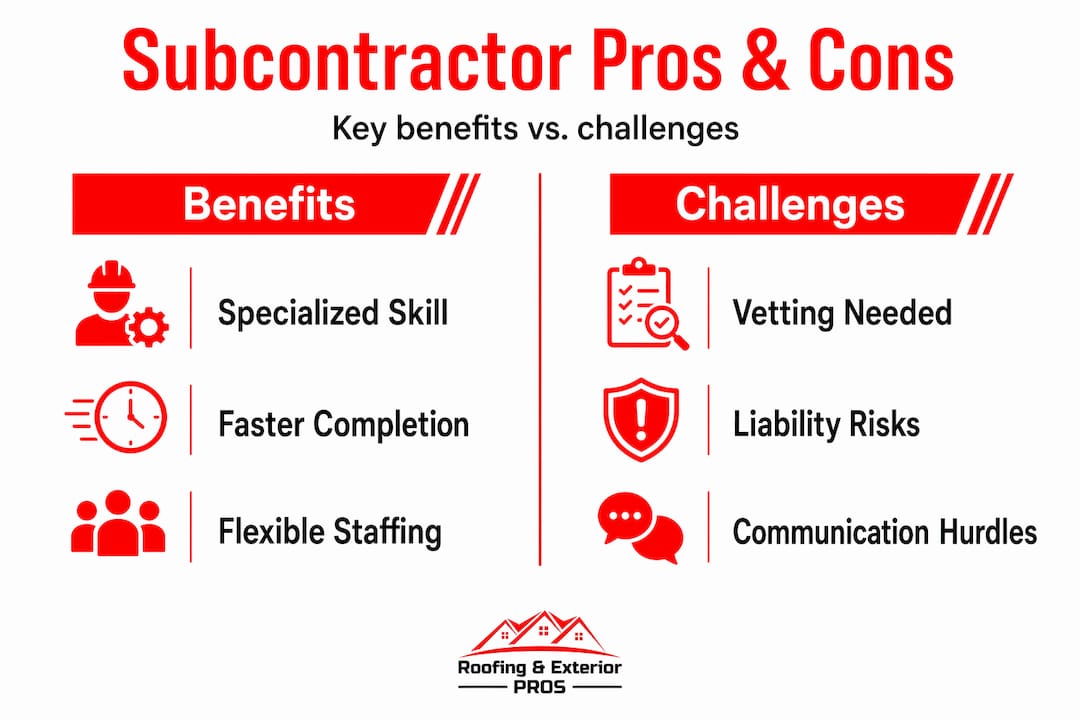
Understanding the benefits of roofing subcontractors helps you see why GCs rely on them and why property owners sometimes choose to hire them directly. Roofing subcontractors provide specialized expertise and additional labor capacity, and they often focus on specific roofing systems or technical niches that a generalist contractor cannot match. This is a genuine advantage on complex projects where precision matters.
The practical benefits break down like this:
- Specialized skill: A subcontractor who installs metal roofing day in and day out will outperform a generalist on that material every time.
- Scalable capacity: GCs can bring in subcontractors during peak seasons or after storm events without carrying full-time payroll year-round.
- Deadline flexibility: Subcontractors allow GCs to run multiple projects simultaneously without pulling crew from one job to cover another.
- Cost efficiency: When scoped and contracted correctly, subcontractors can reduce overhead by concentrating labor only where and when it is needed.
The challenges are equally real, though. Proper vetting and clear onboarding prevent rework and reputation damage, but many GCs skip this step when workloads spike. Quality control is harder to maintain across multiple crews, and compliance management becomes more complex the more subcontractors are involved. The most common mistake is treating a roofing subcontractor like a vendor rather than a contractual partner with their own legal standing.
One misconception worth addressing directly: many people assume using a subcontractor is always cheaper. That is not consistently true. A well-vetted subcontractor with proper licensing and insurance costs more upfront than an unlicensed crew, but they also reduce the risk of callbacks, failed inspections, and legal claims that far exceed any short-term savings.
How to find, vet, and hire a roofing subcontractor
Finding the best roofing subcontractors starts with knowing where to look. Here is a practical process you can follow whether you are a property owner hiring directly or a GC building your preferred subcontractor network:
- Start with referrals. Ask other GCs, suppliers, or roofing material distributors in your area. Suppliers know which subcontractors order consistently and show up for warranty work, which is a strong signal of reliability.
- Verify the license. Check your state contractor licensing board directly. Do not rely on the subcontractor’s word or a photocopy. Most state boards have online lookup tools, and industry-specific recruiting insights confirm that license verification is a baseline, non-negotiable step.
- Confirm active insurance. Request a certificate of insurance showing current general liability and workers’ compensation coverage. Call the insurance carrier to confirm it is valid and not recently canceled.
- Review their past work. Ask for references from GCs or property owners on projects similar in scope and material to yours. Follow up and actually call those references.
- Check for complaints. Search the Better Business Bureau, your state licensing board, and local court records for past complaints, judgments, or license suspensions.
- Put it in writing. A signed subcontract covering scope, schedule, payment terms, insurance, and indemnification is non-negotiable before work begins.
Red flags to watch for include contractors who pressure you to skip permits, who cannot provide a certificate of insurance on request, or who ask for large cash payments upfront with no written agreement. For homeowners starting to prepare for roof replacement, understanding who is actually performing the work is one of the most valuable steps you can take before anyone climbs on your roof.
My honest take on working with roofing subcontractors
I have seen the full spectrum of subcontractor relationships in this industry, and the pattern is consistent. When projects go sideways, it is almost never because the roofer lacked skill. It is because operational failures from inadequate onboarding and unclear quality standards were never addressed before work began.
The property owners who avoid the worst outcomes are the ones who understand that subcontractors exist in a separate legal tier. They are not your crew. They are not automatically covered by your GC’s license. Understanding tiers and permit holders helps avoid surprises in liability and inspection responsibilities, and I have watched that knowledge save clients from expensive disputes more than once.
My honest advice is this: do not assume. Ask who is pulling the permit, who carries what insurance, and who is responsible for the inspection. Those three questions reveal more about how a project is structured than any sales pitch will.
— Jake
Work with a team that manages it all for you
When you hire Roofing & Exterior PROS, you get a company that handles every layer of the project with transparency and accountability. We are a local, family-owned roofing contractor serving the St. Louis metropolitan area, and we work closely with skilled, vetted crews to deliver consistent results on every job.

Whether you need a full residential or commercial roof installation, storm damage repair, or a complete exterior upgrade, our team coordinates licensing, permits, and quality control from start to finish. You will always know who is on your property and why. We also handle insurance claims directly, so you are never left guessing about coverage or compliance. Contact Roofing & Exterior PROS today for a free inspection and quote. We make the process straightforward, from first call to final inspection.
FAQ
What is a roofing subcontractor vs. a general contractor?
A roofing subcontractor is a specialty trade contractor hired by a general contractor to perform a defined scope of roofing work under a subcontract agreement, while the general contractor holds the primary contract with the property owner and manages overall project coordination.
Do roofing subcontractors need their own license?
Yes. 37 states require roofing-specific licenses for roofing subcontractors, and a GC’s license does not automatically extend to the subcontractors working under them.
Who is responsible for pulling permits on a roofing job?
It depends on the contract structure and local AHJ rules. In many cases, the roofing subcontractor pulls their own permit and serves as the contractor of record, making them directly responsible for inspections and code compliance for that scope.
What insurance should a roofing subcontractor carry?
A roofing subcontractor should carry general liability insurance and workers’ compensation coverage, and should name the GC or property owner as an additional insured on their policy. Always verify coverage through the carrier directly, not just from a certificate copy.
How do I protect myself when hiring a roofing subcontractor?
Verify their license through your state board, confirm active insurance coverage, review past project references, and sign a written subcontract before any work begins. Skipping any one of these steps creates avoidable risk.