
TL;DR:
- A reflective roof membrane is designed to reflect solar radiation away from the building, lowering surface temperatures and reducing cooling costs. Its effectiveness depends on surface reflectance, material type, and climate, with proper maintenance extending its lifespan; however, winter heating penalties may offset summer savings in colder regions. Verification through CRRC ratings, considering aged reflectance, and integrating maintenance into the plan optimize performance and long-term benefits.
A reflective roof membrane is one of the most practical tools in modern roofing, yet it’s also one of the most misunderstood. Many property owners assume any light-colored roof delivers meaningful energy savings, and many contractors treat membrane selection as a secondary decision. Both assumptions cost money. A properly specified reflective roof membrane can keep your roof surface over 50°F cooler than a conventional dark roof, cutting cooling loads and extending membrane life. This guide breaks down how these systems work, what types exist, and what actually matters when you’re specifying or installing one.
Table of Contents
- Key takeaways
- What is a reflective roof membrane and how it works
- Types of reflective roof membranes compared
- Benefits and tradeoffs of reflective membranes
- Specifying and installing reflective membranes
- My take on what most people get wrong
- Work with a roofing team that knows reflective systems
- FAQ
Key takeaways
| Point | Details |
|---|---|
| Surface reflectance drives performance | Two similar roofs with different surface finishes can show dramatically different cooling results. |
| Material type affects more than cost | PVC, TPO, and modified bitumen each offer distinct tradeoffs in durability, reflectance, and installation method. |
| Climate shapes the real benefit | Reflective membranes deliver the strongest net savings in hot climates; cold-climate projects must account for the winter heating penalty. |
| Verify ratings before you buy | Check the CRRC directory for certified product and color codes rather than relying on manufacturer marketing claims. |
| Maintenance protects long-term performance | Recoating and cleaning schedules are not optional; they directly affect how well the membrane performs over its lifespan. |
What is a reflective roof membrane and how it works
A reflective roof membrane is a roofing layer engineered to reflect solar radiation away from the building rather than absorb it. The two physical properties that define its performance are solar reflectance and thermal emittance. Solar reflectance measures what fraction of sunlight bounces off the surface. Thermal emittance measures how efficiently the surface releases any heat it does absorb. A high-performing membrane scores well on both.
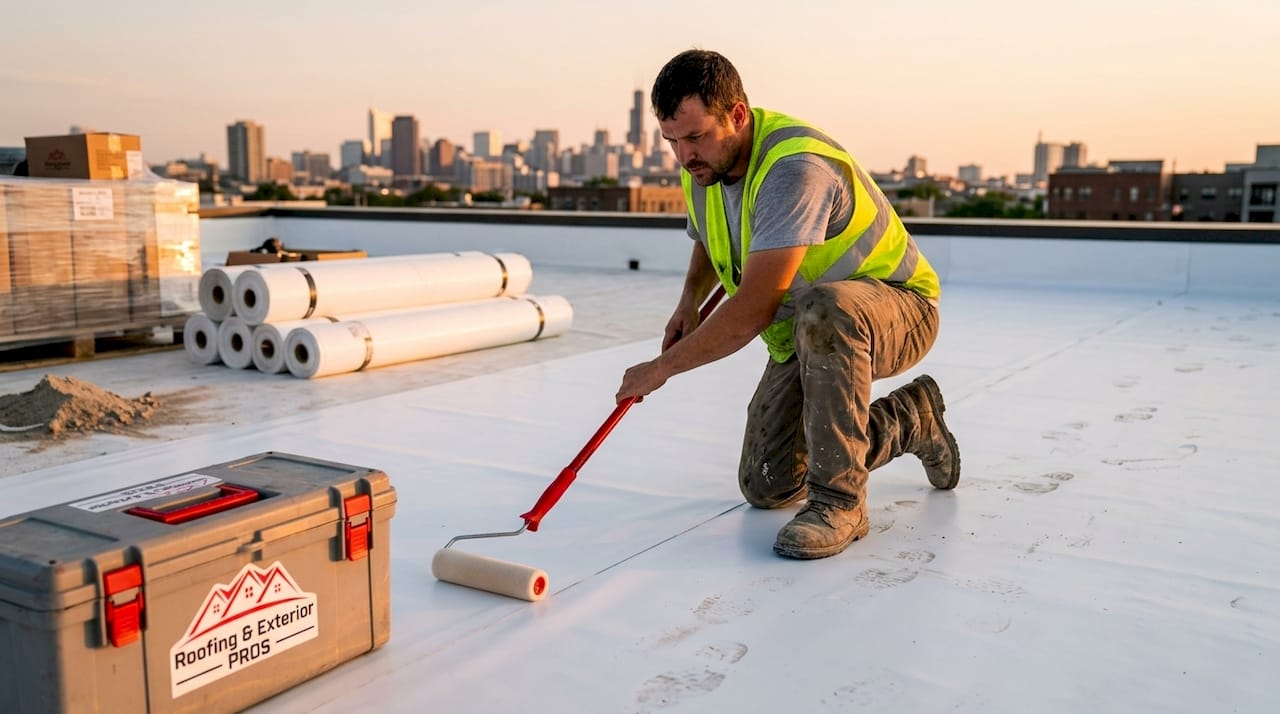
Conventional dark roofs can reach surface temperatures above 150°F on a summer afternoon. That heat transfers directly into the building below, forcing air conditioning systems to work harder and longer. A white or light-colored reflective membrane with a solar reflectance of 60 to 90 percent keeps that surface temperature dramatically lower, reducing the heat load on the building’s mechanical systems.
The most common reflective roofing materials used for membrane construction include:
- PVC (polyvinyl chloride): A single-ply thermoplastic membrane with built-in reflective additives. PVC membranes are known for strong chemical resistance, fire resistance, and long-term durability, making them a reliable choice for commercial flat roofs.
- TPO (thermoplastic polyolefin): Another single-ply thermoplastic option, typically white or light gray, that has become the most widely installed commercial membrane in North America due to its balance of cost and performance.
- Modified bitumen with reflective surfacing: An asphalt-based membrane that can be topped with reflective granules or coatings to meet cool roof requirements.
- Reflective coatings applied over existing membranes: Urethane coatings with metallic or white finishes form flexible, waterproof layers that reduce surface temperatures and resist UV degradation and ponding water.
The underlying roof system matters far less than the surface finish. Cool roof performance is driven primarily by the surface’s solar reflectance, not the substrate beneath it. That’s a critical point for anyone specifying a system.
Types of reflective roof membranes compared
Understanding the differences between membrane types helps you match the right product to the right project. Each category has distinct strengths, and the wrong choice for your climate or building type will underperform regardless of the product’s reflectance rating.
| Membrane Type | Typical Lifespan | Solar Reflectance | Installation Method | Best Application |
|---|---|---|---|---|
| TPO (single-ply) | 15–25 years | 0.70–0.85 | Heat-welded seams | Commercial low-slope |
| PVC (single-ply) | 20–30 years | 0.70–0.85 | Heat-welded seams | Chemical exposure environments |
| Modified bitumen (reflective) | 15–20 years | 0.25–0.65 | Torch, cold-applied, or self-adhered | Low-slope residential and commercial |
| Built-up roof with reflective coating | 15–25 years | 0.60–0.80 (coated) | Applied over existing surface | Retrofit projects |
| Self-adhered cool roof membrane | 15–20 years | Varies by product | Peel-and-stick, no torch | Code-compliant commercial |
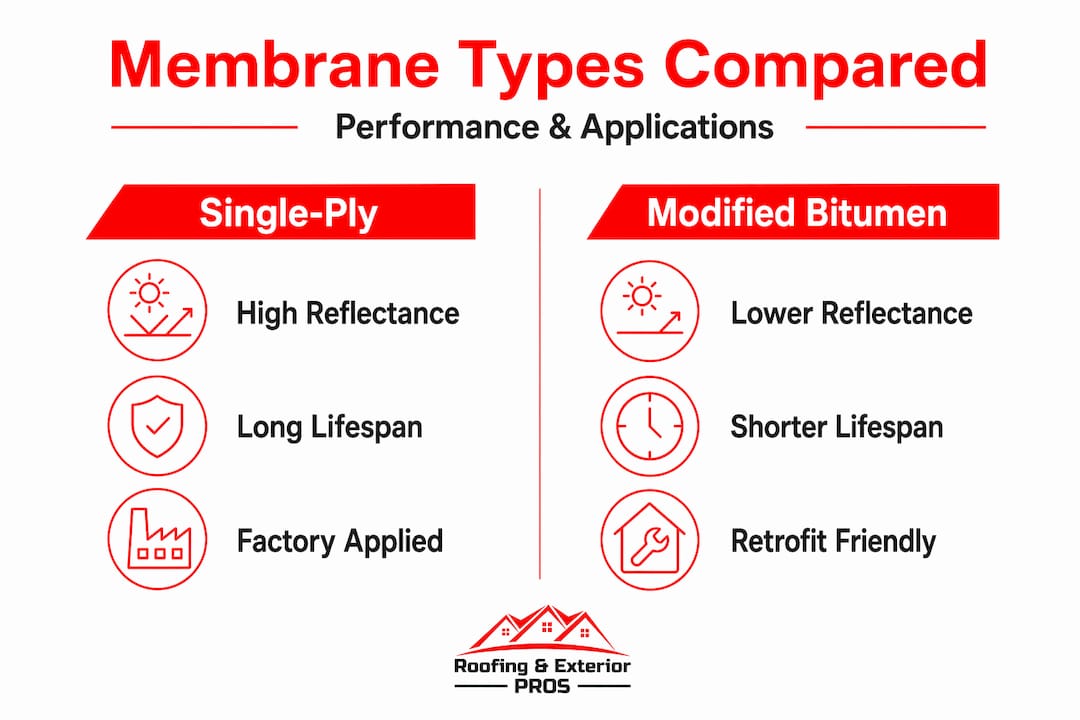
Single-ply membranes like TPO and PVC dominate new commercial construction because their factory-applied white surfaces deliver consistent, certified reflectance values right out of the package. They also weld at the seams rather than relying on adhesives alone, which creates a more reliable waterproof barrier.
Modified bitumen systems are more common in residential low-slope applications and in retrofit projects where a full tear-off is not practical. Adding reflective granules or a white coating to a modified bitumen surface can bring it into compliance with cool roof standards, but the reflectance values are generally lower than what a white TPO or PVC membrane achieves from the start.
Self-adhered systems, like those listed with the Cool Roof Rating Council, eliminate torch application entirely, reducing fire risk during installation and simplifying the process for contractors working in occupied buildings.
Pro Tip: When comparing membrane products, ask for the aged solar reflectance value, not just the initial value. Membranes lose some reflectance over time due to dirt accumulation and UV exposure. A product with a strong aged value, like SRI values around 76 after three years, will outperform a product with a high initial rating that degrades quickly.
Benefits and tradeoffs of reflective membranes
The benefits of reflective membranes are real and well-documented, but they are not unconditional. Understanding both sides helps you make a smarter decision for your specific project.
The primary advantages include:
- Reduced cooling costs: Lower roof surface temperatures translate directly into reduced heat transfer into the building, which cuts air conditioning energy use. This effect is most pronounced in buildings with poor ceiling insulation, where the roof surface has a direct thermal path to occupied spaces.
- Extended membrane lifespan: UV radiation is one of the leading causes of membrane degradation. Reflective surfaces absorb less UV energy, which slows the breakdown of the membrane material itself. This means fewer repairs and a longer replacement cycle.
- Heat island mitigation: Reflective roofs release less heat back into the surrounding air, which reduces the urban heat island effect. For large commercial campuses or dense urban areas, this has measurable environmental benefits.
- Sustainability certifications: Many green building programs, including LEED, require or reward cool roof installations. Specifying a compliant membrane can contribute directly to certification points.
“Energy savings from reflective roofs should be evaluated within the context of local climate due to winter heating tradeoffs.” — U.S. Department of Energy
That quote deserves serious attention. In cold climates, a reflective roof that bounces away solar radiation in January also reduces the passive solar heat gain that would otherwise lower your heating load. This is called the winter heating penalty, and it can partially or fully offset the summer cooling savings depending on your location. A building in Phoenix will see a strong net benefit. A building in Minneapolis needs a more careful analysis before committing to a highly reflective membrane.
Maintenance is the other tradeoff that often gets overlooked. A reflective membrane that is dirty, cracked, or delaminating from a coating layer no longer performs as rated. Regular cleaning and a scheduled roof coating maintenance program are not optional extras. They are part of the system’s performance contract with the building.
Specifying and installing reflective membranes
Getting the specification right before installation starts is where most problems are prevented. Here is a practical sequence for approaching this correctly:
- Confirm your local code requirements. Cool roof mandates vary significantly by state, city, and building type. California’s Title 24, Miami 21, and ASHRAE 90.1 all have specific solar reflectance and thermal emittance minimums. Know your standard before you select a product.
- Use the CRRC directory for product verification. Checking certified product ratings through the Cool Roof Rating Council’s directory is the only reliable way to confirm that a specific membrane SKU and color combination meets your compliance threshold. Do not rely on a manufacturer’s sales sheet alone.
- Treat color as a performance specification, not an aesthetic choice. Granules, pigments, and surfacing systems directly affect solar reflectance and how that reflectance holds up over time. Value engineering that swaps a specified white membrane for a tan or gray alternative to save a few dollars per square foot can break compliance entirely.
- Match the installation method to the building and crew. Heat-welded TPO or PVC requires trained operators and proper equipment. Self-adhered membranes reduce installation risk in occupied buildings. Coatings require clean, prepared surfaces to bond correctly and perform as rated.
- Plan for recoating from day one. Reflective coatings on modified bitumen or built-up roofs will need reapplication at intervals depending on the product and climate. Build that cost and schedule into your project budget at the start, not as an afterthought five years later.
Pro Tip: For commercial projects, request the single-ply membrane benefits documentation from your contractor early in the design phase. Knowing the certified aged reflectance, warranty terms, and recoating requirements upfront prevents costly surprises during construction administration.
My take on what most people get wrong
I’ve worked on enough roofing projects to say with confidence that the most common mistake is treating membrane selection as a procurement decision rather than a performance decision. Someone in the chain, whether it’s an owner, a GC, or a value-engineering consultant, swaps the specified white TPO for a gray alternative to save money. The gray membrane looks similar on a product sheet. It is not similar in performance.
What I’ve seen repeatedly is that the color and surface finish of a membrane accounts for more of its real-world energy performance than almost any other variable. Two buildings with identical insulation levels, identical mechanical systems, and identical roof assemblies will perform very differently if one has a white membrane and the other has a dark one. That’s not theory. That’s physics showing up in utility bills.
The winter heating penalty is real, and I think it gets dismissed too quickly in sales conversations. If you’re in a mixed or cold climate, you need to run the numbers for your specific location before assuming a reflective membrane is the right call. In many cases it still is, especially when you factor in membrane longevity. But the decision should be based on data, not assumptions.
My strongest advice for any professional specifying these systems: verify every product through the CRRC directory, specify the aged reflectance value as a contract requirement, and build a commercial roof maintenance schedule into the project from the start. The membrane that performs best at year fifteen is the one that was maintained, not just installed.
— Jake
Work with a roofing team that knows reflective systems

At Roofing & Exterior PROS, we work with property owners and construction professionals across the St. Louis metropolitan area who want roofing systems that perform, not just roofing systems that look good on paper. We specialize in the installation and maintenance of energy efficient roofing solutions, including TPO, PVC, and modified bitumen systems for both residential and commercial buildings.
When you work with us, we help you select the right membrane for your climate, building type, and code requirements. We verify product ratings, specify correctly from the start, and back our work with clear documentation. Whether you’re planning a new installation or evaluating an existing roof, our team can assess your project and give you a straight answer on what will actually deliver results.
Explore our roofing services to see the full range of systems we install and maintain. You can also review our commercial roofing materials comparison to understand how reflective membranes stack up against other options for your specific project. Contact us today for a free inspection and quote.
FAQ
What is a reflective roof membrane?
A reflective roof membrane is a roofing layer engineered to reflect solar radiation, reducing roof surface temperatures and the heat transferred into the building below. Common materials include TPO, PVC, and modified bitumen with reflective surfacing.
How do reflective roofs work to save energy?
Reflective roofs work by bouncing sunlight away from the surface rather than absorbing it, which keeps roof temperatures significantly lower and reduces the cooling load on the building’s HVAC system. The key performance factors are solar reflectance and thermal emittance.
What types of reflective roof membranes are available?
The main types include single-ply TPO and PVC membranes, modified bitumen with reflective granules or coatings, built-up roofs with reflective surface treatments, and self-adhered cool roof membranes. Each type suits different building types, climates, and installation requirements.
Do reflective membranes work in cold climates?
They can, but the net benefit is smaller in cold climates because reflective surfaces also reduce passive solar heat gain in winter, which is known as the winter heating penalty. A climate-specific energy analysis is recommended before specifying a highly reflective membrane in northern regions.
How do I verify that a reflective membrane meets cool roof standards?
Check the Cool Roof Rating Council (CRRC) directory using the specific product SKU and color code. This confirms the certified solar reflectance and thermal emittance values for the exact product you plan to install, which is more reliable than manufacturer marketing materials.