TL;DR:
- Regular roof maintenance is essential for preserving property value and preventing costly damage over time. Scheduled inspections, minor repairs, and documentation help homeowners avoid emergencies and extend their roof’s lifespan. Neglecting maintenance often leads to expensive repairs or premature replacement, making proactive care a smart financial strategy.
Most homeowners only think about their roof when something goes wrong. A water stain on the ceiling, a shingle in the yard after a storm, a sudden spike in heating costs. But the role of property maintenance roofing plays in protecting your home goes far beyond responding to visible damage. The real risks are usually invisible, building quietly until they become expensive. Understanding what regular maintenance actually prevents, and what it costs when you skip it, changes how you approach your roof entirely.
Table of Contents
- Key takeaways
- The role of property maintenance roofing in protecting your home
- What effective roof maintenance actually involves
- The real financial case for preventive maintenance
- Common problems maintenance uncovers and how to respond
- My honest take on proactive roof care
- Ready to protect your roof before problems start?
- FAQ
Key takeaways
| Point | Details |
|---|---|
| Maintenance protects property value | Consistent roofing upkeep preserves structural integrity and keeps your home’s resale value intact. |
| Inspections should happen twice yearly | Schedule roof inspections each spring and fall to catch seasonal damage before it worsens. |
| Early repairs cost far less | Addressing minor issues promptly prevents the need for major structural repairs or full replacements. |
| Documentation supports claims | Keeping photo logs of your roof’s condition strengthens insurance and warranty claims over time. |
| The 30% rule guides replacement | When repair costs approach 30% of full replacement price, replacement is usually the smarter financial decision. |
The role of property maintenance roofing in protecting your home
Your roof is the first and most critical line of defense between your home and everything the weather throws at it. Rain, wind, hail, UV exposure, and temperature swings all work against roofing materials every single day. Without consistent property upkeep roofing, small vulnerabilities compound into serious structural problems.
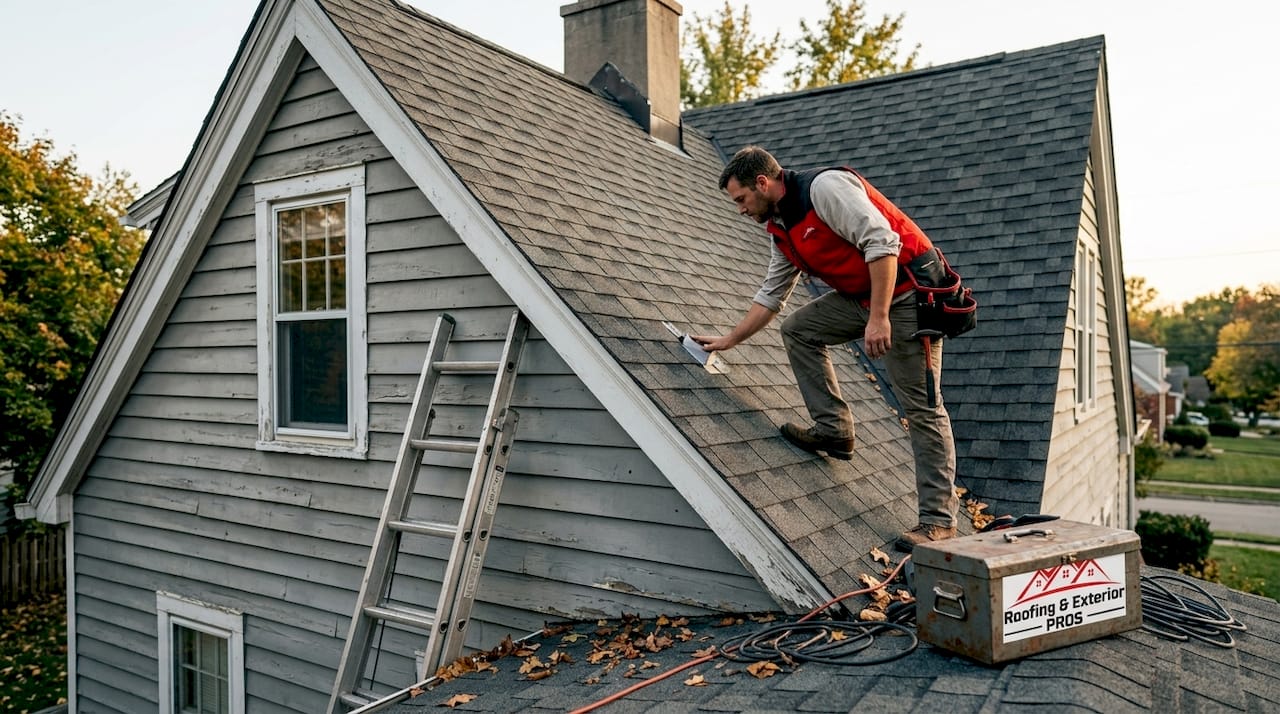
The importance of roof maintenance becomes clearest when you look at what it actually prevents. Flashing around chimneys, vents, and skylights can separate and lift without any visible sign from inside the house. Gutters clogged with leaves force water to back up under shingles, soaking the decking beneath. Poor attic ventilation traps heat and moisture, accelerating shingle deterioration from the inside out. None of these issues announce themselves loudly. They work slowly and silently until the damage becomes undeniable.
Here is what comprehensive roofing maintenance services cover when done correctly:
- Flashing inspection and resealing around all roof penetrations including chimneys, vents, and skylights
- Gutter clearing and downspout checks to keep water flowing away from the structure
- Shingle assessment for curling, cracking, missing granules, or displacement
- Attic ventilation review to confirm proper airflow and prevent moisture buildup
- Structural inspection of fascia, soffit, and decking for signs of rot or water intrusion
The connection between roofing upkeep and property value is direct. Buyers and appraisers factor roof condition into every assessment. A well-documented maintenance history signals responsible ownership and reduces negotiation leverage for buyers who find problems during their own inspections.
Pro Tip: Request a written summary from your roofing contractor after every inspection. Even a brief report noting what was checked and what was found creates a maintenance record that can support future insurance claims and warranty coverage.
What effective roof maintenance actually involves
Knowing the importance of roof maintenance is one thing. Understanding what it actually involves helps you set realistic expectations and ask the right questions when hiring professionals.
Experts recommend that roofs receive at least one annual comprehensive inspection, with twice-yearly evaluations in spring and fall considered the ideal schedule. Spring inspections catch winter damage from ice, snow, and freeze-thaw cycles. Fall inspections prepare the roof for the next round of cold weather stress.
Here is what a thorough maintenance visit should include, in order of priority:
- Clear all gutters and downspouts. Debris-clogged gutters are one of the leading causes of water backup under shingles, and they void many manufacturer warranties if left unaddressed.
- Inspect and repair damaged or missing shingles. Even one missing shingle creates a direct path for water to reach the decking below.
- Check all flashing and sealant. Flashing around chimneys, pipes, and skylights is the most common entry point for water. Sealant degrades with UV exposure and needs periodic replacement.
- Evaluate attic ventilation. Inadequate airflow causes heat and moisture to build up, which accelerates shingle aging and can lead to mold growth in the decking. Learn more about ventilation warning signs if you suspect problems.
- Remove moss, algae, and debris. Organic growth traps moisture against roofing materials, accelerating deterioration and potentially triggering code-based replacement requirements.
- Document conditions with photographs. Time-stamped photo logs are among the most practical tools for tracking roof health over time, distinguishing stable conditions from those getting worse.
Keeping a maintenance log does more than satisfy insurance adjusters. It gives you a clear picture of how your roof ages, when repairs were made, and what areas need closer attention during the next inspection cycle. Our commercial roof maintenance checklist offers a useful seasonal framework that property managers can adapt for residential use as well.
Pro Tip: Take photos from the same angles each inspection cycle. Side-by-side comparisons over two or three years reveal gradual deterioration that is nearly impossible to spot in a single visit.
The real financial case for preventive maintenance
Homeowners often skip maintenance to save money. The math rarely works in their favor. A professional roof inspection costs around $230, and minor repairs typically run between $400 and $600. That is a modest annual investment when you compare it to what neglect eventually demands.
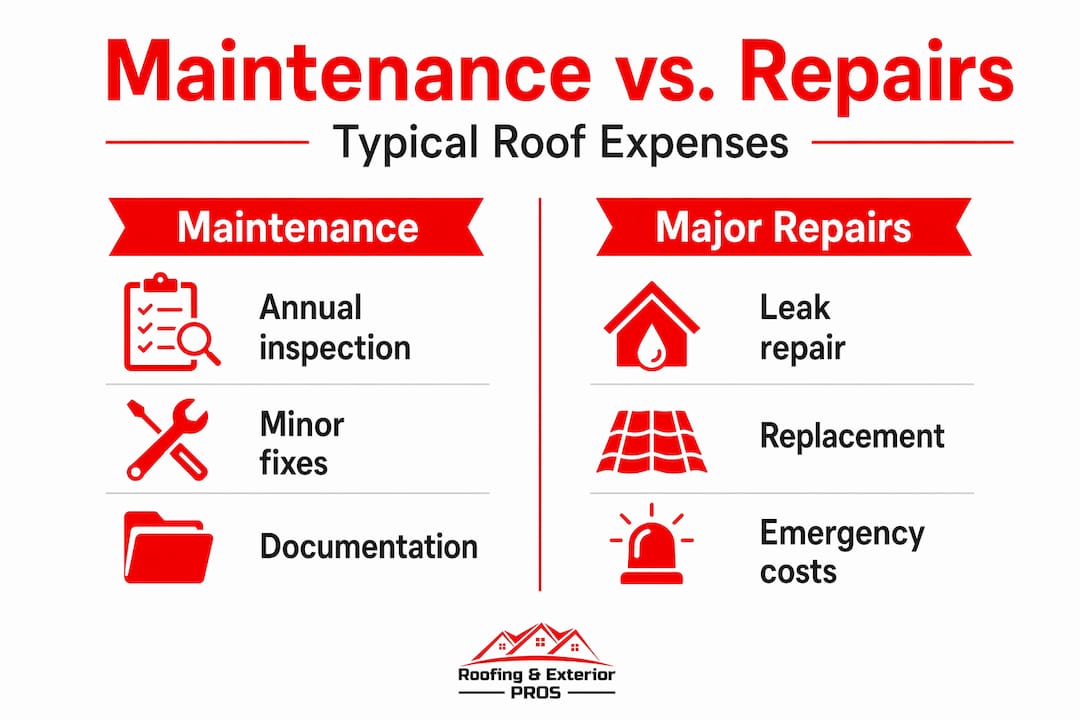
The table below shows how costs scale when maintenance is deferred:
| Maintenance scenario | Typical cost range | Notes |
|---|---|---|
| Annual professional inspection | $200 to $250 | Identifies problems before they escalate |
| Minor shingle or flashing repair | $400 to $600 | Usually completed in under 2 hours |
| Water damage to decking and interior | $2,000 to $8,000+ | Often caused by ignored flashing or gutter issues |
| Emergency roof repair call | $1,500 to $3,000+ | Rates increase for after-hours or storm-season demand |
| Full roof replacement | $8,000 to $20,000+ | Often preventable with consistent upkeep |
Scheduled maintenance lowers total ownership cost and reduces emergency repairs compared to reactive approaches. Property managers who track this consistently report fewer surprise expenses and lower liability exposure over a multi-year horizon.
One of the most practical financial guidelines in roofing is the 30% rule. When the cost of repairs approaches 30% of a full roof replacement, replacement becomes the more economical long-term choice. Patching leaks on an aging roof often leads to repeated failures within one to two years, meaning you pay for both the patches and the replacement. Our repair versus replacement guide walks through how to apply this rule to your specific situation.
“Roof maintenance should be treated as a capital asset protection strategy, not just an overhead cost.” — EPDM Roofing Association
That framing shifts the entire conversation. You are not spending money on maintenance. You are protecting an asset worth hundreds of thousands of dollars.
Common problems maintenance uncovers and how to respond
A roof health assessment during a scheduled inspection frequently turns up issues that would never be caught from the ground. Understanding what these problems look like, and how serious they are, helps you make faster, better decisions.
- Hidden water intrusion. Water can travel up to 40 feet within a roof structure before it shows up as a visible stain or drip inside the home. By the time you see it indoors, the damage has usually spread well beyond the entry point. Check signs of hidden roof leaks to know what to look for during your own walkaround.
- Damaged or absent flashing. Flashing separates and lifts with temperature changes over time. Once the seal is broken, water enters every rain cycle. Prompt resealing or replacement stops damage that compounds with every storm.
- Moss and organic growth. Beyond being unsightly, moss holds moisture against roofing materials continuously. The International Property Maintenance Code prohibits installing new layers over saturated substrates, meaning unresolved moisture issues can force costly replacements that might have been avoided.
- Gutter-related water backup. Gutters that overflow or drain poorly direct water toward the fascia, soffit, and foundation. Water that damages roof decking spreads quickly once it gets past the shingles.
- Ventilation failures. An attic that cannot breathe traps heat in summer and moisture in winter. Both accelerate the aging of roofing materials from below, often without any visible exterior signal until significant damage has already occurred.
Annual inspections establish maintenance histories that allow contractors to prioritize repairs strategically, which benefits older roofs in particular. Rather than guessing what needs attention, you can make decisions based on documented trends across multiple years of inspection data.
Preventing ice dams is another area where regular maintenance pays off. Ice dam formation is closely tied to attic insulation and ventilation quality, both of which are assessed during routine roof health evaluations. Catching ventilation deficiencies before winter arrives reduces your exposure to one of the most damaging weather-related roof events in cold climates.
My honest take on proactive roof care
I have seen hundreds of roofs in the St. Louis area at every stage of their lifespan. And the pattern is remarkably consistent. Homeowners who schedule regular maintenance almost never face the catastrophic repair bills that hit homeowners who wait for a problem to show up on their ceiling.
What surprises most people is how often the expensive damage was entirely preventable. A $150 flashing repair ignored for two seasons can turn into $6,000 in decking replacement and interior remediation. The repair itself was never the obstacle. It was the assumption that nothing was wrong because nothing was visible yet.
I think the biggest mindset shift that serves homeowners well is treating roofing upkeep the same way they treat their HVAC or their car. Nobody waits for their engine to seize before changing the oil. But many people wait for water to drip through a ceiling before they call a roofer. The roof deserves the same scheduled attention as any other major system in your home.
Documentation is the other thing I cannot stress enough from experience. Property managers who maintain photo logs and inspection records rarely get caught off guard. They can show an insurer exactly when a condition appeared and how it progressed. That record is worth real money when a storm hits and a claim needs to be filed.
The bottom line is that consistency wins. A twice-yearly inspection with minor repairs as needed costs a fraction of a single emergency call, and far less than a full replacement that could have been pushed out another decade with proper care.
— Jake
Ready to protect your roof before problems start?
At Roofing & Exterior PROS, we work closely with homeowners and property managers across the St. Louis metro area to keep roofs in strong condition year after year. Whether you need a thorough inspection, a minor repair, or guidance on whether it is time for something more, our team gives you clear answers based on what we actually find.

We offer free inspections and honest assessments, with no pressure to commit to more than your roof genuinely needs. If your maintenance history has gaps, or if it has been more than a year since your last professional evaluation, now is a good time to get back on schedule. When an inspection reveals that replacement is the right move, our residential roof installation process guides you through every step clearly and professionally. Reach out to Roofing & Exterior PROS today and let us help you stay ahead of problems, not behind them.
FAQ
How often should a roof be inspected for maintenance?
Roofs should be professionally inspected at least once a year, with twice-yearly evaluations in spring and fall considered best practice. This schedule allows you to catch damage from winter stress and prepare the roof for the next cold season.
What does a standard roof maintenance visit include?
A standard maintenance visit covers gutter clearing, shingle assessment, flashing and sealant inspection, attic ventilation review, and removal of moss or debris. The contractor should also document conditions with photos to support future insurance or warranty claims.
When does it make more sense to replace a roof than repair it?
When repair costs approach 30% of the full replacement price, replacement is usually the more economical choice. Repeated patching on an aging roof often leads to ongoing failures within one to two years, making replacement the smarter long-term investment.
Can regular maintenance actually extend roof lifespan?
Yes. Consistent maintenance addresses minor issues before they compound, protects roofing materials from moisture and organic growth, and keeps ventilation systems functioning properly. All of these factors directly extend how long a roof performs reliably. Explore our tips on extending roof lifespan for specific strategies that work in Missouri’s climate.
What happens if roof maintenance is skipped for several years?
Deferred maintenance allows small vulnerabilities like loose flashing or granule loss to progress into water intrusion, decking rot, and structural damage. Costs escalate significantly, and emergency repairs during storm season carry much higher price tags than scheduled upkeep.