TL;DR:
- Metal roofing lasts 40 to 70 years and costs more upfront, but it often saves money over time compared to asphalt shingles. Shingles are less expensive initially but require replacement more frequently, making metal the better long-term investment for homeowners planning to stay long-term. Proper installation and local conditions significantly influence the durability and performance of either roofing material.
When you compare shingles vs metal roofing, the core difference comes down to this: asphalt shingles cost less upfront but need replacing sooner, while metal roofing costs more initially and lasts two to three times longer. For most homeowners, that trade-off defines the entire decision. According to RoofVista, standing seam metal roofs run $9.50–$16.00 per square foot installed, compared to $4.50–$8.50 for architectural asphalt shingles. The Metal Roofing Alliance and industry analysts at RoofReport both confirm that your planned length of stay in the home is the single most important factor in this roofing materials comparison. Get that decision right, and everything else falls into place.
How do shingles and metal roofing compare on cost?
Metal roofing costs roughly 2 to 2.5 times more upfront per square foot than architectural asphalt shingles as of 2026. That gap is real, and you should plan for it honestly.
For a standard 2,000 square foot home, here is what the numbers look like:
| Cost Factor | Architectural Shingles | Standing Seam Metal |
|---|---|---|
| Material + Installation (per sq ft) | $4.50–$8.50 | $9.50–$16.00+ |
| Total Project Cost (2,000 sq ft) | $9,000–$17,000 | $19,000–$32,000 |
| Expected Lifespan | 20–30 years | 40–70 years |
| Re-roofing Cycles Over 60 Years | 2–3 times | 0–1 times |
| Long-Term Cost (60-year horizon) | $27,000–$51,000 | $19,000–$32,000 |
The long-term math often favors metal. A homeowner who replaces asphalt shingles twice over 60 years spends more in total than someone who installs metal once. That said, the upfront gap of $10,000 or more is a real budget constraint for many families.
- Shingle repairs typically cost $150–$400 per incident for minor damage.
- Metal roof repairs are less frequent but can run $300–$800 when needed.
- Both materials may qualify for insurance discounts, but metal roofs more consistently earn premium reductions in storm-prone regions.
Pro Tip: Get at least three quotes from licensed contractors before committing. The cost of shingles vs metal varies significantly by region, roof complexity, and contractor experience.
What are the durability differences between shingles and metal?
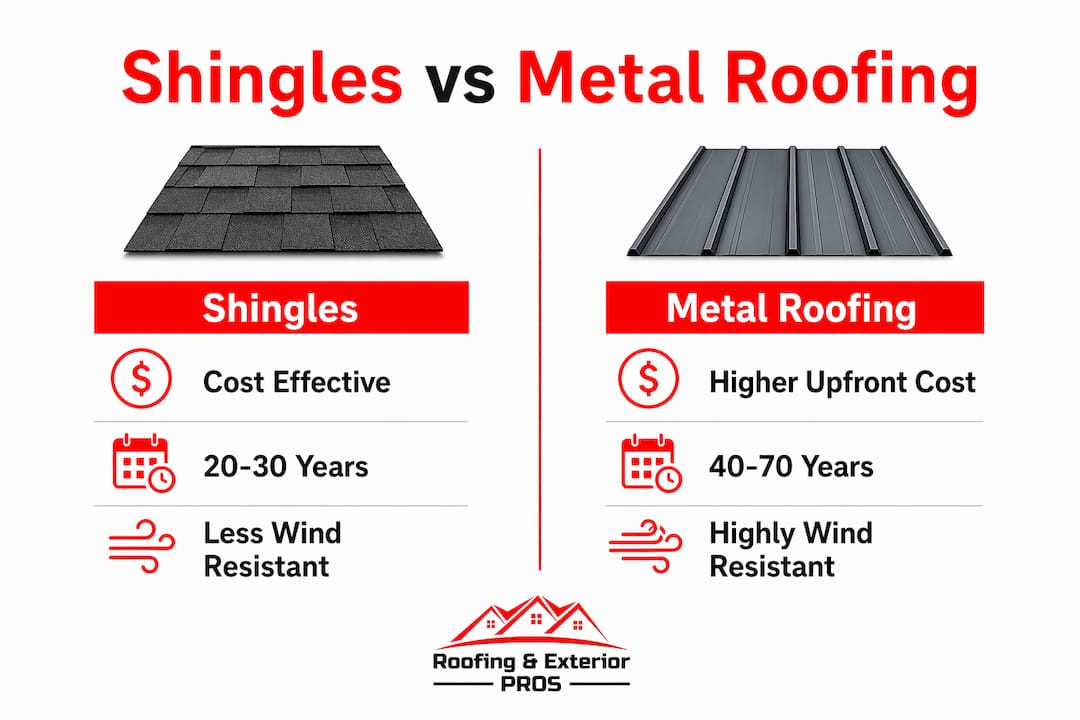
Metal roofing systems last 40–70 years, while modern architectural shingles last 20–30 years. Basic 3-tab shingles fall shorter still, at 15–20 years. That lifespan gap is the most important number in the shingle vs metal durability conversation.
Wind resistance is another clear separator. Metal roofs resist winds above 140 mph, while architectural shingles are rated for 110–130 mph. Metal’s continuous panel construction and hidden fasteners give it a structural edge in severe weather. For homeowners in tornado corridors or coastal areas, that difference is not trivial.
Here is a direct breakdown of durability factors for each material:
Architectural Shingles
- Granule loss accelerates with age, reducing UV protection and shortening lifespan.
- Vulnerable to wind uplift at tabs and edges, especially after 15 years.
- Hail damage creates soft spots and granule loss that often require full replacement.
- Fire rating is typically Class A when installed over a fire-resistant deck.
Metal Roofing
- Resists hail, fire, and wind at a higher threshold than shingles.
- Oil canning, a visible waviness in flat panels, is a cosmetic issue that does not affect structural performance.
- Expansion and contraction with temperature changes can loosen fasteners over time if improperly installed.
- Corrosion resistance depends on coating quality; Galvalume and Kynar 500 coatings are the industry standard.
Pro Tip: Ask your contractor about hail-resistant roofing options before signing any contract. In Missouri and the broader Midwest, hail is one of the top causes of premature roof failure for both material types.
How do shingles and metal roofing compare on energy efficiency?
Metal roofs reduce annual cooling energy use by 10%–25% in warm climates by reflecting solar radiation rather than absorbing it. Reflective coatings and proper ventilation can lower attic temperatures by 20–30 degrees Fahrenheit. That translates directly to lower air conditioning bills every summer.
Standard asphalt shingles absorb heat. Without special cool-roof coatings, they contribute to attic heat buildup and higher cooling loads. Some manufacturers offer Energy Star-rated shingles with reflective granules, but their performance still falls short of metal in most climates.
| Factor | Asphalt Shingles | Metal Roofing |
|---|---|---|
| Solar Reflectance | Low (standard) | High |
| Cooling Cost Reduction | Minimal | 10%–25% in warm climates |
| Recyclability | Low (landfill waste) | 100% recyclable |
| Recycled Content | Minimal | Often 25%–95% recycled steel |
| Insurance Premium Impact | Standard | Potential discounts in storm zones |
The environmental gap is significant. Asphalt shingles generate about 11 million tons of landfill waste annually in the U.S. Metal roofs are 100% recyclable at end of life and often contain substantial recycled content. For property owners with sustainability goals, that difference matters beyond just the utility bill.
What should you know about installation and maintenance?
Installation complexity separates these two materials more than most homeowners expect. Metal roofing requires precise measurements, specialized tools, and a thorough understanding of metal expansion and contraction. Improper installation can cause early failure even when the material itself is high quality. Asphalt shingle installation is more forgiving and far more widely understood among general roofing contractors.
Improper flashing and ventilation are the leading causes of premature failure in both material types. This is a critical point that most homeowners overlook. The quality of the installation matters as much as the material you choose.
Shingle maintenance considerations:
- Inspect annually for cracked, curling, or missing shingles.
- Clear moss and algae with zinc sulfate treatments; algae-resistant shingles are available from manufacturers like GAF and Owens Corning.
- Replace damaged sections individually, which keeps repair costs low.
- Gutters need more frequent cleaning due to granule shedding.
Metal roof maintenance considerations:
- Inspect sealants and fasteners every 5–10 years.
- Check flashing details at penetrations and valleys; flashing quality is more critical to water resistance than panel gauge.
- Touch up scratches promptly to prevent rust on exposed steel.
- Metal roofs require far fewer repairs over their lifespan than shingles.
Pro Tip: When hiring for metal roofing, verify the contractor has specific metal roofing experience, not just general roofing credentials. Ask to see completed metal projects and check references. The skill gap between a metal specialist and a general roofer is substantial.
For St. Louis area homeowners, you can review asphalt shingle lifespan factors to understand how local weather patterns affect maintenance schedules for both materials.
Which roofing option offers better aesthetics and property value?
Shingles offer a wider range of textures and profiles that blend naturally with traditional architectural styles. Architectural shingles from GAF, Owens Corning, and CertainTeed come in dozens of colors and can mimic slate or wood shake at a fraction of the cost. For colonial, craftsman, and ranch-style homes, shingles often look more proportionally appropriate.
Metal roofing has expanded well beyond the corrugated barn look. Standing seam panels, metal shingles, and stone-coated steel tiles now suit a broad range of residential and commercial styles. Metal profiles work especially well on modern, contemporary, and farmhouse-style homes.
Property value impact depends on your market and buyer expectations:
- Metal roofs can add measurable resale value in markets where buyers recognize the long-term cost savings.
- Shingles are the expected standard in most neighborhoods, so a quality shingle roof meets buyer expectations without standing out.
- A worn or aging shingle roof actively reduces sale price and can stall transactions during inspection.
- Metal roofs signal low maintenance to buyers, which is a selling point in competitive markets.
Regional climate also shapes the right choice. In Missouri, where severe storms, hail, and temperature swings are common, metal roofing for Missouri homes delivers both performance and curb appeal advantages that align with local conditions. If you plan to sell within 10 years, a quality architectural shingle roof is often the more cost-effective investment for resale. If you plan to stay long-term, metal roofing’s long-term value becomes the stronger financial argument.
Key takeaways
Metal roofing costs more upfront but outlasts asphalt shingles by 20–40 years, making it the better financial choice for homeowners who plan to stay in their home 20 or more years.
| Point | Details |
|---|---|
| Upfront cost gap | Metal costs 2–2.5x more per square foot than architectural shingles at installation. |
| Lifespan advantage | Metal lasts 40–70 years vs. 20–30 years for architectural shingles. |
| Weather performance | Metal resists winds above 140 mph; shingles are rated for 110–130 mph. |
| Energy and environment | Metal reduces cooling costs 10%–25% and is 100% recyclable; shingles generate 11 million tons of landfill waste annually. |
| Installation quality | Proper flashing and ventilation matter more than material choice for long-term roof performance. |
What i’ve learned after years of watching homeowners make this decision
After working alongside homeowners and property managers on hundreds of roofing projects in the St. Louis area, I’ve noticed a consistent pattern. The homeowners who regret their roofing choice almost always made it based on the lowest upfront number, without thinking through how long they planned to stay in the home.
Homeowners who plan to stay less than 15 years usually get better financial return from quality architectural shingles. That is not a knock on metal. It is just math. But homeowners who stay 20 or more years and chose shingles to save money often end up spending more in total, plus dealing with the disruption of a second re-roofing project.
The other thing I tell people: the material is only half the equation. I have seen metal roofs fail in five years because of bad flashing details, and I have seen 30-year shingle roofs still performing well because the installation was done right and the attic ventilation was properly set up. Whoever installs your roof matters as much as what they install.
My honest recommendation is this. If you are in a storm-prone area, plan to stay long-term, and can absorb the higher upfront cost, metal is the stronger choice. If your budget is tight or you are planning to sell within a decade, a quality architectural shingle roof from a trusted manufacturer is a perfectly sound decision. Do not let anyone tell you one material is always right for every situation.
— Jake
Get expert roofing guidance from roofing & exterior PROS
Choosing between shingles and metal roofing is a significant decision, and the right answer depends on your property, your budget, and your long-term plans. At Roofing & Exterior PROS, we work closely with homeowners and commercial property owners across the St. Louis metropolitan area to find the right fit for every project.
We install both architectural shingle and metal roofing systems with the same commitment to quality craftsmanship and transparent communication. Whether you need a full replacement, a storm damage assessment, or a free inspection to understand your options, our team is ready to help. For commercial property owners, our commercial roofing solutions cover both metal and shingle systems built to hold up under demanding conditions. Contact Roofing & Exterior PROS today to schedule your free consultation.
FAQ
How long does a metal roof last compared to shingles?
Metal roofing systems typically last 40–70 years, while architectural asphalt shingles last 20–30 years. That means a metal roof can outlast two full shingle replacements over the life of a home.
Is metal roofing worth the higher upfront cost?
Metal roofing is worth the cost if you plan to stay in your home 20 or more years. Homeowners who stay fewer than 15 years generally see better financial return from quality architectural shingles.
Which roofing material handles severe weather better?
Metal roofing resists winds above 140 mph and carries superior fire and hail ratings compared to shingles, which are rated for 110–130 mph. Metal is the preferred choice in storm-prone regions.
Do metal roofs save money on energy bills?
Yes. Metal roofs can reduce annual cooling energy costs by 10%–25% in warm climates by reflecting solar radiation. Standard asphalt shingles absorb heat and offer minimal energy efficiency benefits without special coatings.
Can i install a metal roof over existing shingles?
In many cases, yes. Local building codes and roof deck condition determine whether an overlay is permitted. A licensed roofing contractor should inspect your existing roof before making that call.