Insulated vinyl siding is regular vinyl siding with a rigid foam backing attached to each panel. It is usually worth the extra money if you plan to stay in your home for years, you are already replacing siding, and you want a straighter, stiffer, quieter wall. It is usually not worth it if you expect it to replace the insulation inside your walls or to pay for itself in a couple of winters. Here is what it costs, what it does, and how to decide for a home in the St. Louis area.
TL;DR
- Insulated vinyl costs roughly $2.00 to $3.00 more per square foot than standard vinyl, and most projects land between $8.50 and $14.50 per square foot installed.
- The foam adds a thin layer of continuous insulation, typically R-2 to R-5 depending on thickness. It cuts heat loss through wall studs but does not replace insulation inside the wall.
- The most noticeable gains are a flatter, more rigid look and a quieter, more impact-resistant wall. Energy savings are a bonus, not the main event.
- Installation quality matters more than the brand. Moisture planning in older Missouri walls is where jobs go wrong.
Table of Contents
- What insulated vinyl siding is
- How much R-value you actually get
- What it costs
- Is it worth it?
- Insulated vinyl versus other options
- Where insulated vinyl goes wrong
- What a good installation looks like
- Our perspective
- Get a siding inspection and quote
- FAQ
- Sources
What insulated vinyl siding is
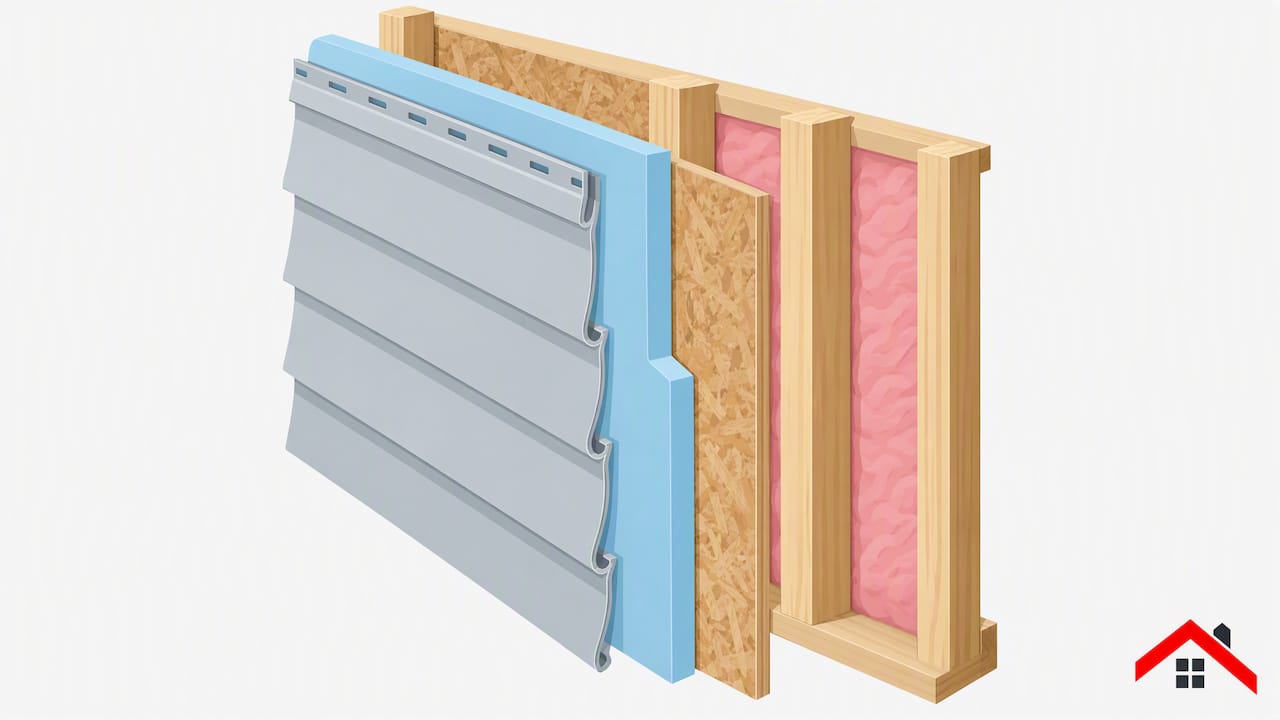
From the street, it looks like any vinyl siding. Behind each panel sits a contoured layer of rigid foam, usually expanded polystyrene, that fills the gap between the siding and the wall sheathing. Standard vinyl is hollow behind the face, so it flexes, rattles in wind, and can show waves on a wall that is not perfectly flat.
The foam is bonded to the panel at the factory. That makes the panel stiffer and gives the wall a continuous layer of insulation over the studs, which are the weak points in a typical framed wall. Manufacturers such as Alside, Georgia-Pacific, CertainTeed and ProVia all sell versions, with foam thickness and profile varying by line.
How much R-value you actually get
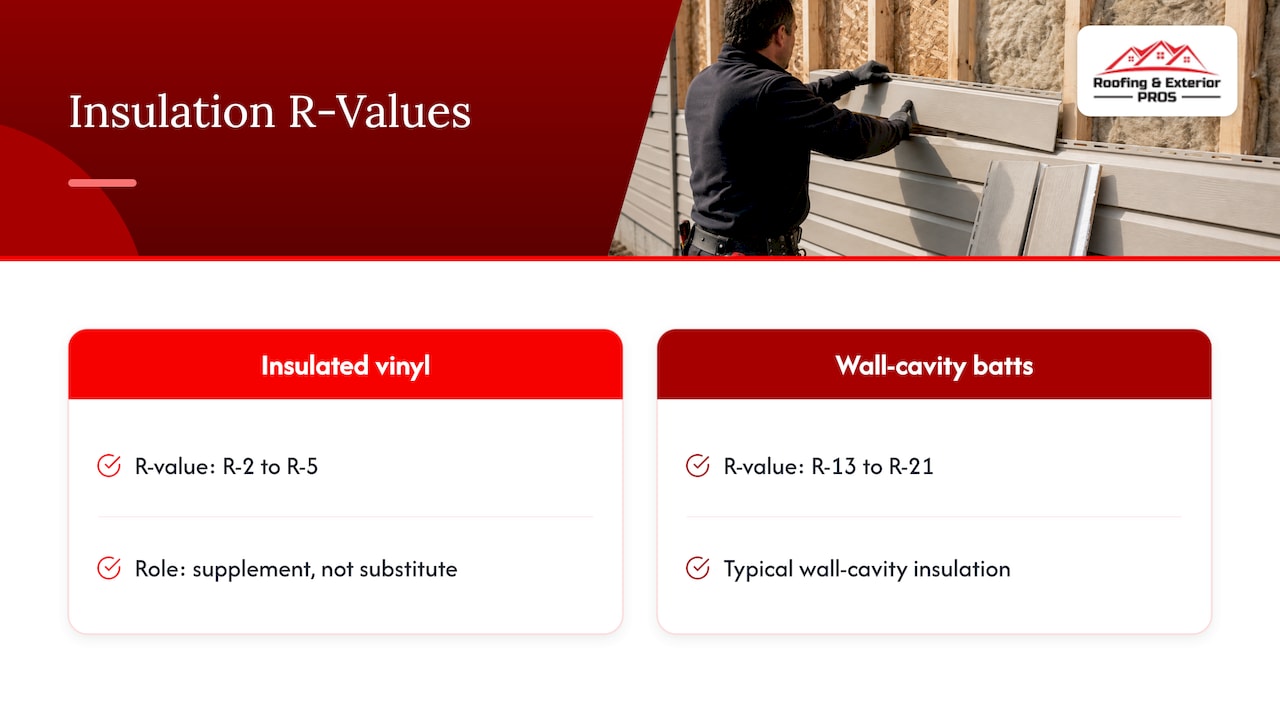
Insulated vinyl typically adds R-2 to R-5, depending on foam thickness. The thickest products, with foam close to an inch, sit at the top of that range. For comparison, a typical wall cavity filled with batts is R-13 to R-21, so the siding is a supplement, not a substitute.
Where it helps is thermal bridging. Wood studs conduct heat far better than the insulation beside them, and that path accounts for a meaningful share of heat loss through a typical wall. A continuous layer outside the sheathing interrupts it. The same source cites annual utility savings ranging from 1% to 14%, and that spread is the honest takeaway: your result depends on your existing insulation, air leaks, and how well the house was built.
What the energy code says
The Vinyl Siding Institute’s building code reference guide notes that insulated vinyl siding is recognized under the International Energy Conservation Code as a form of continuous insulation. Under the 2021 IECC, Climate Zone 4 wall paths include combinations such as R-20 cavity plus R-5 continuous insulation. St. Louis is commonly listed in that zone. Adopted codes differ by municipality in the metro area, so ask your city or county building department what applies to your address before you assume a specific path.
What it costs
Here are the published national figures. We do not publish fixed prices because every house is different, so treat these as a planning range, not a quote.
| Item | Typical range | Source |
|---|---|---|
| Installed insulated vinyl, per square foot | $8.50 to $14.50 | Angi |
| Premium over standard vinyl | About $2.00 to $3.00 per square foot | Angi |
| Whole-house project | $6,000 to $20,000 | Angi |
| Old siding disposal | $150 to $350 | Angi |
What moves your number most:
- Wall area. Square footage of exterior wall, not floor area. Gables and tall two-story fronts add up fast.
- Complexity. Dormers, bump-outs, many windows, and tight corners add labor.
- Condition underneath. If tear-off reveals damaged sheathing or flashing, it has to be fixed before new siding goes on.
- Trim and accessories. Window and door trim, soffit and fascia, and gutters are often done in the same project.
If you are comparing quotes, make sure each one states the product line, foam thickness, trim package, and what happens if rot is found. A cheaper quote that skips those details is not really cheaper.
Is it worth it?
The energy payback alone is slow. If you spend $2.00 to $3.00 more per square foot on a 2,000 square foot wall area, that is $4,000 to $6,000 extra, and a utility reduction in the single digits of a typical bill takes many years to recover that. If energy savings are your only reason, an air-sealing and attic insulation project usually returns more per dollar.
The case for insulated vinyl is broader:
- A straighter wall. The rigid backing resists the waviness that makes hollow vinyl look cheap. According to remodelers’ guidance, that flatter look is the main immediate payoff.
- Impact and noise. The foam backing makes panels more resistant to dents and dampens outside sound.
- Comfort. Fewer cold spots on exterior walls, especially at stud lines.
- No wall teardown. You get a continuous insulation layer without opening interior walls.
It is a good fit when you are already replacing worn siding, you plan to stay five to ten years or longer, and you value the look and comfort. It is a weaker fit when your siding is in decent shape and only needs repair rather than replacement, or when the budget is tight and the choice is between insulated vinyl and a sound installation of standard vinyl. A well-installed standard job beats a poorly installed premium one.
Insulated vinyl versus other options
| Option | Strength | Trade-off |
|---|---|---|
| Standard vinyl | Lowest cost, low maintenance | Hollow back, flexes, no added insulation |
| Insulated vinyl | Stiffer, quieter, continuous insulation | Higher cost, needs moisture planning |
| Fiber cement | Durable, wood-like, paintable | Heavier, higher installed cost, repainting |
If you are still deciding on material, our guides on fiber cement versus vinyl and siding insulation options for Missouri homes walk through the trade-offs. Appearance matters too. If you want to see how colors and profiles will look before you commit, exterior rendering is one way homeowners and builders preview a finished facade, and our page on siding for curb appeal covers what tends to look best on local homes.
Where insulated vinyl goes wrong
Installation errors
Vinyl expands and contracts with temperature, and Missouri swings from summer heat to winter lows. Panels have to hang loosely, with nails centered in the slots and not driven tight. Consumer Reports’ siding buying guide stresses that proper attachment is what keeps siding on the wall and flat. Overdriven nails and poorly set trim around windows, doors and corners cause buckling and cracks even in a premium product.
Moisture in the wall
This is the issue homeowners rarely hear about. Foam backing slows the drying of the wall assembly. If water gets behind the siding through failed flashing, a bad window seal, or a gutter that overflows onto the wall, it needs a way to dry. Houses in our area vary a lot: a 1950s home with old sheathing is a different job than a 1990s home with a vapor barrier already in the wall. Before we recommend insulated vinyl, we look at how the wall is built, where water has been getting in, and whether flashing and housewrap are sound. Our guide to the best siding for moisture in Missouri homes covers this in more detail.
Expecting too much
An R-3 foam layer will not make a drafty house airtight. If the house leaks air around outlets, rim joists and windows, siding will not fix it. Air sealing and proper flashing come first.
What a good installation looks like
- Inspection. Check the existing siding, sheathing, flashing, windows and gutters, and note any rot or water staining.
- Tear-off and repair. Remove old siding and fix damaged sheathing before anything new goes up.
- Weather barrier and flashing. Install housewrap or a comparable barrier and flash windows, doors and penetrations properly.
- Panel installation. Hang panels loosely, with correct nail spacing, and follow the manufacturer’s trim and corner details.
- Final walk-through. Check seams, trim, caulk joints and cleanup with the homeowner.
Our step-by-step siding installation guide explains what to expect on site.
Our perspective
We are a family-owned company working on homes across the St. Louis area, and we talk with homeowners about this upgrade often. Our view is simple: insulated vinyl is a good product when it is chosen for the right reasons. Choose it because you want a flatter, sturdier, quieter wall and you are replacing siding anyway. Do not choose it because a brochure promised a big drop in your heating bill.
What we care about most is what happens before the first panel goes on. Look at the wall. Find out where water has been getting in. Fix flashing and gutters. Then pick the product. We would rather tell you honestly that standard vinyl or repairs are the better value for your house than sell you an upgrade that does not fit. After a storm, we also check whether your insurance may cover some siding work, and we help you document it.
— Jake Ehlinger
Get a siding inspection and quote
If you are weighing insulated vinyl for your home or building, we offer free inspections and quotes across the St. Louis metro area. We will look at your walls, explain your options in plain language, and give you a written scope you can compare. See our siding services or contact us through our site to schedule. If your siding was damaged by a storm, start with our storm damage restoration team. Gutters, fascia and soffit are often replaced in the same project, and you can see those on our gutter and fascia and soffit pages.
FAQ
How much does insulated vinyl siding cost?
National figures put most installed projects between $8.50 and $14.50 per square foot, or roughly $6,000 to $20,000 for a whole house, according to Angi. Expect a premium of about $2.00 to $3.00 per square foot over standard vinyl. Your actual price depends on wall area, home complexity and the condition of what is under the old siding.
How much R-value does insulated vinyl siding add?
Usually R-2 to R-5, depending on foam thickness. That is a supplement to wall insulation, not a replacement. Its main benefit is reducing heat loss through the studs.
Is insulated vinyl siding worth it?
It is worth it when you are already replacing siding and want a stiffer, straighter, quieter wall with some added insulation. It is less compelling if you are chasing a fast energy payback. A site visit to check the wall condition is the best way to decide.
Can insulated vinyl siding be installed over existing siding?
We recommend removing old siding so we can inspect the sheathing and flashing underneath. Covering problems hides moisture damage, which is a bigger risk with foam-backed panels that dry more slowly.
Does insulated vinyl siding last as long as regular vinyl?
The vinyl face is the same material, so lifespan depends mostly on installation, trim details and maintenance. Our siding maintenance guide for Missouri homes and our tips on cleaning vinyl siding help it last.
Sources
- Angi: 2026 cost to install insulated vinyl siding
- The Remodelers: Insulated vinyl siding cost and worth
- Vinyl Siding Institute: Building code reference guide
- Consumer Reports: Siding buying guide
- Remodel Calculators: IECC Climate Zone 4 requirements