
If your St. Louis roof took a hit this hail season, schedule a free professional inspection now. Hidden damage is common on asphalt shingles, and Missouri insurance windows for filing don’t stay open forever. Local roofing contractors inspect roofs across the St. Louis metro at no cost, document findings, and help build claims for insurance carriers.
TL;DR:
- Hail impacts on asphalt shingles can be deeper than surface damage, often causing fractures in the mat even when visible signs seem minimal.
- Damage indicators include dents, soft bruises, and granule loss on shingles, along with dents and rust on metal roofs, and cracked or shifted tiles on others.
- Timing and documentation are critical; photograph collateral damage, record storm details, and avoid roof access until professionals inspect to prevent safety hazards.
- Insurance deductibles are typically percentage-based, meaning costs may outweigh benefits for small or localized damage, especially on older roofs.
- Contractor reports with slope-specific photos and impact counts strengthen claims, as insurers rely on detailed, professional damage assessments.
Table of Contents
- Hail Damage Roof St. Louis: Signs You Shouldn’t Ignore
- What To Do Right After The Storm Hits
- How Do Insurance Claims Work For St. Louis Hail Damage?
- What Does A Contractor Inspection Report Actually Include?
- Repair Or Replace: What Actually Determines The Decision
- A Local Roofer’s Take On Where Hail Claims Go Wrong
- Get A Free Hail Damage Inspection From Roofing & Exterior PROS
- Essential Resources For Verifying Storm Damage
- Sources
- FAQ
Hail Damage Roof St. Louis: Signs You Shouldn’t Ignore
Roof damage from hail rarely announces itself the way homeowners expect. Most people scan for granule piles in the gutter or obvious dark spots and call it good when they see neither. That’s a mistake. Shingles can absorb an impact 1.5 to 2 millimeters deep that fractures the mat underneath while the surface looks nearly untouched.
What each material actually shows:
- Asphalt shingles: black divots, soft “bruised” spots you feel more than see, and granule loss that exposes the mat underneath.
- Metal roofing: dents, scoured or chipped coating, and hidden rust starting wherever the finish broke.
- Tile, slate, and wood shake: chipped edges, cracked corners, and tiles that shifted or split on impact.
Ground-level clues matter just as much as anything on the roof. Dented gutters, chewed-up AC fins, torn window screens, and hail dings on parked cars are a reliable proxy for what happened above them. If your gutters look like a golf ball took batting practice, your shingles probably did too.
Size and age both raise the stakes. Hail around 1 inch in diameter, roughly quarter sized, commonly starts damaging asphalt shingles. A 15-year-old roof with brittle, sun-baked shingles takes a harder hit than a roof installed two years ago, even in the identical storm.
What To Do Right After The Storm Hits
The first hour after hail matters more than most homeowners realize, and not because of the roof itself. It’s about safety and evidence.
- Stay off the roof. Wet shingles, loose debris, and downed or sagging power lines make a post-storm roof walk dangerous. Leave that to a contractor with the right equipment.
- Photograph collateral damage where you stand. Gutters, downspouts, AC units, screens, and vehicles. Place a coin or tape measure next to any hailstones still on the ground for scale.
- Note the date, time, and storm details. Check whether neighbors’ cars or siding show similar marks. It builds a stronger, corroborated timeline for your insurer.
- Cover active leaks with a tarp, and keep every receipt and photo tied to that temporary fix.
- Call your insurer’s claims line and a local contractor before making permanent repairs on your own.
Pro Tip: Take wide shots and close-ups of the same damage. Adjusters and contractors both need context, and a single tight zoom photo without a reference point is easy to dismiss as inconclusive.
Once you’ve documented the scene, get emergency roof repair scheduled for anything actively leaking, and ask that contractor to attend the adjuster’s visit if you file a claim.
How Do Insurance Claims Work For St. Louis Hail Damage?
Filing a claim in St. Louis isn’t as simple as calling your agent and waiting for a check. Missouri policies typically carry a wind or hail deductible, and it changes the math on whether filing even makes sense.
- Percentage deductibles are common. Many Missouri carriers set wind/hail deductibles at 1% to 2% of your dwelling coverage, not a flat dollar amount. On a $300,000 policy, a 2% deductible means you cover the first $6,000 yourself.
- Run the numbers before filing. If your estimated repair cost is close to or below your deductible, a claim may not be worth the premium bump that follows.
- Roof age and scope both affect the decision. An older roof with widespread impacts is a stronger replacement case than a newer roof with a handful of isolated dents.
- Timelines move fast after major storms. After a large regional hail event, adjusters get booked up quickly, sometimes weeks out, while contractor inspections can usually happen within days.
- Documentation changes outcomes. A written contractor report with photos and storm verification often expands what an adjuster is willing to approve.
The scale of the risk here isn’t hypothetical. Severe convective storms, including hail, have generated multi-billion-dollar insured losses nationally in recent years, and Missouri sits squarely in an active hail corridor. That’s exactly why a roof insurance claims guide for Missouri homes is worth reading before you pick up the phone with your carrier.
What Does A Contractor Inspection Report Actually Include?
Insurers don’t take a homeowner’s word for storm damage, and they shouldn’t have to. What they want is documentation that mirrors how a claims adjuster is trained to evaluate a roof.
A carrier-ready inspection report typically includes:
- Slope-by-slope photos covering every roof plane, not just the side facing the street.
- Chalk-marked impact points with a quantified count per slope.
- Attic checks for water intrusion behind damaged sections.
- Close-up photos of collateral damage on gutters, vents, and flashing.
A written report with slope-by-slope documentation and a quantified impact count is the standard of evidence most carriers weigh heavily when deciding how much of a roof to cover. Pair that with a storm-verification check: the Storm Prediction Center and NOAA’s National Centers for Environmental Information publish hail size reports by ZIP code and date, which lets you confirm the storm that hit your address actually produced damaging hail.
A combination of photo documentation slope by slope, an impact count, and a report formatted for insurance claims is often included in professional roof inspections.
Repair Or Replace: What Actually Determines The Decision
Not every hail-damaged roof needs to come off. The decision usually comes down to a few concrete factors rather than a gut feeling.
- Percentage of the roof affected. Scattered impacts on one slope often mean a targeted repair. Damage spread across multiple slopes tends to push toward full replacement.
- Roof age. A roof past 15 to 20 years with hail damage is a much stronger replacement candidate than a roof five years into its life.
- Interior signs. Attic staining or active leaks usually mean the adjuster’s scope needs to widen beyond cosmetic repair.
- Cost and timeline. Local repair costs for isolated hail damage often run in the low thousands, while full replacements vary widely based on roof size, pitch, and material. A St. Louis roof repair cost breakdown gives a clearer sense of what ranges look like before you get a quote.
- Working timeline. Straightforward repairs can often wrap in a day or two once approved. Full replacements through insurance typically run several weeks from inspection to final completion, mostly waiting on adjuster scheduling and material delivery.
If you’re replacing anyway, material choice matters for the next storm. UL Class 3 and Class 4 impact-rated shingles resist hail better than standard shingles, and some Missouri insurers offer premium discounts for installing them. Our guide to the best shingles for Missouri weather breaks down which impact-rated options hold up best against Midwest storms, and our roof replacement step-by-step guide walks through what the full process looks like.
A Local Roofer’s Take On Where Hail Claims Go Wrong
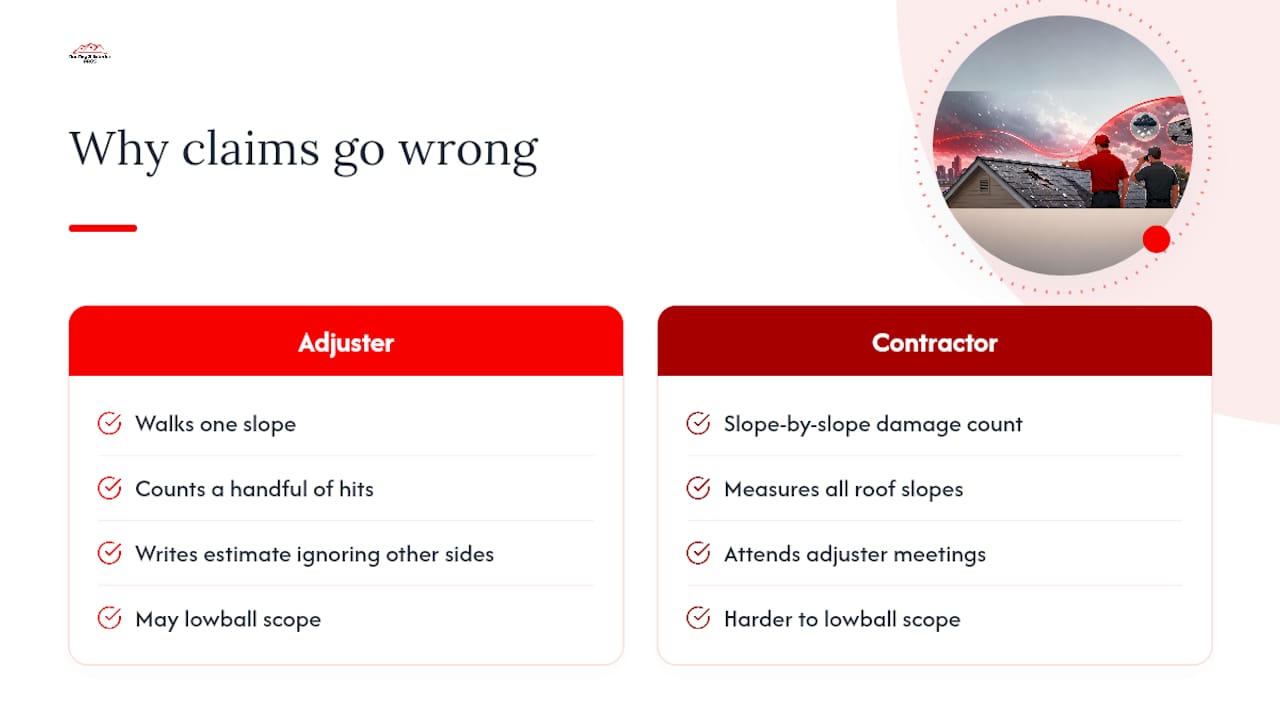
Most claim denials I see aren’t about whether hail hit the roof. They’re about scope. An adjuster walks one slope, counts a handful of hits, and writes an estimate that ignores the other three sides of the house.
That’s the gap a contractor on-site closes. Local roofing contractors work across the St. Louis metro, including St. Charles and O’Fallon, and may attend adjuster meetings with a slope-by-slope damage count. It’s harder to lowball a scope when someone else already measured it.
— Jake Ehlinger
Get A Free Hail Damage Inspection From Roofing & Exterior PROS
Some local roofing contractors offer free inspections with photo documentation, impact counts, and written reports designed to assist homeowners with insurance claims.

If your roof took a hit this season, we handle the parts homeowners dread most. That means coordinating with your insurance company, tarping active leaks the same day if needed, and giving you an honest recommendation, repair when repair makes sense, full replacement only when the damage actually calls for it. We’re not incentivized to oversell a job your roof doesn’t need.
Ready to find out where you stand? Schedule your free storm damage inspection with Roofing & Exterior PROS and get a carrier-ready report in hand before you make a single call to your insurer.
Essential Resources For Verifying Storm Damage
- Check hail size by ZIP code and date through the Storm Prediction Center and NCEI Storm Events Database.
- Review your policy’s wind/hail deductible structure before filing, especially percentage-based deductibles common in Missouri.
- Pair storm verification with contractor documentation. Together, they give adjusters little room to dispute that the damage occurred.
Sources
- How to Find Hail Damage on a Roof — Fixr
- How to identify hail damage on a roof — Local Roofing Help
- What does hail damage to your roof look like? — CallRoofExperts
FAQ
Will Insurance Cover Roof Damage From Hail?
Most Missouri homeowners policies cover hail damage as a named peril, but payout depends on your wind/hail deductible and whether the damage meets your carrier’s threshold for repair versus replacement.
How Much Does It Cost To Replace A Roof After Hail Damage?
Costs vary by roof size, pitch, and material, and isolated repairs typically cost far less than full replacement; a local cost breakdown gives more specific ranges based on scope.
How Long Can A Roof Last After Hail Damage?
An untreated hail-damaged roof can develop leaks and accelerated wear within a year or two, since fractured shingle mats lose their ability to shed water even without visible cracking.
How Bad Does Hail Damage Have To Be To Replace A Roof?
Widespread impacts across multiple slopes, a roof already near the end of its lifespan, or interior leaks typically push the decision toward full replacement rather than a patch repair.
Should I Get A Second Opinion Before Filing A Claim?
Yes. A free inspection from a local contractor like Roofing & Exterior PROS gives you an independent impact count and report before the adjuster’s scope becomes the final word.