TL;DR:
- Attic insulation plays a vital role in protecting your roof from moisture damage, ice dams, and premature deterioration. Proper installation and air sealing are essential for maximizing energy savings and maintaining roof warranties, especially in regulated climates. Upgrading insulation and ventilation improves attic conditions, extending roof lifespan and reducing cooling and heating costs.
Most homeowners think of attic insulation as something that keeps the house warm in winter. That’s only part of the picture. The role of attic insulation in roofing extends far beyond cold-weather comfort. It protects your roof structure from moisture damage, prevents ice dams, reduces cooling bills in summer, and can directly determine whether your roof warranty stays valid. Get it right, and your roof lasts longer while your energy bills drop. Get it wrong, and you may be looking at mold, rot, and a failed shingle warranty before you expect it.
Table of Contents
- Key takeaways
- The role of attic insulation in roofing and energy efficiency
- How insulation protects your roof structure
- Comparing attic insulation types for roofing performance
- Best practices for installation
- How to tell if your insulation is working
- My take on what homeowners consistently get wrong
- Ready to protect your roof from the attic up?
- FAQ
Key takeaways
| Point | Details |
|---|---|
| Year-round thermal protection | Attic insulation blocks heat in summer and retains it in winter, reducing HVAC load every month. |
| Roof lifespan depends on it | Poor insulation and ventilation cause ice dams, mold, and wood rot that shorten roof life significantly. |
| Material choice matters | Fiberglass, cellulose, and spray foam each suit different attic configurations and ventilation needs. |
| Air sealing comes first | Sealing gaps before adding insulation delivers the biggest energy savings per dollar spent. |
| Ventilation must work together | Insulation without proper airflow causes moisture buildup that can void your roof warranty. |
The role of attic insulation in roofing and energy efficiency
Attic insulation works as a thermal barrier between your living space and the outside environment. Heat always moves toward cooler areas, so in winter it tries to escape through your ceiling, and in summer it pushes down from the roof deck into your home. Insulation slows both movements by reducing conduction (heat moving through solid materials), convection (heat carried by air movement), and radiation (heat transferred through infrared energy).
The measure of that resistance is called the R-value. Higher R-value means more resistance to heat transfer. The U.S. Department of Energy recommends R-38 to R-60 for most attics depending on climate zone, and upgrading from R-19 to R-38 can cut heat transfer by 50%, which translates to 10 to 15 percent savings on cooling bills in hot climates.
The impact on your monthly utility bill is real. Proper attic insulation can yield energy cost reductions of 15 to 30 percent depending on climate and how well the installation is done. That’s not a small number over a 10-year period.
Here are the key energy-related benefits attic insulation delivers:
- Reduces HVAC run time by keeping conditioned air stable longer
- Prevents roof deck temperatures from exceeding 150°F in summer, which degrades shingles faster
- Lowers heating load in winter by reducing heat loss through the ceiling
- Blocks allergens and moisture from entering the living area, improving indoor air quality
Pro Tip: Insulation alone won’t reach its full potential without air sealing. Gaps around light fixtures, attic hatches, plumbing penetrations, and electrical boxes create convective pathways that bypass even thick insulation. Seal those first.
How insulation protects your roof structure
This is where most homeowners are genuinely surprised. The benefits of roof insulation go well past comfort. Your attic’s thermal and moisture conditions directly affect whether your roof decking, rafters, and shingles stay healthy for their full expected lifespan.
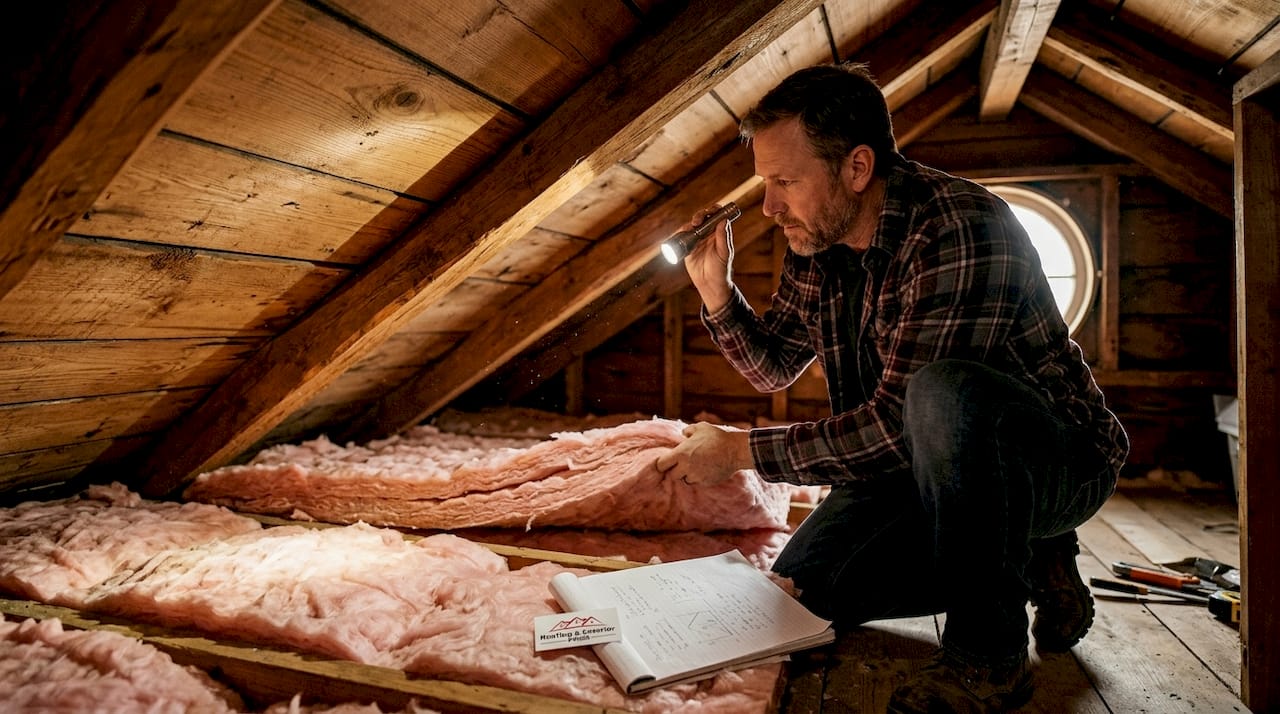
When attic insulation is inadequate or unevenly installed, the attic space experiences extreme temperature swings. In winter, warm air escaping from the living space heats the attic unevenly. Snow on the roof melts where the attic is warm, runs toward the cold eaves, and refreezes. That’s how ice dams form and cause roof damage. Ice dams force water under shingles and into the roof deck, leading to rot, mold, and interior leaks.
Moisture is the other major threat. When warm, humid air from the living space migrates into the attic and contacts cold roof decking, it condenses. That moisture feeds mold growth and accelerates wood rot in rafters and sheathing. Poor ventilation and insulation commonly void roof warranties because manufacturers require minimum ventilation standards to be met.
A roof warranty rejection tied to poor attic ventilation is one of the most frustrating outcomes we see. The homeowner spent thousands on a new roof, but the attic conditions invalidated the coverage within a few years.
Key structural risks that proper insulation and ventilation prevent:
- Ice dam formation along eaves in cold weather
- Condensation on the underside of the roof deck
- Mold growth on wood framing and decking
- Shingle granule loss from heat cycling on an under-insulated deck
- Premature failure of roof underlayment due to moisture saturation
To protect soffit vents and maintain continuous attic airflow, ventilation baffles are required in most jurisdictions. These baffles create a clear 1-inch air channel at each rafter bay so insulation never blocks the vents. Without them, you lose the moisture and heat management that keeps your roof structure dry.
You can also learn more about the signs of ventilation problems before they develop into expensive repairs.
Comparing attic insulation types for roofing performance
Not every insulation material performs the same way, and the right choice depends on your attic configuration, budget, and whether the attic is vented or conditioned.
| Insulation Type | R-Value per Inch | Best Use Case | Key Consideration |
|---|---|---|---|
| Fiberglass batts | 2.2 to 2.7 | Standard vented attic floors | Easy DIY install; leaves gaps if not fitted carefully |
| Blown-in fiberglass | 2.2 to 2.7 | Existing attic floor top-up | Good coverage of irregular areas |
| Cellulose (blown-in) | 3.2 to 3.8 | Vented attic floors, retrofit | Made from recycled material; settles slightly over time |
| Open-cell spray foam | 3.5 to 3.7 | Rafter underside, conditioned attic | Vapor permeable; may need additional vapor barrier |
| Closed-cell spray foam | 6.0 to 7.0 | Roof deck underside, conditioned attic | Creates air and vapor barrier; eliminates need for traditional attic ventilation |
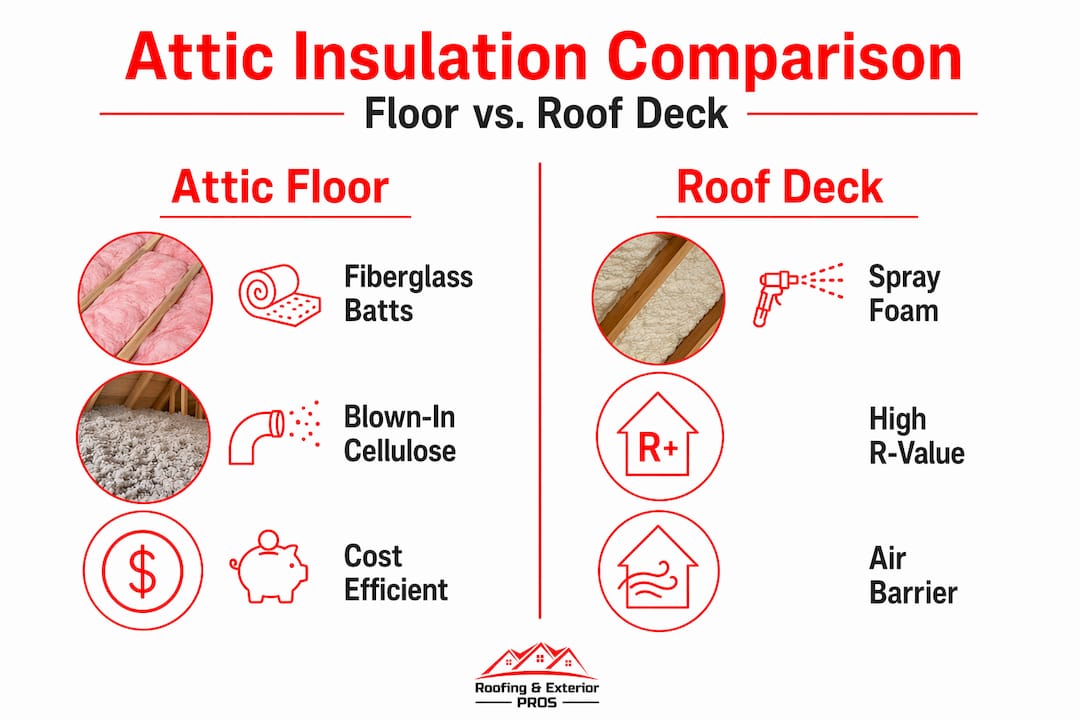
One distinction homeowners frequently miss is the difference between attic floor insulation and roof deck insulation. In a standard vented attic, insulation goes on the attic floor to separate the unconditioned attic from the living space below. But in a finished or conditioned attic space, insulation must be applied to the rafters or roof deck instead, or you create condensation problems between the two insulation layers.
Closed-cell spray foam applied to the underside of the roof deck is the most technically demanding option. It creates a conditioned attic, eliminates the need for soffit-to-ridge ventilation, and delivers the highest R-value per inch. However, it requires specialized installation and vapor control and costs significantly more than blown-in alternatives.
For most homeowners in the St. Louis area with standard vented attics, blown-in cellulose or fiberglass is a cost-effective and reliable choice. The best materials for attic insulation depend heavily on the specifics of your roof design and existing ventilation setup.
Best practices for installation
Getting the insulation installed correctly determines whether you see the promised energy savings or end up with a moisture problem. These are the steps that matter most.
- Air seal before you insulate. Sealing gaps around fixtures and penetrations is the single most cost-effective energy efficiency upgrade you can make. Use spray foam or caulk around recessed lights, top plates, plumbing stacks, and attic hatch frames before adding any insulation material.
- Install ventilation baffles at every rafter bay. These cardboard or foam channels hold insulation back from the soffit vents, preserving the airflow path from soffit to ridge. Blocking soffit vents with insulation is the most common installation mistake and one of the leading causes of moisture damage.
- Check your vapor barrier placement. In cold climates, the vapor barrier goes on the warm side of the insulation (the ceiling side). Installing it on the wrong side traps moisture in the insulation and decking.
- Match depth to your climate’s recommended R-value. For most Missouri homes, targeting R-49 to R-60 on the attic floor is appropriate. Measure current depth first and add only what’s needed to reach the target.
- Verify soffit-to-ridge airflow after installation. Confirm that air can still move freely from the soffit vents at the eaves up to the ridge or power vents at the peak. A blocked airway defeats the insulation’s moisture control function.
Pro Tip: If your attic has recessed can lights installed before 2010, they are likely not airtight-rated. Replace them with airtight LED fixtures before insulating, or you’ll be insulating over a direct air leak.
How to tell if your insulation is working
You don’t need specialized equipment to spot the warning signs. Some clues are obvious, and others require a trained eye.
Signs that your attic insulation or ventilation system needs attention:
- High energy bills that have increased without a clear reason, especially in summer
- Uneven room temperatures throughout the house, particularly on the top floor
- Ice dams along the roofline after winter snowfall
- Visible mold or dark staining on attic framing or the underside of the roof deck
- Frost or condensation on attic surfaces during cold weather
- Insulation depth below 7 inches, which suggests R-value well under the recommended minimum
A professional thermal imaging inspection can locate exactly where heat is escaping and where moisture is accumulating. A qualified inspector will also verify that soffit vents are not blocked, baffle channels are intact, and the vapor barrier is correctly placed.
Regular attic inspection is one of the most cost-effective ways to protect your roof investment. Catching a moisture problem early costs far less than replacing rotted decking or dealing with mold remediation. Maintaining proper insulation also adds measurable value to your home, since energy-efficient properties consistently attract stronger appraisals and buyer interest. For Missouri homeowners, understanding how to extend roof lifespan starts in the attic, not on the roof surface.
My take on what homeowners consistently get wrong
I’ve reviewed a lot of attics over the years, and one pattern stands out. Homeowners invest in new shingles or a full roof replacement and then never think about the attic conditions underneath. That’s backwards.
In my experience, attic insulation problems are behind a large share of the premature roof failures we see. It’s rarely the shingles themselves. It’s the moisture that builds up because the ventilation baffles were skipped, or the vapor barrier was placed on the wrong side, or the air sealing was never done before the blown-in insulation was added. The insulation looks fine from the hatch, but the roof deck underneath is quietly deteriorating.
What I’ve learned is that homeowners underestimate how much the attic functions as a climate buffer for the entire roofing system. The insulation doesn’t just keep your house comfortable. It keeps your roof dry, stable, and within the operating conditions the manufacturer designed for.
My honest advice: before you spend money on any roof repair or replacement, get the attic assessed. If the ventilation and insulation aren’t right, you are shortening the life of whatever roofing system goes on top. Fixing the attic first is almost always cheaper than fixing the roof twice.
— Jake
Ready to protect your roof from the attic up?
At Roofing & Exterior PROS, we work closely with homeowners across the St. Louis area to make sure roofing projects are backed by a properly insulated and ventilated attic. A new roof without the right attic conditions underneath is a warranty risk and a comfort problem waiting to happen.

Our team inspects attic ventilation, insulation depth, air sealing, and vapor barrier placement as part of every residential roofing service we provide. We also handle insulation upgrades, ventilation corrections, and full roof installations with the kind of transparency and craftsmanship that St. Louis homeowners have trusted for years. If you’re not sure whether your attic is working for your roof or against it, reach out to us for a free inspection. We’ll give you a clear, honest assessment with no pressure.
FAQ
What is the role of attic insulation in roofing?
Attic insulation acts as a thermal and moisture barrier between your living space and the roof system, reducing heat transfer, preventing condensation on the roof deck, and protecting against ice dams and structural wood rot that shorten roof lifespan.
How does attic insulation affect energy bills?
Proper attic insulation combined with air sealing can reduce energy costs by 15 to 30 percent depending on climate and installation quality, by reducing the workload on your heating and cooling system year-round.
What happens if attic insulation blocks the soffit vents?
Blocked soffit vents cut off the airflow needed to remove moisture and excess heat from the attic space. This leads to condensation on the roof deck, mold growth, and shingle degradation, and can void your roof manufacturer’s warranty.
What R-value does my attic insulation need?
Most homes in Missouri and similar climate zones should target R-49 to R-60 on the attic floor. Upgrading from R-19 to R-38 alone can cut heat transfer by 50 percent, so current insulation depth is worth measuring before adding new material.
When should I use spray foam instead of blown-in insulation?
Closed-cell spray foam is the right choice when you have a finished or conditioned attic where insulation belongs on the roof deck rather than the attic floor. It delivers the highest R-value per inch and creates an air and vapor barrier, but it requires professional installation and is significantly more expensive than blown-in options.