
If you’re planning a roof replacement in St. Louis and wondering what is architectural shingle versus the standard option, you’re not alone. Most homeowners assume all asphalt shingles are basically the same. They’re not. Architectural shingles offer a fundamentally different construction, longer lifespan, and better protection against the kind of weather Missouri throws at roofs every year. This guide breaks down the architectural shingle definition, how these shingles compare to 3-tab, what they cost, and what you need to know before making a decision.
Table of Contents
- Understanding architectural shingles: materials and design
- Architectural shingles vs 3-tab shingles: lifespan, durability, and performance
- Cost and investment: pricing and long-term value of architectural shingles
- Installation essentials and maintenance tips for architectural shingles
- Why architectural shingles are a smart investment for St. Louis homeowners
- Beyond the basics: what most homeowners miss about architectural shingles
- Get expert roofing services for architectural shingles in St. Louis
- Frequently asked questions
Key Takeaways
| Point | Details |
|---|---|
| What architectural shingles are | They are thicker, layered asphalt shingles offering a 3D look and superior durability compared to 3-tab shingles. |
| Durability and lifespan | Architectural shingles typically last 25-30 years or more, nearly double the lifespan of standard 3-tab shingles. |
| Enhanced weather resistance | They provide better wind and hail resistance and may qualify for specialized warranties like WindProven™. |
| Cost versus long-term value | Though costlier upfront, architectural shingles offer better protection and longevity, making them a smart investment. |
| Professional installation matters | Using required accessories and proper installation is essential to realize full warranty benefits and durability. |
Understanding architectural shingles: materials and design
Architectural shingles are made of multiple layers of asphalt-coated fiberglass laminated together, creating a thicker and more dimensional look than standard shingles. That laminated construction is the core of what separates them from everything else on the market. The layers are bonded together to form a single, heavier shingle that sits on your roof with real visual depth.
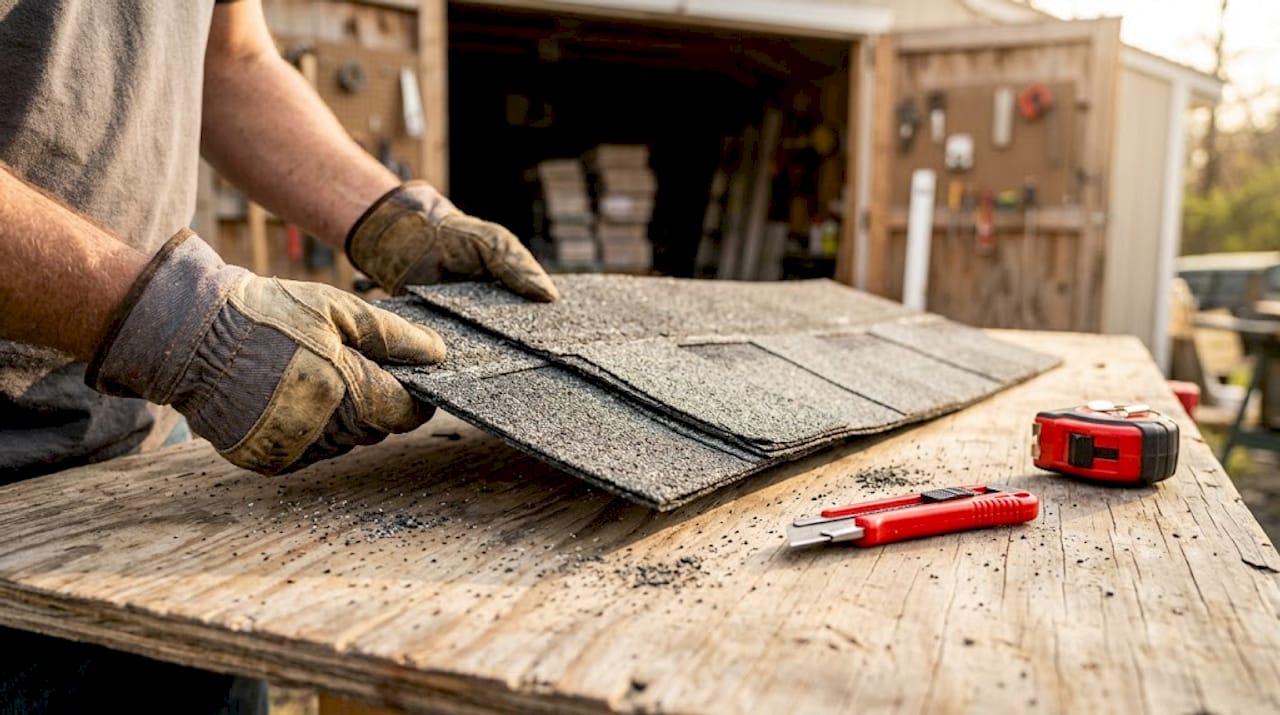
That depth matters more than most homeowners realize. Because of the layering, architectural shingles mimic the look of natural materials like slate or cedar shake without the weight or cost of those materials. When you look at a roof finished with architectural shingles, you see shadow lines, texture variation, and dimension. A 3-tab roof, by comparison, looks flat and uniform.
Here is what defines architectural shingles at a glance:
- Multiple laminated layers bonded into a single thick shingle unit
- 3D visual effect that replicates slate, cedar shake, or wood tile
- Wide range of colors and styles to match virtually any home exterior
- Heavier weight per square than 3-tab, adding structural resistance
- Wider tabs of irregular sizes that create a natural, varied appearance
Standard 3-tab shingles are thinner, flat, and cut with uniform notches that give every row an identical appearance. They do the job, but they offer less visual interest and less physical resilience. If you’re comparing best shingles for Missouri weather, architectural shingles consistently outperform 3-tab in both durability and aesthetics.
Architectural shingles vs 3-tab shingles: lifespan, durability, and performance
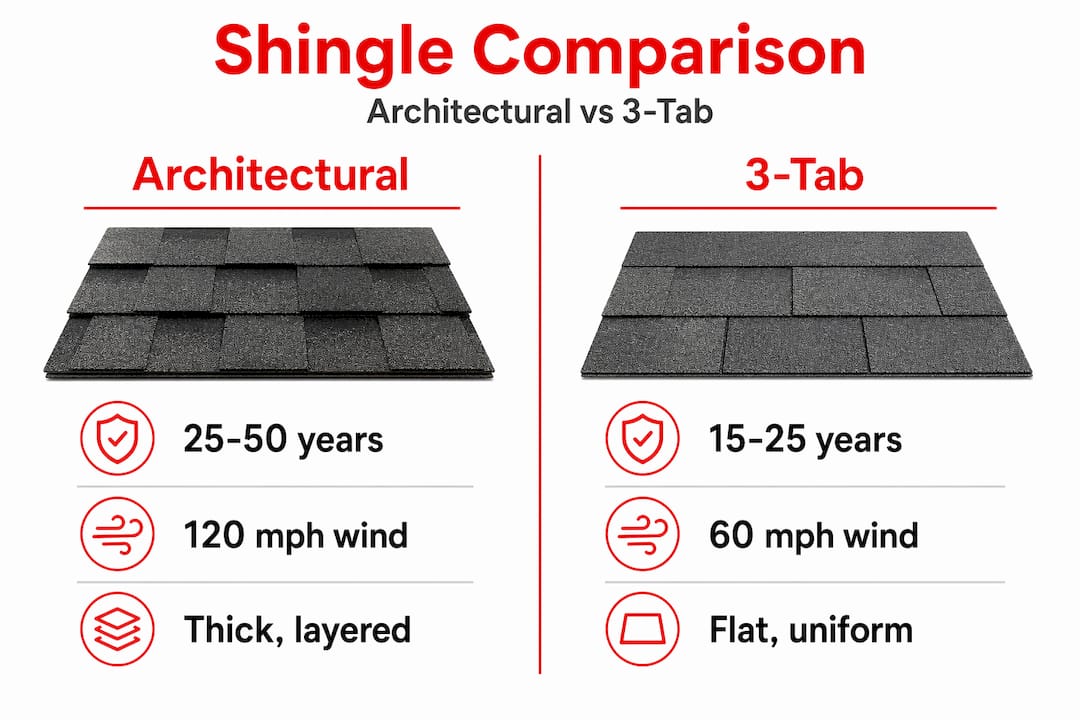
This is where the real difference shows up. Architectural shingles typically last 25 to 30 years or longer, while 3-tab shingles last 15 to 25 years, and architectural shingles carry higher wind and hail resistance. That gap in lifespan alone changes the math on which product actually costs less over time.
Wind performance is a big deal in St. Louis. Architectural shingles are rated to withstand wind speeds up to 120 mph under standard warranties. Most 3-tab shingles cap out around 60 mph. For context, straight-line winds from Missouri thunderstorms regularly exceed 70 mph, which means a 3-tab roof is already at its limit during a moderate storm.
| Feature | Architectural shingles | 3-tab shingles |
|---|---|---|
| Lifespan | 25 to 50 years | 15 to 25 years |
| Wind resistance | Up to 120 mph (standard) | Up to 60 mph |
| Thickness | Double-layer laminated | Single layer |
| Visual dimension | 3D, textured | Flat, uniform |
| Typical warranty | 30 years to lifetime | 20 to 25 years |
| Impact resistance | Class 3 or 4 available | Limited options |
GAF’s Timberline HDZ® line goes even further. WindProven™ warranty eligibility requires installation with specific accessories, including starter strips, deck protection, ridge cap shingles, and a leak barrier or attic ventilation, but it provides no maximum wind speed limitation. That is a meaningful level of protection for St. Louis homeowners.
Impact resistance is another factor worth examining closely. Timberline HDZ® shingles pass UL 2218 Class 3 impact-resistance testing, and that rating may qualify you for insurance discounts depending on your insurer. Not every architectural shingle carries this rating, so it is worth confirming before you buy.
“Choosing architectural shingles over 3-tab is not just a cosmetic upgrade. In a region like St. Louis where hail and severe storms are routine, the performance difference can mean the difference between a roof that survives a storm and one that doesn’t.”
Pro Tip: Ask your roofing contractor specifically about UL 2218 Class 3 or Class 4 ratings when selecting architectural shingles. Some product lines carry this rating and some do not, and the insurance savings can offset a meaningful portion of your upgrade cost.
For homeowners weighing whether to repair or replace, our guide on roof repair or replacement choices walks through how to evaluate your current roof’s condition before committing to either path. And if you want to get the most from your investment over time, see how to extend roof lifespan in Missouri with the right maintenance habits.
Cost and investment: pricing and long-term value of architectural shingles
The upfront cost of architectural shingles is higher than 3-tab. That is simply true. But the cost of architectural shingles needs to be understood in context of what you are actually buying.
Architectural shingles cost more per bundle and in total installation, but the longer lifespan and durability benefits often justify that expense. A typical bundle of architectural shingles runs up to $400, compared to roughly $275 for a comparable 3-tab bundle. For a full roof replacement, total project costs generally range from $4,500 to $20,000 depending on roof size, pitch, and the specific product line you choose.
| Cost factor | Architectural shingles | 3-tab shingles |
|---|---|---|
| Cost per bundle | Up to $400 | Around $275 |
| Full replacement range | $4,500 to $20,000 | $3,500 to $12,000 |
| Expected lifespan | 25 to 50 years | 15 to 25 years |
| Replacement frequency | Once in 30 to 50 years | Potentially twice in same period |
| Insurance discount potential | Yes, with qualifying ratings | Rarely |
Here is what the numbers actually mean for a St. Louis homeowner. If you install a 3-tab roof today and it lasts 20 years, you may be replacing it again before an architectural shingle roof installed at the same time would need attention. Over a 40-year period, the cost difference narrows considerably, and the architectural option likely wins on total value.
Additional factors that improve the value case:
- Reduced repair frequency due to stronger construction
- Potential insurance premium savings with impact-resistant ratings
- Higher resale value from improved curb appeal and documented warranty coverage
- Fewer weather-related claims over the life of the roof
Pro Tip: When getting quotes from residential roofing contractors in St. Louis, ask for a cost-per-year breakdown based on expected lifespan. This reframes the comparison from sticker price to actual long-term value, and it often makes the architectural shingle choice much easier to justify.
Installation essentials and maintenance tips for architectural shingles
Knowing how to install architectural shingles correctly is not something to treat casually. The installation process directly affects whether your warranty stays valid and how long the roof actually performs. Professional installation is not just a recommendation, it is a requirement for most manufacturer warranties.
Here is what a proper architectural shingle installation involves:
- Remove the existing roofing material down to the deck to inspect for rot or damage
- Install roof deck protection such as synthetic underlayment across the entire surface
- Apply a leak barrier in vulnerable areas including valleys, eaves, and around penetrations
- Install starter strip shingles along the eaves and rakes before the field shingles begin
- Lay field shingles in the manufacturer-specified pattern with correct nail placement and spacing
- Install ridge cap shingles at the peak using the appropriate product for the shingle line
- Verify attic ventilation meets requirements to protect shingles from heat and moisture damage
The 15-year WindProven™ warranty specifically requires installation with GAF starter strips, roof deck protection, ridge cap shingles, and either a leak barrier or qualifying attic ventilation. Skipping any of these components does not just reduce performance, it eliminates warranty coverage entirely.
Maintenance after installation is straightforward but important:
- Clear debris from the roof surface and gutters at least twice a year
- Inspect after major storms for lifted, cracked, or missing shingles
- Check flashing around chimneys, vents, and skylights for gaps or rust
- Ensure attic ventilation remains unobstructed to prevent heat buildup under the shingles
- Schedule a professional inspection every few years to catch issues before they become costly
Pro Tip: Proper attic ventilation is one of the most overlooked factors in architectural shingles lifespan. Excessive heat trapped in the attic degrades shingles from underneath, potentially cutting years off their service life even when the exterior looks fine.
For a detailed look at what the full process involves, our residential roof installation process page walks through each phase from start to finish.
Why architectural shingles are a smart investment for St. Louis homeowners
St. Louis weather is not gentle on roofs. The region sees hailstorms, ice storms, high winds, and significant temperature swings across the seasons. Architectural shingles provide a longer lifespan, better wind and hail resistance, and aesthetic upgrades well-suited for homes in challenging weather areas like St. Louis.
Here is the full picture of what you gain with architectural shingles:
- Storm durability rated for wind speeds up to 120 mph and impact-resistance testing up to Class 4
- Longer warranty coverage with lifetime options available on select product lines
- Curb appeal that adds real visual value and can improve resale attractiveness
- Insurance savings potential with qualifying UL 2218 impact ratings
- Peace of mind from knowing your roof is built to handle Missouri’s toughest weather
“For St. Louis homeowners, architectural shingles are not a luxury upgrade. They are the practical choice for a region where severe weather is a regular part of life.”
Choosing the best shingles for Missouri weather means looking beyond price per bundle and focusing on what the product actually delivers over its full service life.
Beyond the basics: what most homeowners miss about architectural shingles
Here is something we see repeatedly when homeowners come to us after a bad experience with a previous roof. They chose architectural shingles, paid the premium, and still ended up with warranty issues or insurance claim complications. The reason is almost always the same: they focused on the shingle category and ignored the system.
Not all architectural shingles are equal. Hail and wind performance depends on tested UL 2218 ratings and complete warranty systems, not just the shingle type. A product can be labeled “architectural” and still carry no impact-resistance rating and no wind warranty beyond the standard 60 mph. The label tells you the construction style. It does not tell you the performance level.
The WindProven™ warranty, for example, does not activate just because you bought the right shingle. It requires a specific combination of accessories installed by a qualified contractor. If even one component is missing or substituted, the warranty does not apply. Most homeowners do not find this out until they file a claim.
Insurance savings work the same way. Your insurer needs documentation of the specific UL 2218 class rating for the shingles installed on your home. A general statement that you have “architectural shingles” is not enough. You need the product name, the tested rating, and in some cases a certificate from the installer.
We always tell homeowners to ask their contractor three specific questions before signing anything. What is the UL 2218 impact class rating for this product? What accessories are required to qualify for the full wind warranty? And will you provide documentation I can give to my insurance company? If a contractor cannot answer all three clearly, that is a signal worth paying attention to.
Understanding shingle performance ratings before you commit puts you in a much stronger position, both for warranty protection and for potential insurance benefits.
Get expert roofing services for architectural shingles in St. Louis
Choosing architectural shingles is the right call for most St. Louis homeowners, but the product is only as good as the installation behind it. Working with a qualified local contractor ensures your shingles are installed to meet warranty requirements, your accessories are correctly specified, and your roof is built to perform through Missouri’s toughest seasons.
At Roofing & Exterior PROS, we work closely with homeowners across the St. Louis metropolitan area to select the right residential roofing solutions for their home, budget, and weather exposure. Whether you are starting fresh or evaluating roof repair or replacement options, our team provides honest guidance, transparent pricing, and installation that protects your warranty from day one. Contact Roofing & Exterior PROS today for a free roof inspection and personalized recommendation.
Frequently asked questions
How long do architectural shingles typically last compared to 3-tab shingles?
Architectural shingles last about 25 to 30 years or more, which is often double the lifespan of 3-tab shingles that typically last 15 to 25 years. Premium architectural lines can reach 50 years with proper installation and maintenance.
What makes architectural shingles more resistant to wind and hail?
Their thicker, laminated construction adds physical mass and bonding strength, and WindProven™ warranty systems that require specific accessories help architectural shingles withstand higher wind speeds and hail impact far better than standard shingles.
Can installing architectural shingles save me money on homeowner’s insurance?
Some architectural shingles carry a UL 2218 Class 3 rating that may qualify you for insurance discounts, but savings depend on your specific insurer and policy terms, so always confirm with your insurance provider before assuming a discount applies.
Do I need to hire a professional to install architectural shingles?
Yes. Professional installation is required to meet manufacturer warranty terms and ensure all necessary system accessories are correctly installed for full wind and impact protection.
What maintenance do architectural shingles require to maximize lifespan?
Regular inspection, clearing debris from the roof and gutters, prompt repair of any damaged shingles, and maintaining proper attic ventilation are the core habits that protect architectural shingles performance and keep the warranty intact.