A metal roof costs more upfront but often delivers lower lifetime cost and a much longer service life, which makes it the right call for homeowners who plan to stay put for 15 years or more. The main tradeoff: higher installed price and some noise or denting risk, against decades of reduced maintenance and strong weather resistance. Below we break down the real numbers so you can use the decision checklist later in this guide.
TL;DR:
- A standing seam study projects at least 60 years of service in most noncoastal settings, provided installation follows best practices and suitable sealant protects seams.
- The 1.7 to 2.0 times upfront cost can pay off over decades, while asphalt or tile may suit homeowners selling within five years.
- Standing seam steel supports solar panels mounted with clamps without roof penetrations, while cheaper exposed fastener panels need more frequent checks of screw seals.
- A cool roof needs both solar reflectance and thermal emittance; bare metal does not automatically qualify, and colder climates may face a mild heating penalty.
- Ask bidders to explain how they manage thermal movement and choose sealants, then request separate prices for materials, labor, roof removal, and permits.
Table of Contents
- 1. Pros of metal roofing: durability, weather resistance, and savings
- 2. Cons of metal roofing: cost, complexity, and tradeoffs
- 3. Types of metal roofing and what each is best for
- 4. Cost and life-cycle math: when metal pays back
- 5. Energy performance and cool-roof considerations
- 5. Installation and maintenance: what keeps a metal roof performing
- 6. How to decide: homeowner checklist and contractor questions
- 7. Publisher perspective: our approach to metal roof installations
- 8. What matters most when choosing a metal roof
- 9. Get a metal roof inspection and quote from our team
- FAQ
- Sources
1. Pros of metal roofing: durability, weather resistance, and savings
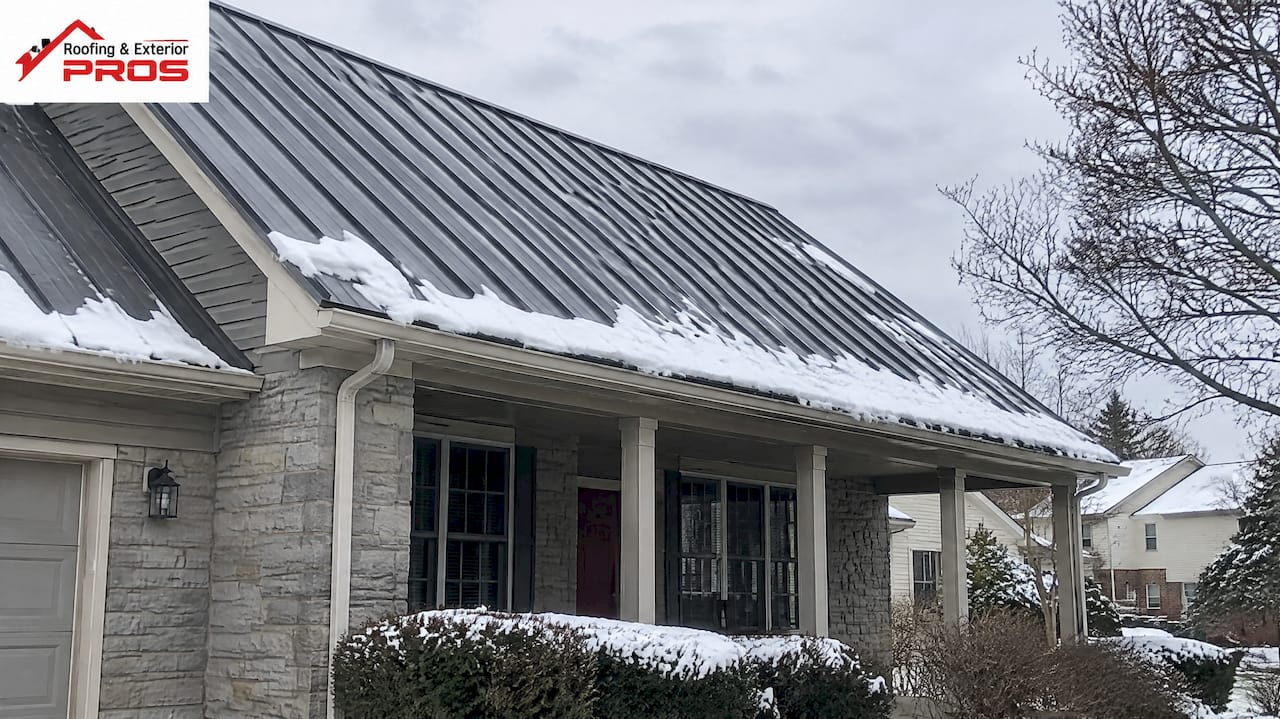
The biggest advantage of metal roofing is how long it lasts. A service-life assessment of 55% Al-Zn alloy coated steel standing seam systems projects 60 or more years of service in most non-coastal environments, provided the roof is installed using best practices. That caveat matters: the sealant used at seams and penetrations is often the real limiting factor, not the steel itself.
Weather performance is another strong point. Metal panels shed snow more readily than shingles, resist wind uplift well when properly fastened, and hold up to hail better than most asphalt products, which is part of why some insurers offer favorable treatment for metal roofs in storm-prone regions. For homeowners in wildfire-adjacent areas, metal’s noncombustible surface is a genuine safety advantage over wood shake or standard shingles.
Energy performance rounds out the case. Painted or coated light-colored metal finishes improve both solar reflectance and thermal emittance, the two properties that actually determine cooling performance according to Department of Energy cool-roof guidance. A roof that only reflects sunlight without shedding absorbed heat efficiently will not perform as well as one engineered for both.
A metal roof that meets best-practice installation standards can reach many decades of service life in most non-coastal climates, according to the Metal Construction Association’s service-life study, roughly two to three times longer than a typical asphalt shingle roof.
Other advantages worth weighing:
- Steel and aluminum roofing is highly recyclable at the end of its service life, unlike shingle tear-off waste that typically goes to a landfill.
- Metal roofs need far less routine maintenance than shingles, since there are no granules to shed and no moss-prone valleys to clear regularly, and homeowners can also learn about roof moss removal services to keep their roofs in top shape.
- A metal roofing and solar PV white paper from the Metal Construction Association notes that metal roofs are a strong mounting platform for solar panels, since the roof typically outlasts the panel array itself.
- Standing seam profiles allow clamp-style solar mounts that do not penetrate the roofing material, which preserves the warranty and watertight integrity.
2. Cons of metal roofing: cost, complexity, and tradeoffs
The upfront price is the drawback homeowners run into first. Metal roofing typically costs more per square than asphalt shingles, and several factors push that number higher: steep or complex rooflines, standing seam profiles over exposed-fastener styles, copper or specialty metals, and the need for a tear-off of existing roofing before installation.
Installer skill matters more with metal than with shingles. A standing seam roof depends on precise seaming, correct clip spacing, and proper accommodation for expansion and contraction. A crew without that specific experience can produce a roof that leaks or buckles years before it should, regardless of how good the material itself is.
Noise and denting are the next concerns homeowners raise, and both are manageable with the right planning:
- Rain and hail noise is noticeably reduced with solid roof decking and standard attic insulation, so it is rarely an issue in homes with typical construction.
- Choosing a thicker gauge panel or a textured, stone-coated profile reduces dent risk from hail or foot traffic compared to thin, flat panels.
- Exposed-fastener panels are more prone to minor cosmetic dents than concealed-fastener standing seam systems.
- Darker, matte finishes tend to hide minor surface imperfections better than glossy light colors.
Repairs can also be more involved than patching a shingle. Panel replacement sometimes means matching a discontinued profile or color, and sealant failure at a seam or flashing point requires the correct sealant chemistry, not just any caulk from a hardware store. These are solvable problems, but they call for a contractor who already knows metal systems rather than one learning on your roof.
3. Types of metal roofing and what each is best for
Not all metal roofs are built the same way, and the profile you choose affects cost, looks, and performance as much as the metal itself.
- Standing seam steel uses raised, interlocking seams with hidden fasteners, offers the best resistance to leaks and wind uplift, and is the preferred choice for solar mounting since clamps attach without penetrating the panel.
- Exposed-fastener steel panels cost less to install than standing seam but have screw heads exposed to the weather, which means more frequent inspection of fastener seals over time.
- Stone-coated steel mimics the look of shingles or tile while keeping metal’s durability, a good fit for homeowners or HOAs that want a traditional appearance.
- Aluminum resists corrosion exceptionally well, making it a strong pick in coastal or high-humidity settings where steel products can be more prone to rust over time.
- Copper carries the highest material cost but ages into a distinctive patina and can last longer than steel or aluminum with virtually no coating maintenance.
For most residential projects, standing seam steel balances cost, appearance, and solar compatibility better than the alternatives, while stone-coated or exposed-fastener options fit tighter budgets where the standing seam look is not a priority.
4. Cost and life-cycle math: when metal pays back
The installed cost of a metal roof depends heavily on material choice, labor, tear-off needs, and permitting, and specialty standing seam crews generally charge more than a standard shingle crew because the work requires more precision. Despite that premium, the math often favors metal for homeowners who are not planning to move soon.
Metal roofing commonly costs around 1.7 to 2.0 times more upfront than asphalt shingles but can last two to three times longer, which lowers the effective cost per year of ownership for homeowners who stay in the home long enough to capture that advantage.
Consider a simplified illustrative comparison: say a shingle roof costs $12,000 installed and lasts 20 years, while a comparable metal roof costs $22,000 installed and lasts 50 years. Over 50 years, the shingle roof needs replacement roughly twice more (at year 20 and year 40), pushing total shingle spending past $36,000 before inflation, versus a single $22,000 metal investment. The homeowner’s actual numbers will differ, but the pattern, fewer replacement cycles offsetting a higher initial price, holds in most long-tenure scenarios.
Several factors shift this math in either direction:
- How long you plan to stay in the home is the single biggest variable, since metal’s advantage compounds over decades.
- Energy savings from a reflective, well-coated metal roof add up over time, particularly in hot climates.
- Local contractor availability affects both price and quality, since a shortage of experienced standing seam installers can push bids higher.
- Insurance treatment varies by carrier and region, so it is worth asking directly how a metal roof affects your premium.
When comparing quotes, ask each contractor to break out material, labor, tear-off, and permit costs separately rather than giving one lump figure, which makes it far easier to spot where prices diverge.
5. Energy performance and cool-roof considerations
Cooling performance depends on two separate properties: solar reflectance, how much sunlight the surface bounces away, and thermal emittance, how efficiently the surface releases absorbed heat. DOE and ENERGY STAR guidance is clear that both matter together, which is why an unpainted or unfinished metal roof is not automatically a cool roof even though it looks reflective.
Climate changes the calculation. Cool roofing tends to save the most in hot, sun-heavy regions, while in colder climates a highly reflective roof can create a mild winter heating penalty by reflecting away sunlight that would otherwise help warm the attic space.
- Painted or specially coated metal finishes improve emittance while maintaining reflectance better than bare, uncoated metal.
- Lighter colors generally reflect more solar energy, but a quality coating matters more than color alone for long-term performance.
- Ask your installer whether the finish carries a reflectance and emittance rating, since those figures are what actually drive energy results.
- Some utilities and local programs offer rebates for cool-roof products, so it is worth checking with your provider before finalizing material choice.
5. Installation and maintenance: what keeps a metal roof performing
Metal panels expand and contract with temperature swings, and NRCA technical guidance stresses that this movement has to be designed for explicitly, with proper clip systems and defined fixed points, or panels can distort and seams can fail over time.
Sealant choice is just as critical. Butyl, polyurethane, and silicone sealants each behave differently under temperature cycling and UV exposure, and using the wrong one at a seam or flashing point is a common cause of early leaks. A contractor who specifies sealant by brand and chemistry, rather than “whatever we have on the truck,” is a good early sign of expertise.
A simple annual maintenance routine goes a long way:
- Walk the roofline each spring and fall to check for loose fasteners or lifted seams.
- Clear debris from valleys and around penetrations before it traps moisture.
- Inspect sealant at flashing points every few years and recaulk proactively, not after a leak appears.
Pro Tip: Schedule your metal roof inspection alongside your gutter cleaning twice a year so loose fasteners and seam issues get caught before the next storm season.
6. How to decide: homeowner checklist and contractor questions
Turning everything above into a decision starts with a short set of honest questions about your own situation and the contractor you are considering.
- How many more years do you realistically plan to stay in this home, since metal’s value climbs the longer you own it?
- What does your local climate throw at a roof most often: heavy snow, hail, high wind, or intense summer sun?
- Does your budget comfortably cover metal’s higher upfront cost, or would a shorter-term asphalt or tile option make more sense right now?
- Does your HOA or neighborhood have restrictions on roofing material, profile, or color that could limit your options?
- Has the contractor shown documented standing seam projects, and can they explain exactly which sealant system they plan to use and why?
- Does the written estimate separate material, labor, tear-off, and permit costs, and does it specify warranty terms in writing?
If you plan to sell within the next five years or your budget is tight right now, asphalt shingles or a tile reroof may be the more practical short-term choice, and that is a reasonable call depending on your timeline.
7. Publisher perspective: our approach to metal roof installations
Jake Ehlinger covers roofing materials and life-cycle cost for homeowners weighing a replacement decision. Our team is local and family-owned and brings direct experience across shingle, slate, wood shake, flat, and metal roofing systems. When we install a metal roof, we follow manufacturer-specified fastening patterns, use sealant chemistry matched to the application point rather than a one-size approach, and inspect seams before calling the job complete. We also assist homeowners through insurance claims when storm damage is part of the equation.
8. What matters most when choosing a metal roof
The conventional advice on metal roofing tends to fixate on the price tag and stop there, which misses the point entirely. The real decision variable is not what the roof costs today, it is how many years you will own the house, because that single factor determines whether the higher upfront number turns into savings or into money left on the table.
We also think homeowners underrate installer expertise relative to material grade. Two roofs built from identical steel can age completely differently depending on whether the crew understood thermal movement and sealant chemistry, and that gap rarely shows up in a sales brochure.
If we had to narrow the homework to one task, it would be this: before comparing prices, ask every bidding contractor to walk through exactly how they handle seams, sealants, and expansion joints. The answer tells you more about the roof’s real lifespan than any warranty document will.
— Jake Ehlinger
9. Get a metal roof inspection and quote from our team
If you are weighing a metal roof for your own home, the most useful next step is a firsthand look at your current roof, your rafters, and your local exposure, not another spec sheet. We offer free inspections and quotes, and we handle insurance claims assistance when storm damage is part of the picture.
During a visit, expect us to:
- Check your existing roof deck, flashing, and ventilation for issues that affect any new installation.
- Walk you through standing seam, exposed-fastener, and stone-coated options based on your home’s style and budget.
- Provide a written estimate that separates material, labor, and tear-off costs so you can compare it clearly against other bids.
Ready to see what a metal roof would cost for your home? Request a free roofing inspection and quote and we will walk the details with you in person.
FAQ
Why don’t more people choose metal roofs?
Cost is the main reason: metal roofing typically runs 1.7 to 2.0 times more upfront than asphalt shingles, which puts off homeowners focused on the initial price tag rather than long-term cost. Familiarity also plays a role, since many roofing crews specialize in shingles and fewer are trained specifically for standing seam metal work.
How much does it cost to install a metal roof on a 1,200 square foot house?
Total cost depends on the metal type, roof pitch, and local labor rates, with standing seam systems generally priced higher than exposed-fastener panels of the same size. Because pricing varies significantly by region and material choice, the most reliable number comes from a written quote based on your specific roof rather than a generic estimate.
What are the downsides of having a metal roof?
The main downsides are a higher upfront cost, the need for an experienced installer familiar with seams and thermal movement, and a greater chance of denting with thinner gauge panels or exposed-fastener profiles. Repairs can also be more specialized than patching shingles, since matching a discontinued panel color or using the wrong sealant chemistry can cause problems down the line.
How do insurance companies view metal roofs?
Insurance treatment varies by carrier and region, so the only reliable answer comes from asking your own provider directly. Many insurers do view metal’s wind and hail resistance favorably, but the specific effect on your premium depends on your policy and location.
Sources
- Service life assessment of low-slope unpainted 55% Al-Zn alloy coated steel standing seam metal roof systems — Metal Construction Association
- NRCA guidance on metal roofing thermal movement